
Same-day & Next-day Delivery

Quality Guaranteed

Unlock Your Welcome Offers: FREE Delivery | Up to 80% OFF | Free 30-day JoyPlus trial
Download the APP
A food storage container is just as useful for keeping leftovers as it is for meal prepping, organising the fridge or transporting your lunch. Yet a hasty purchase can quickly result in a lid that leaks, a box that won’t stack, or a material that isn’t freezer-safe.
Before comparing models, here are the main pitfalls to avoid and the criteria that really matter in everyday use.
A clip-on lid doesn’t automatically make a container airtight. If you’re transporting soup, sauce or a saucy dish, check for a seal, the number of closure points, and compatibility with liquid foods. A poorly fitted closure can cause leaks in your bag or contaminate other items in the fridge.
Withstanding cold doesn’t mean the container can handle all temperature changes. Placed in the freezer while still warm, a container can suffer thermal shock, warp or crack. Follow the manufacturer’s instructions and let your preparations cool down before storing them.
The body of a container may be dishwasher-safe, while the lid, seal or wooden parts need to be washed by hand. This distinction matters to avoid lingering odours, warping and premature wear. Before buying, take the time to check the materials and care instructions.
A glass food storage container lets you see its contents at a glance. Borosilicate glass is often valued for its resistance to temperature changes, but it remains heavier and can break if dropped.
Food-grade plastic, particularly polypropylene, is lightweight and practical for meals on the go. Check for BPA-free labelling, as well as compatibility with the dishwasher, microwave and freezer. These uses don’t necessarily apply to the lid.
A stainless steel food container is well suited to transport and repeated use. Its corrosion resistance depends on the alloy used, but it should never go in the microwave. Multi-compartment models may also require hand washing.
A large container isn’t necessarily more practical. For a single portion, a capacity from a few hundred millilitres up to around one litre is usually sufficient. For family batch cooking, it’s better to choose several sizes than to fill a large container with a small portion.
Also think about measuring your fridge shelves, freezer drawers and lunch bag. A stackable container makes kitchen organisation easier, provided its dimensions match those of your other containers.
Before ordering, check the pictograms and instructions regarding:
A compartmentalised container is handy for separating foods, but it doesn’t always guarantee a leak-proof seal between sections. For a lunch box or bento box, check whether the compartments are independent or simply moulded into the same tray.
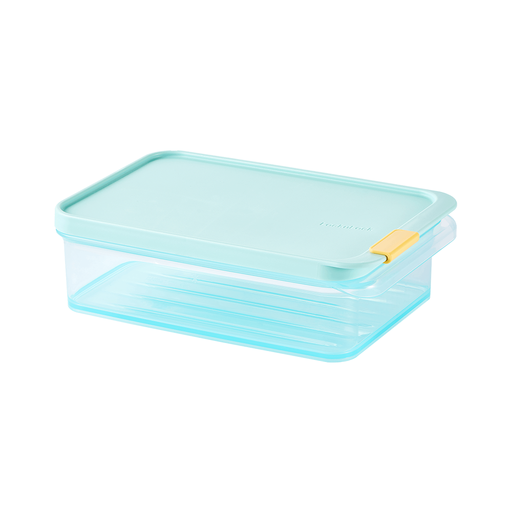
Why this choice suits this profile: With its 1.05-litre capacity, this model is ideal for leftovers, prepped portions and everyday fridge or freezer storage. Its transparent body lets you quickly identify the contents.
The hollow structure of the lid makes stacking easy. The labelling clips allow you to note the contents and storage date.
Made from BPA-free polypropylene, this container is freezer- and dishwasher-safe (top rack). The manufacturer also states it can be used in the microwave for the body, without the lid.
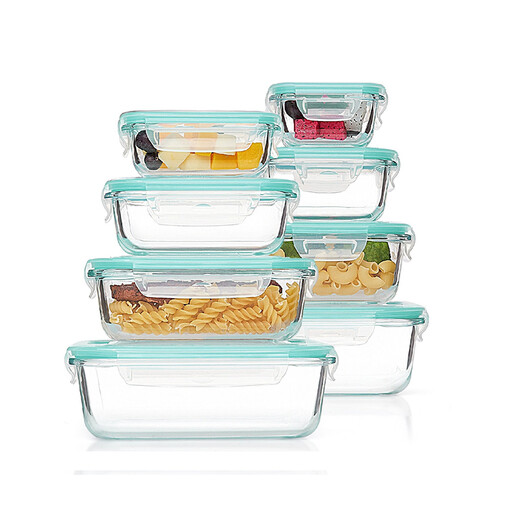
Why this choice suits this profile: With eight capacities ranging from 150 to 1,040 ml, this set lets you pick the right size for sauces, sides, individual portions and family meals alike.
The variety of sizes prevents using an oversized container for a small amount and makes fridge organisation easier.
The borosilicate glass comes with removable lids. The different sizes are suitable for both transporting a meal and storing small portions.
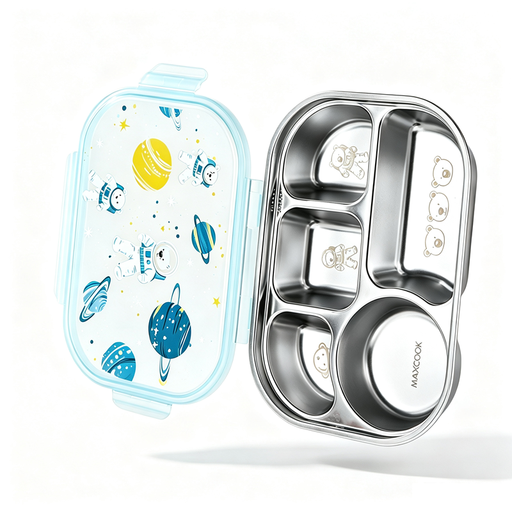
Why this choice suits this profile: This bento box is designed for compartmentalised meals, picnics and prepping portions for the office, school or outdoor activities.
The five compartments separate foods, and the four clips keep the lid secure during transport. The manufacturer recommends hand washing.
Made from 316L stainless steel, this box offers five separate sections. It should not go in the microwave or oven, and highly acidic or salty foods should not be stored in it for long periods.
We’ve put together a comprehensive, real-time updated selection of products that meet these demanding criteria as well as European safety regulations.
A bread box serves a different purpose from a container intended for the freezer. It needs to allow a limited amount of air to circulate, while protecting the bread from dust and drying out. The two-tier model, with a wooden handle and a viewing window, can work well in a kitchen where you want to free up worktop space and quickly spot stored items. Check out its product page.
Another option, the Bodum BISTRO Bread Box Large, has a stated capacity of 10 litres and a bamboo lid that can double as a chopping board. This lid must be washed by hand, without being submerged or placed in the dishwasher.
Go for several containers of different sizes that are stackable and freezer-safe if you’re prepping meals in advance. Glass is practical for seeing the contents and managing different portions, while plastic will be lighter to carry.
The storage time depends on the food, how it’s prepared and the storage temperature. An airtight container limits exchange with the outside, but it doesn’t replace the cold chain or health guidelines. Write the date on the container and check the appearance, smell and texture before eating.
Wash and dry the body, lid and seal separately. Avoid abrasive sponges, sudden temperature changes and uses not intended by the manufacturer. Replace any container that has a crack, warp or seal that no longer closes properly.