
Livraison le jour même ou le lendemain

Qualité garantie

Débloquez vos offres de bienvenue: Livraison GRATUITE | Jusqu'à -80 % | 30 jours d'essai gratuits à JoyPlus
Téléchargez l'application
Preparing meals in advance, taking a lunch box to the office, or storing leftovers requires containers suited to each situation. Yet buying reusable food containers can come with a few disappointments: a lid that leaks, a material that isn’t microwave-safe, or a capacity that doesn’t match your portions.
Before comparing lunch boxes, vacuum-insulated food jars and glass storage containers, there are three pitfalls worth paying close attention to.
A clip-on or press-on lid may hold the contents in place without being completely airtight. If you’re transporting soup, sauce or a dish in a bag, check for a seal, the type of closure and the manufacturer’s recommendations. A container designed for dry foods isn’t necessarily suitable for liquid preparations.
Not all containers are oven-safe, microwave-safe, freezer-safe or dishwasher-safe. Metal, particularly stainless steel, must never go in a microwave. Some plastic lids need to be removed or left slightly open before reheating. The “compatible” label sometimes applies only to the container, not its lid.
An oversized lunch box takes up unnecessary space in your bag and can encourage you to pack oversized portions. On the other hand, a small container won’t work for a mixed salad or a full meal. For batch cooking, having several sizes lets you separate portions, sauces, desserts and sides.
Stainless steel food containers appeal for their durability and low tendency to retain odours. 304-grade stainless steel suits most everyday uses, while 316-grade is presented by manufacturers as more corrosion-resistant. In both cases, microwave use is out of the question.
Glass storage containers let you see the contents at a glance and can generally be used for reheating food when they clearly state this. However, their weight and fragility are worth considering if you’re taking them on the go.
Ceramic bowls and ramekins are suitable for preparing, serving and storing individual portions. Check the heat resistance of the container and the lid separately: a ceramic that’s oven-safe doesn’t mean its plastic lid is too.
For an individual lunch, a compartmentalised box makes it easier to separate foods. A compartmentalised bento box is especially handy for children’s meals, portion control or picnics. A wide-opening container is easier to fill and clean, particularly for soups, pasta and saucy dishes.
Choose vacuum-insulated food jars based on the amount you actually carry. A 1.5 L model can hold several portions or a family meal, but it will naturally be bulkier than an individual size.
Check the washing instructions, the number of removable parts and how easy the seal is to access. Lids with a complex mechanism can trap residue. To make your kit last, avoid abrasive sponges, dry each piece thoroughly before storing, and regularly inspect the seals, clips and lids.
For products intended for food contact, consult the compliance information provided by the seller and manufacturer. Plastic-related features, such as being BPA-free, should be verified on the product page rather than assumed from the container’s appearance.
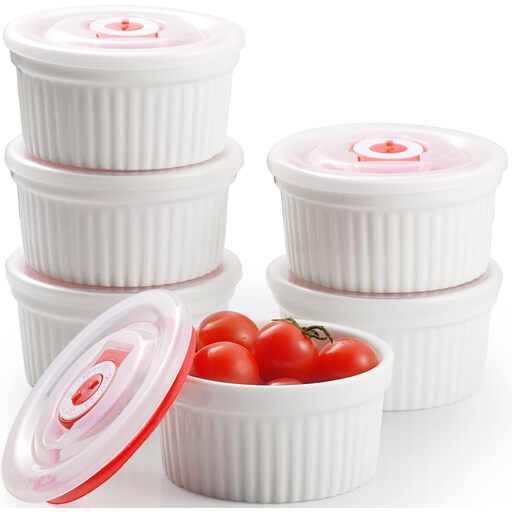
Why this choice suits this profile: This set of six ramekins works for individual portions, desserts, sauces and meal prep. The lids with a date dial make it easy to organise food in the fridge or freezer.
The container and lid are described separately: the ceramic is oven-safe, microwave-safe, dishwasher-safe and freezer-safe, while the lids are designed for hand washing and microwave use up to 120 °C.
Six porcelain ramekins, stated capacity of 8 oz each, lids with date indicator and portion-friendly sizes.

Why this choice suits this profile: Its large capacity suits hearty meals, soups and transporting several portions. The wide opening makes filling easy and allows you to eat straight from the jar.
The product page mentions vacuum insulation, a leak-proof closure and stated heat retention of 4 to 6 hours. However, it is recommended not to turn the container upside down and to wash it by hand.
316 stainless steel, vacuum insulation, wide opening and 1.5 L capacity.
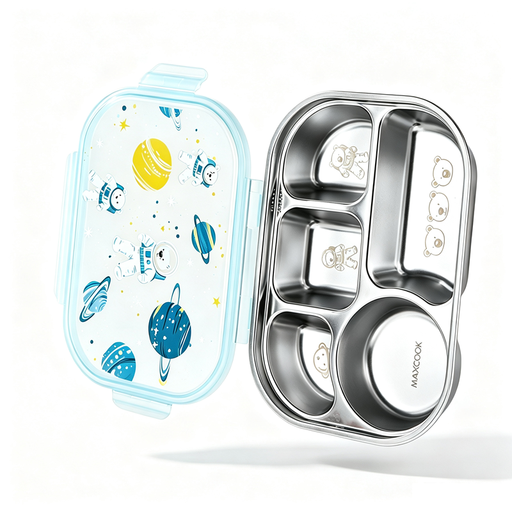
Why this choice suits this profile: Its five compartments work well for structured meals, portion prep and picnics. This size can also suit children’s lunches, under adult supervision.
The product page clearly details the usage limits: no oven or microwave, hand washing recommended and check the clips before transport. These details reduce the risk of misusing the metal.
316L stainless steel, five compartments, four closure loops and a polypropylene lid.
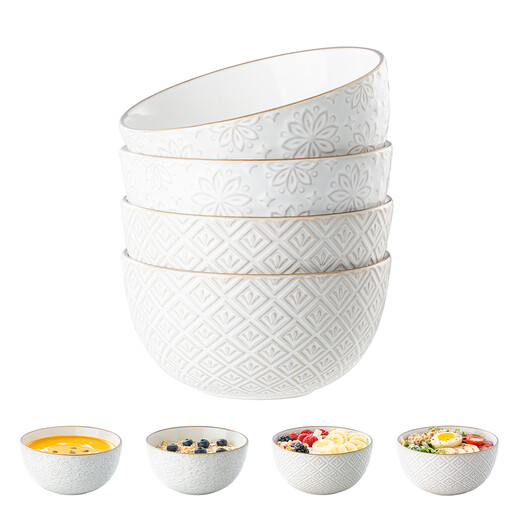
Why this choice suits this profile: These ceramic bowls work for cereals, soups, salads, fruit, noodles and dishes served at the table. Their stackable design saves cupboard space.
The product page distinguishes the permitted uses and states compatibility with the dishwasher, microwave, oven and freezer. However, these are serving bowls without a lid for transport.
Set of four bowls, glazed ceramic, stackable design and distinct embossed patterns.
We’ve put together a comprehensive, real-time updated selection of products that meet these demanding criteria and European safety standards.
For a dry or mixed dish, a compartmentalised lunch box stops foods from mixing together. For soup or a hot meal, go for a wide-opening vacuum-insulated food jar. Always check the seal, capacity and transport conditions stated by the manufacturer.
Glass lets you quickly identify the contents and can be used for reheating when declared compatible. Stainless steel is generally lighter and better suited to travel, but it must not go in the microwave. The right choice therefore depends on your intended use and the appliances you have.
Wash the container promptly after use, dry it thoroughly and let the seals air out before closing the box. Avoid thermal shock, abrasive products and prolonged storage of highly acidic or salty foods when the instructions advise against it. Replace any cracked lid or deformed seal to maintain the seal.