
Livraison le jour même ou le lendemain

Qualité garantie

Débloquez vos offres de bienvenue: Livraison GRATUITE | Jusqu'à -80 % | 30 jours d'essai gratuits à JoyPlus
Téléchargez l'application
A tidy kitchen and food that stays fresh longer isn't a luxury—it's common sense. Yet, choosing the right food storage container can quickly become a headache. Caught between manufacturers' promises and the harsh reality of daily use, we often end up with cupboards full of disappointing containers. Before your next purchase, let's review the pitfalls to avoid so you can finally find that perfect container.
To stop making mistakes and invest in kitchen storage for dry foods that is truly effective and durable, there are three criteria to examine closely.
The choice of material has a direct impact on preservation, maintenance, and aesthetics.
A container's true airtightness depends entirely on the quality of its seal. Opt for lids with a silicone gasket that is both flexible and thick. It must fit the rim of the container perfectly to create an impenetrable barrier against air and moisture. Systems with four-sided clips or screw-on lids generally provide good pressure to keep the seal in place.
To optimize every square inch of your cupboards, the watchword is: stackable! Therefore, prioritize a stackable food container. Square or rectangular shapes are your best allies: they fit together perfectly, without wasting space, in cupboards and in the refrigerator. Also, consider the opening: a wide mouth makes filling, accessing the contents, and cleaning much easier. Opting for a set of storage containers from the same range is often the best bet: visual consistency and modularity guaranteed.
Rather than an endless list, here are a few options that meet specific needs while avoiding the pitfalls mentioned.
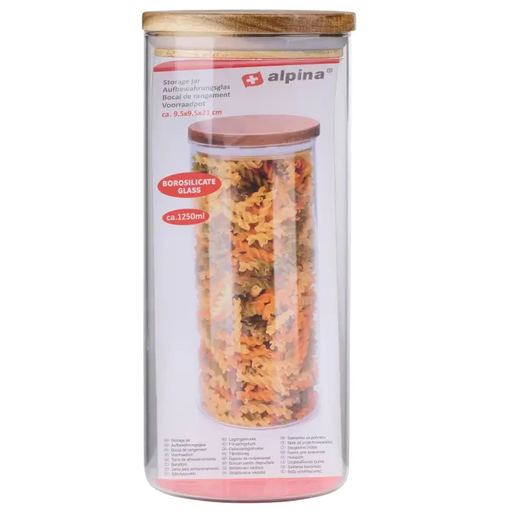
Why we chose it: Perfect for bulk-food fans who love to display their beautiful pasta, rice, or legumes. The combination of glass and an acacia wood lid is a winning formula for a kitchen with a natural, modern feel.
The glass body retains neither stains nor odours. The wooden lid, equipped with a gasket, ensures a proper seal for dry foods, unlike purely decorative lids.
Its square shape is a major asset for space optimization, allowing for efficient side-by-side storage on a shelf.
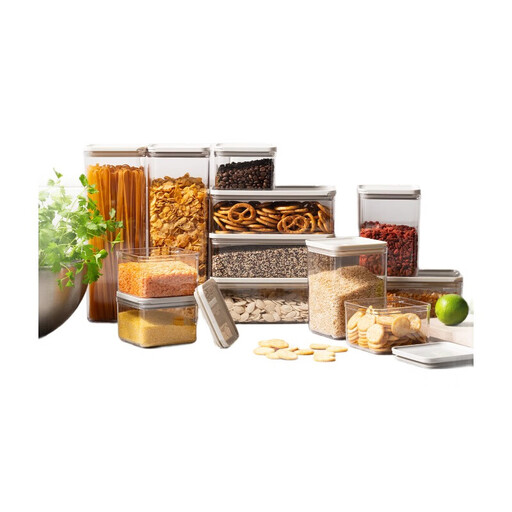
Why we chose it: The all-in-one solution for flawless organization. This set of storage containers comes in various sizes to suit all your needs, from spices to flour. The system's uniformity and modularity are the key to a pristine pantry.
It avoids the "pointless design" trap by offering a coherent and stackable system. Made from BPA-free plastic and dishwasher-safe, these containers are designed for intensive family use.
A complete set of 12 stackable pieces in 4 different sizes, providing a versatile and space-saving storage solution.

Why we chose it: The essential companion for bringing a hot meal to the office or on the go. Its generous 1.5L capacity allows you to pack a soup, a saucy dish, or chili, which will stay hot until your lunch break.
This isn't just a plastic box, but a true hot food thermos. Its vacuum insulation is designed for one thing: maintaining temperature, where a standard container would give up.
Its secret: double-wall 316 stainless steel insulation that retains heat for 4 to 6 hours. Bonus: its wide mouth makes filling, serving, and cleaning easy.
Discover our full selection of products that meet our quality criteria and food safety standards.
The foolproof test: fill the container halfway with water, close it securely, and shake it over the sink. If not a single drop escapes, it's a sign of an effective seal and therefore good airtightness.
Yes, provided you follow a few maintenance rules. Since wood is a living material, it should never be submerged in water or put in the dishwasher. Wiping it with a damp cloth followed by immediate drying is enough to clean it. Acacia, which is very common for this use, is a dense and resistant wood that will last for years with minimal care.
Absolutely not! It is imperative to always check the manufacturer's recommendations. As a general rule, glass and plastic containers can go in. However, lids (especially those made of wood, with complex seals, or specific mechanisms like on an airtight coffee canister) should almost always be washed by hand to preserve their effectiveness and lifespan.