
Livraison le jour même ou le lendemain

Qualité garantie

Débloquez vos offres de bienvenue: Livraison GRATUITE | Jusqu'à -80 % | 30 jours d'essai gratuits à JoyPlus
Téléchargez l'application
Juggling leftovers, prepping meals for the week, or simply organizing your pantry can quickly become a headache. Between leaky containers, lost lids, and stained materials, finding the right food storage container is a crucial mission to preserve freshness and optimize space. In this guide, we break down the essential criteria and present our selection of the best models to help you make the right choice—one that truly fits your daily life.
Before you settle on a model, a few points deserve your attention. They will make all the difference in your daily routine.
This is often the first question that comes up, and each material has its advantages.
Glass food containers: Prized for their durability and completely neutral properties, glass food containers don't retain odors or stains, even from the dreaded tomato sauce. Borosilicate glass, in particular, handles thermal shock without flinching, making it ideal for going from the fridge to the microwave without transferring contents. It's the top-tier option for anyone seeking a healthy and ultra-durable material. Its only downsides? Its weight and fragility, which require a bit more care.
Plastic: Lighter and generally more affordable, plastic is the king of portability. For food use, it's essential to choose a model guaranteed to be BPA-free (bisphenol A). Modern designs are often created as stackable containers, a real plus for optimizing space in cupboards or the fridge. Perfect for dry goods, salads, or sandwiches on the go.
A perfectly airtight food container is key for optimal preservation and for avoiding the disaster of a saucy dish spilling in your bag.
The locking system: Clip systems (sometimes called "snap-lock") are often the most reliable for a leak-proof seal. They are essential for carrying a meal container with soup or a saucy dish to the office. A silicone gasket is an extra guarantee of security: check for its presence.
Versatility: Think about your routine. Do you need containers that are microwave, freezer, and dishwasher safe? Do you practice meal prep? If so, a set of food storage containers in various sizes will be your best ally for preparing the week's meals. Finally, don't underestimate the convenience of stackable containers (for fridge organization) or nesting ones (which fit inside each other for maximum space-saving in cupboards).
To help you choose, we've selected several models that excel in different categories: daily use, transport, or pure organization.
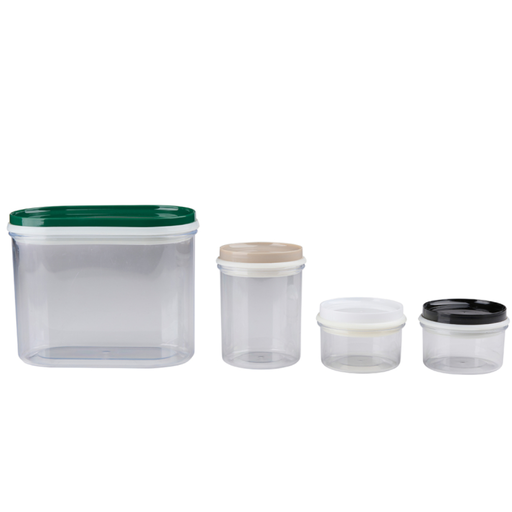
This four-piece set is a simple and functional solution for everyday storage needs. Made of polypropylene (PP) plastic, it is lightweight and durable. Its stackable design makes it an ally for optimizing space in the refrigerator or cupboards.
An excellent starter kit for students, single individuals, or anyone looking for a simple, budget-friendly solution for storing leftovers and dry goods.
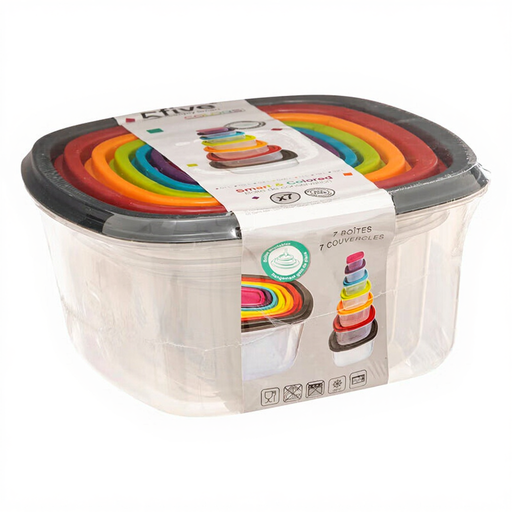
Seven sizes, seven colors: this 5 five set of storage containers focuses on visual organization and ultra-compact storage. Their nesting design (they fit inside one another) is a major asset for freeing up cupboard space.
Perfect for families and meal prep fans who juggle numerous containers. It's also the smart choice for small kitchens where every square inch counts.
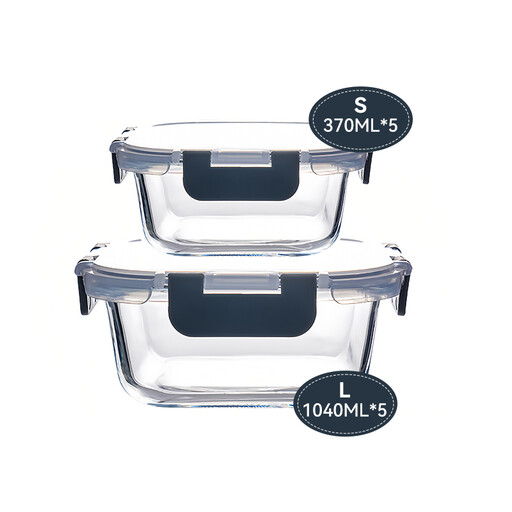
Taking it to the next level, this complete glass set is the premium solution for meal prep and storage. The choice of borosilicate glass guarantees resistance to thermal shock and perfect hygiene. The ideal meal container for the office: healthy, durable, and practical.
For those who don't compromise on material quality, who reheat their lunch at the office, and for intensive meal prep enthusiasts looking for a healthy solution that's built to last.
Our selection covers the most common uses, but the world of food storage containers is much broader. Extra-large capacities, special formats, alternative materials... there is a solution for every need.
? Explore our full range of transparent packaging boxes to find the right solution for you.
Bisphenol A (BPA) is a chemical compound sometimes used in the manufacturing of certain plastics. Its use in food containers is now highly regulated in Europe as a precautionary measure. The "BPA-free" label therefore guarantees that the product does not contain it, a mark of safety for many consumers.
A foolproof home remedy: fill the container with a mixture of warm water and white vinegar (or baking soda). Let it sit for a few hours before rinsing thoroughly. Letting the container air dry, without its lid, also helps eliminate any lingering stubborn odors.
Yes, provided you follow one golden rule. Opt for a borosilicate glass container, designed to withstand extreme temperatures. Most importantly, never fill it to the brim! Liquids expand when they freeze. Always leave 2 to 3 cm of free space below the lid to prevent the pressure from shattering the glass.