
Livraison le jour même ou le lendemain

Qualité garantie

Débloquez vos offres de bienvenue: Livraison GRATUITE | Jusqu'à -80 % | 30 jours d'essai gratuits à JoyPlus
Téléchargez l'application
An airtight food storage container can make weekly meals easier, reduce odours in the fridge and simplify taking lunch with you. However, some purchases quickly prove disappointing: a leaking lid, an unsuitable size or a material that is not microwave-safe.
Before you add anything to your basket, here are the criteria that really matter when choosing a food storage container, lunch box or container for storing food.
A lid that is simply clipped on or placed over the container may be sufficient for dry foods, but it quickly shows its limitations with soup, sauce or food in vinaigrette. To help prevent leaks, look for a silicone seal and a closing system that applies even pressure all the way around the rim.
Four-sided clips are generally designed to keep the lid securely in place across the whole container. However, you should check that every clip is properly locked before carrying the container.
A borosilicate glass container may be suitable for reheating, depending on the manufacturer’s instructions, whereas a stainless steel container is generally not microwave-safe. Similarly, a lid may need to be removed, left ajar or washed by hand.
So don’t rely solely on claims such as ‘heat-resistant’ or ‘versatile’. Check the precise guidance concerning the microwave, freezer and dishwasher.
A 2- or 3-litre container can be useful for storing leftovers from a family meal, but it will take up more room in an already full fridge. Conversely, a small container may not hold a complete portion.
For meal prep, sizes from 500 to 1,000 ml are often the easiest to portion out. For bulk ingredients, family-sized preparations or cupboard storage, a large stackable container will generally be more practical.
A leak-proof container needs to combine a well-fitting lid with a correctly positioned seal. Removable seals make cleaning easier, but they can be put back incorrectly after washing. Before each use, check their position and the overall condition of the silicone.
For liquids, leave a little space beneath the lid and transport the container flat. An airtight closure cannot compensate for a damaged or improperly locked lid.
A microwave-safe container must be used in accordance with its instructions. In many cases, the lid must be removed or left ajar to allow steam to escape. Containers intended for the freezer should also have some spare capacity, as liquid foods expand when they freeze.
Finally, measure the space available in your drawers, fridge and lunch bag. A rectangular shape often makes storage and stacking easier.
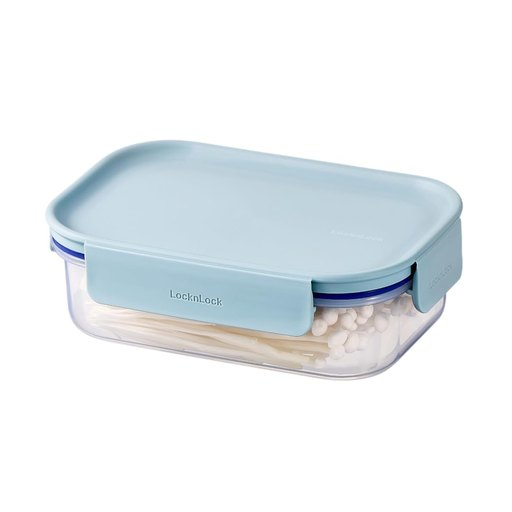
Why this choice suits this profile : With its 910 ml capacity, this size is suitable for individual meals, leftovers and everyday meal prep. Its stackable design helps you organise the fridge or cupboard without building up a collection of different-sized containers.
The specifications state that it has an airtight, leak-proof closure and is compatible with the freezer, microwave and dishwasher. The lid must be removed or left ajar when reheating food.
BPA-free PP plastic, 910 ml rectangular format, stackable design and dishwasher-safe construction.
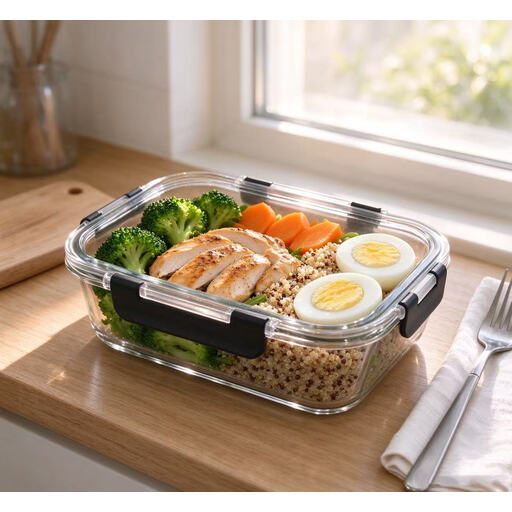
Why this choice suits this profile : This set includes five 1,040 ml containers and five smaller 370 ml containers. It covers a wide range of uses, from taking lunch to storing small portions.
The choice of sizes means you won’t need to use a large container for a small portion, or vice versa. However, check the specific guidance for each lid before placing the containers in the microwave or freezer.
Borosilicate glass, according to the product description, clip-lock lids and a choice of two capacities for flexible organisation.
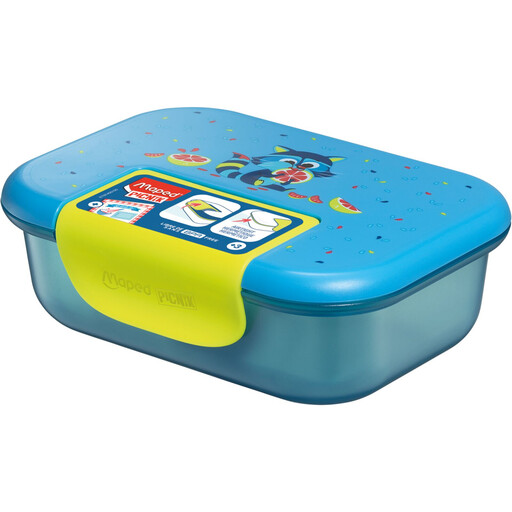
Why this choice suits this profile : This 900 ml stainless steel lunch box is suitable for children and adults who regularly take meals to school, work or picnics.
Its lack of microwave compatibility is clearly stated, helping to prevent misuse. The attached lid also means there’s no separate piece to lose.
Stainless steel, 900 ml capacity, attached lid, large fluorescent fastening and dishwasher-safe construction.
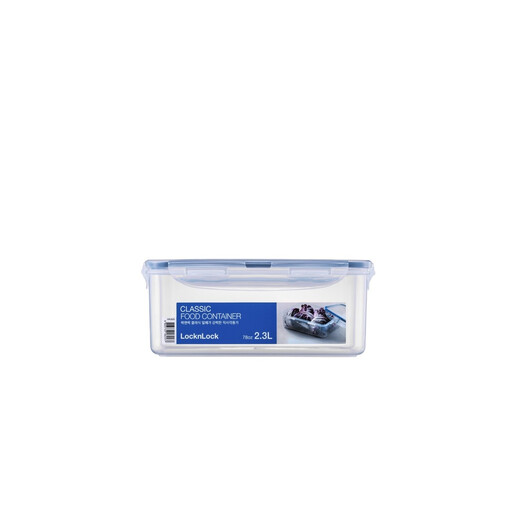
Why this choice suits this profile : Its 2.3-litre capacity is ideal for storing large quantities of prepared food, family leftovers or bulk ingredients, in the fridge or freezer.
The transparent body lets you identify the contents at a glance, while the four clips and silicone seal are designed to help prevent leaks. The lid must be removed before reheating.
Food-contact-safe PP plastic, silicone seal and stated compatibility with the freezer, microwave and dishwasher.
We’ve put together a complete, real-time updated list of products that fully meet these strict selection criteria and European safety regulations.
A few simple habits are all it takes to preserve the airtight seal of your food storage container:
Service life depends on the material, how often the container is washed and the condition of the seal. A container that no longer closes properly, has a crack or has a warped lid should be replaced.
Only if the manufacturer permits it. The lid will often need to be removed or left ajar. Stainless steel containers must not be used in the microwave. For glass and plastic, follow the temperature limits and the instructions specific to the model.
A volume of 370 to 500 ml is suitable for small portions or side dishes. A 700 to 1,000 ml lunch box can hold a complete lunch. To store leftovers for a family, choose a container of 2 litres or more, while taking the available space into account.
Rinse the container soon after use, clean the seal thoroughly and leave each part to air-dry. Glass containers are often popular because their non-porous surface retains fewer odours. For extended storage, avoid leaving food that is still very hot in a sealed container.