
Livraison le jour même ou le lendemain

Qualité garantie

Débloquez vos offres de bienvenue: Livraison GRATUITE | Jusqu'à -80 % | 30 jours d'essai gratuits à JoyPlus
Téléchargez l'application
The screech of a chair scratching the hardwood, the discovery of yet another scuff on a floor you thought was pristine… These everyday nightmares have a simple solution: the adhesive felt pad. But be warned, not all pads are created equal. The wrong choice is a surefire way to waste time and money, and ultimately, protect nothing at all. As a product expert at Joybuy, my mission is to help you see clearly and choose a truly reliable solution, cutting through the marketing jargon.
Before you dive in headfirst, let's review the two pitfalls you must absolutely avoid.
To avoid these mishaps, you just need to check three very simple technical points. This is what separates a useless gadget from a truly durable accessory.
A pad's ability to protect your floors and muffle noise depends entirely on the quality of its material. A good felt pad is identifiable by its high-density fibres.
A good furniture glider pad should never come unstuck. The quality of the glue is therefore a non-negotiable criterion. Favour products labelled "extra-strong" or "high-performance". A quality adhesive ensures the pad becomes one with the furniture leg, even with heavy use. For perfect adhesion, don't forget the golden rule: the surface must be clean, dry, and dust-free before application.
Here, it all depends on your furniture and your projects.
To illustrate these criteria, here are a few products that meet very specific needs.
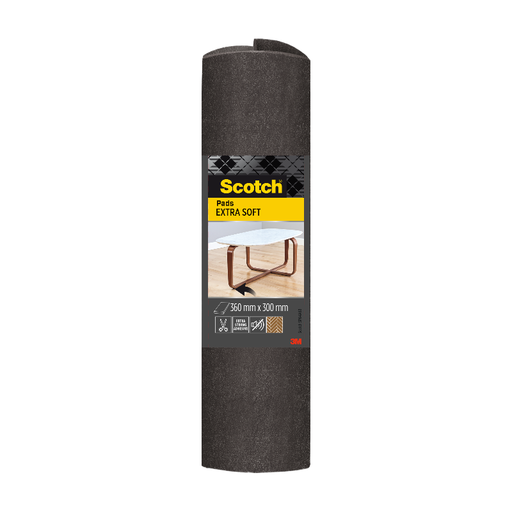
Why we recommend it: This large cut-to-size sheet is THE solution for wide, rectangular, or unusually shaped furniture legs. It allows you to create a perfectly adapted protector, whether for a bookshelf, a sofa, or a TV stand.
By allowing you to cut the exact shape you need, you ensure complete coverage of the furniture leg. The high-density felt and powerful adhesive guarantee protection that won't fail.
Maximum versatility: a single sheet can be used to protect several pieces of furniture of different sizes and shapes. Ideal for getting the most out of your purchase.
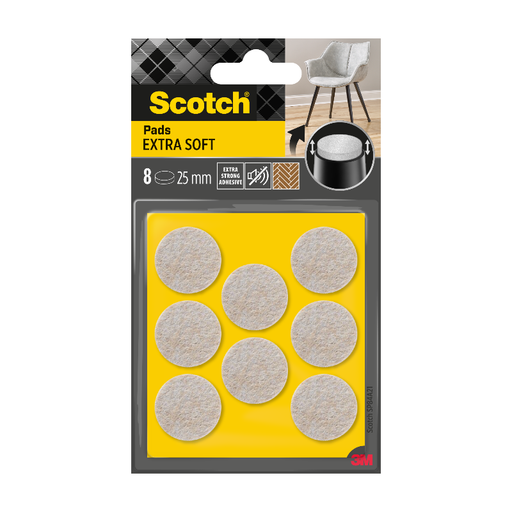
Why we recommend it: With its standard 25 mm diameter, this pad is the perfect all-rounder for most dining chairs, stools, and other small furniture. The pack of 8 lets you equip two chairs in a flash.
The extra-strong adhesive ensures the pad won't detach, even with the daily back-and-forth of chairs. The high-density felt resists crushing and effectively protects the floor from scratches.
Ready to use: no cutting required. Just peel, stick, and enjoy immediate protection and a noticeable reduction in noise.
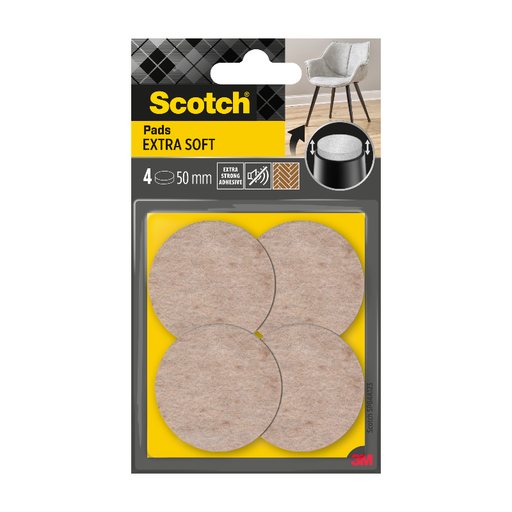
Why we recommend it: Its large 50 mm diameter is specially designed to handle heavy loads. It's perfect for the legs of solid tables, wardrobes, sofas, or armchairs, where the significant weight requires a larger contact area to avoid denting the floor.
Its large surface area and high-density felt prevent the pad from being crushed under pressure. It distributes weight more evenly, offering maximum protection against dents and deep scratches.
Heavy-duty protection: the size and density of the felt are optimised for heavy furniture, precisely where smaller pads would fail in record time.
Discover our complete selection of products that meet our quality criteria and current standards.
It all depends on the quality of the pad, the weight of the furniture, and how often it's moved. A high-quality model on a chair used daily can last between one and three years. Our advice: inspect them once a year and replace them as soon as the felt is visibly compressed or the adhesive shows signs of weakening.
Careful preparation is the secret to a long-lasting bond.
Felt pads are the champions for hard, smooth floors like hardwood, laminate, tile, linoleum, or vinyl. However, they should be avoided on carpets or rugs: the felt fibres would catch, which would surely rip the pad off. For those surfaces, opt for smooth plastic gliders instead, which are much more suitable.