
Livraison le jour même ou le lendemain

Qualité garantie

Débloquez vos offres de bienvenue: Livraison GRATUITE | Jusqu'à -80 % | 30 jours d'essai gratuits à JoyPlus
Téléchargez l'application
The screech of a chair on the tile, that one dreaded scratch on a brand-new hardwood floor, the dresser that's impossible to move for cleaning... We're all familiar with these everyday annoyances. Yet, the solution is surprisingly simple: the furniture pad. When chosen correctly, it protects your floors, eliminates noise, and makes your life easier.
But with the overwhelming number of options available, it's not always easy to navigate the choices. This guide is here to bring clarity, breaking down the key criteria and presenting practical solutions for all your furniture. Whether you're in the middle of a move or simply want to take better care of your home, follow our guide!
Before you buy, there are three criteria to carefully consider for effective floor protection: the material, the attachment type, and, of course, compatibility with your furniture.
The choice of material will depend on your flooring and the desired effect.
Most pads today are self-adhesive for a quick and effortless installation. The key to a secure fit? Meticulous preparation. The surface of the furniture leg must be perfectly clean, dry, and free of grease before application. Nail-on or screw-in versions, on the other hand, guarantee a much more durable attachment. This is the preferred solution for dining chairs, which are subjected to daily wear and tear, but it does require a few basic tools.
To be both effective and discreet, the pad must perfectly match the shape and size of the furniture leg. A pad that's too small will wear out in record time, while one that's too large will not only be unsightly but also risks peeling off. A simple tip: measure the diameter (for round legs) or width (for square/rectangular legs) before ordering.
We have selected several top-rated products, each designed to meet a specific need.
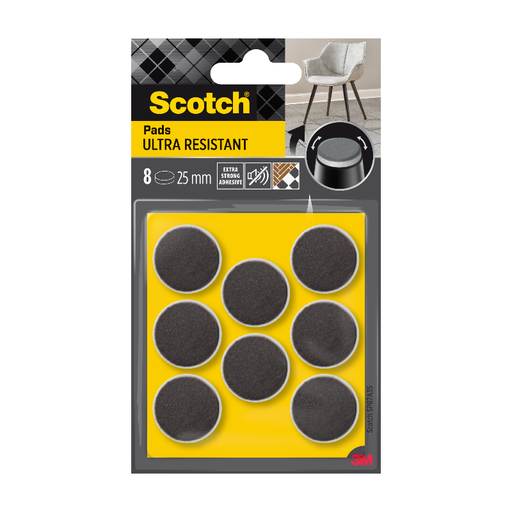
Key Feature: These pads combine high-density felt with a particularly heavy-duty adhesive. Their real advantage is the rounded-edge design, a game-changing feature for tiled floors. According to 3M, this shape makes them three times more resistant than a standard pad when sliding over tile grout lines.
Highlights:
Best for: Those with tile floors, especially in kitchens or bathrooms, who need a robust solution for their chairs and tables.
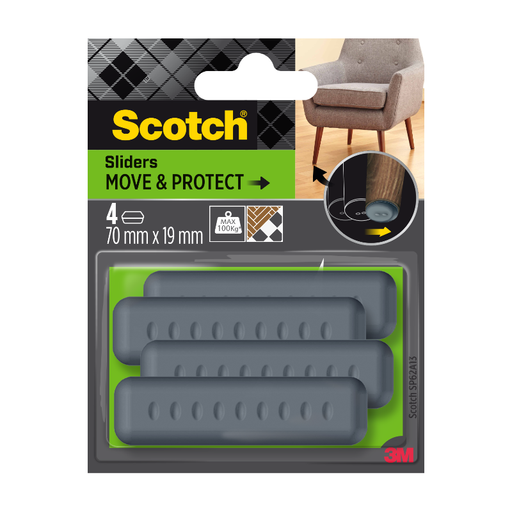
Key Feature: This slider pad is specially designed for moving heavy items without breaking your back. Its honeycomb structure, also according to 3M, makes sliding 50% easier compared to unpadded furniture. It's designed to stay securely in place without leaving any residue.
Highlights:
Best for: Essential for very heavy furniture like sofas, wardrobes, or bookcases. An invaluable tool for spring cleaning or moving.
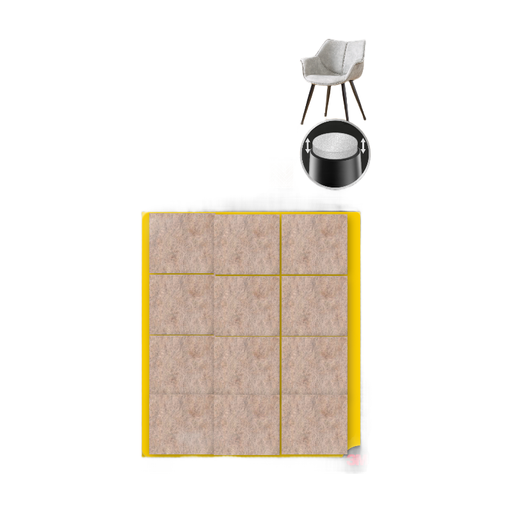
Key Feature: Made from natural wool fibres, this pad stands out for its softness and thickness. It's the premium option for floor protection on the most delicate surfaces.
Highlights:
Best for: Anyone with varnished hardwood, lacquered floors, or other precious surfaces who demands maximum protection.
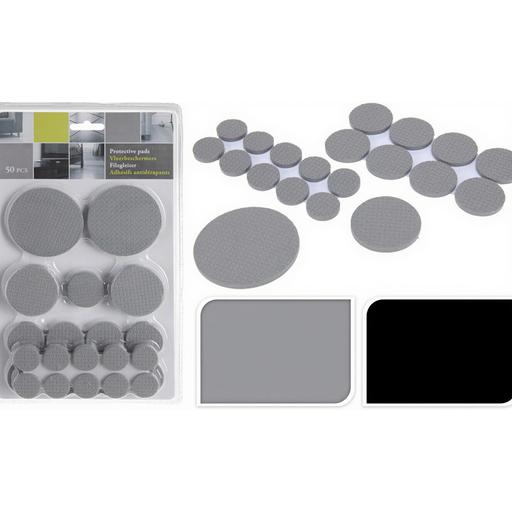
Key Feature: This great-value 50-piece set is the ultimate multi-purpose solution for stabilising countless items around the house. This non-slip rubber pad is designed to grip the floor and prevent furniture from moving.
Highlights:
Best for: A must-have for securing a vibrating washing machine, a sofa that slides on tile, or even small decorative objects. The essential kit to always have in a drawer.
Our selection covers the most common uses, but every home is unique. If you haven't found the perfect match here, know that there is a multitude of other shapes, sizes, and materials available.
? Explore our full range of adhesive pads to find the custom solution for every piece of furniture in your home.
1. How do I properly apply an adhesive pad? For maximum adhesion, the leg surface must be perfectly clean. Wipe it with a cloth dampened with denatured alcohol to remove any dust, grease, or wax. Once the surface is completely dry, peel off the protective film, apply the pad, and press firmly for 30 seconds. Ideally, wait an hour or two before using the furniture to allow the adhesive to set completely.
2. How often should I replace my chair pads? The lifespan of a chair leg protector depends on its quality, frequency of use, and the type of flooring. Inspect them every 6 to 12 months. If they are compressed, clogged with dust and hair, or simply worn out, it's time to replace them. A worn-out pad loses all its effectiveness and can even end up scratching your floor.
3. Which pad should I choose to avoid scratching a hardwood floor? For hardwood floors—whether varnished, oiled, or waxed—the felt pad remains the gold standard. For the most delicate floors (like lacquered or antique wood), opt for a wool felt pad, which is even softer and thicker. In any case, avoid hard plastic or metal pads at all costs, as they can cause irreversible damage.