
Livraison le jour même ou le lendemain

Qualité garantie

Débloquez vos offres de bienvenue: Livraison GRATUITE | Jusqu'à -80 % | 30 jours d'essai gratuits à JoyPlus
Téléchargez l'application
A squeaky piece of furniture, a chair leaving marks on the parquet or a table that is difficult to move can quickly lead to unnecessary and frustrating expenses. Furniture pads offer a simple solution, provided you choose a type suited to your flooring, the weight of the furniture and how you intend to use it.
Before buying self-adhesive felt pads or furniture sliders, there are three pitfalls to avoid.
On parquet, laminate flooring, lino or any other delicate surface, dense wool felt effectively protects chair and table legs. Anti-scratch felt pads prevent direct contact between the furniture and the floor, provided they are kept clean and replaced when they start to wear.
On tiled flooring, particularly in a bathroom or kitchen, check that the pad can cope with joints and minor unevenness. Two-material felt pads with rounded edges generally move over the joins between tiles more easily than straight-edged models. They may also be suitable for some rough floors.
Furniture sliders with a honeycomb structure are better suited to regularly moving a sofa, wardrobe or heavy appliance. However, they do not replace basic precautions: lift the furniture slightly when necessary and check that there are no small stones on the floor.
Measure the base of the leg before placing your order. The most common sizes include:
For a square or irregularly shaped leg, Scotch self-adhesive pads can easily be trimmed with a pair of scissors. The trimmed piece should be slightly smaller than or the same size as the base of the leg, to prevent any edge from sticking out.
The stated load capacity often applies to a pack of four pads, rather than to a single piece. Some Scotch honeycomb sliders, for example, have a maximum load capacity of 100 kg or 400 kg for four units, depending on the model. Distribute the weight evenly and take into account the contents of the furniture, such as books stored in a bookcase.
Installation has a direct impact on how securely the pad stays in place:
A monthly check will help you spot flattened felt, an edge that is coming away or a dirty slider. If this happens, replace the affected piece rather than continuing to move the furniture with inadequate protection.
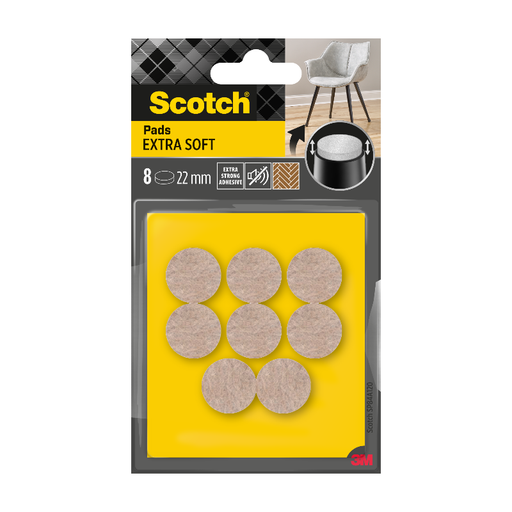
Why this choice suits this profile : Their round 22 mm size and pack of 8 are suitable for chairs, tables and small items of everyday furniture.
The clearly stated diameter reduces the risk of measuring incorrectly. The self-adhesive design also means you do not need to buy additional tools.
Dense wool felt, practical adhesive and a round format suitable for parquet, laminate flooring and similar surfaces.
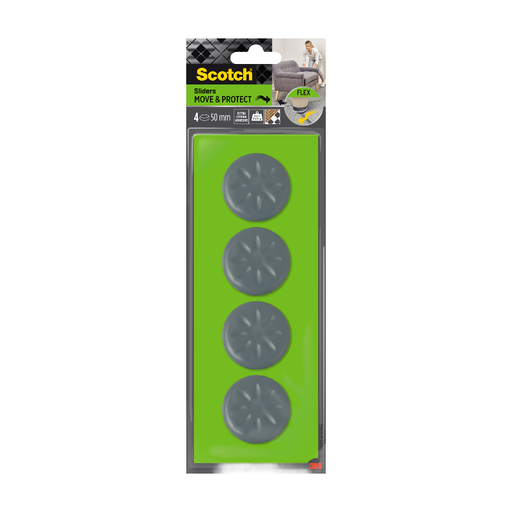
Why this choice suits this profile : This slider is designed for heavy furniture or items that are difficult to reposition on floors with minor unevenness.
Its articulated design and cushioning foam help reduce the risk of catching on uneven surfaces, provided it is installed correctly.
A 50 mm diameter, honeycomb structure and a stated load capacity of up to 400 kg for 4 sliders.
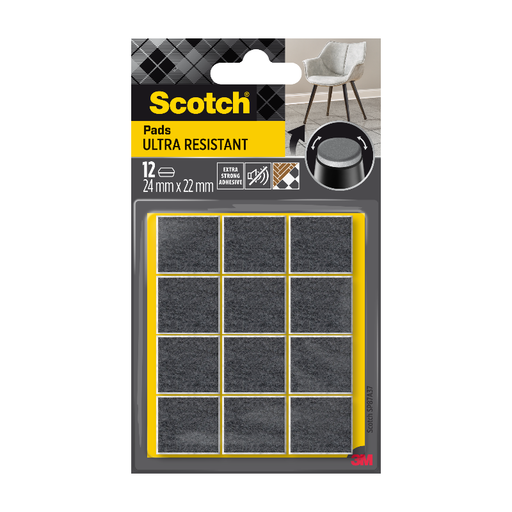
Why this choice suits this profile : Its rounded shape is suitable for chairs, stools and small items of furniture that are regularly moved across tiled flooring.
Its rounded edge is described as more resistant to moving over tile joints than some straight-edged models.
A dense two-material design, 12 pads per pack and reinforced adhesive, according to the product information.
We have put together a comprehensive, real-time updated selection of products that meet these demanding criteria and European safety regulations.
Floor protection pads should be fitted to stable furniture. Avoid attaching them to a peeling varnished, damp or very dusty surface. For furniture that is used frequently, inspect all four contact points to identify any uneven wear.
Noise-reducing pads can help minimise movement noise. The product information for several references states that noise reduction can reach 30 decibels, but the result depends on the floor, the furniture and the conditions of use. This figure therefore does not guarantee the same level of reduction in every home.
Small components should be kept out of the reach of children and animals. Some models are intended for indoor use only and for furniture that is static or moved slowly. Always observe the maximum load capacity, installation instructions and warnings shown on the packaging.
Choose parquet pads made from dense wool felt, with a surface large enough to distribute pressure. Sizes from 22 to 34 mm are often suitable for chair and table legs, but measuring the leg remains the deciding factor. Replace the felt as soon as it becomes flattened or collects dust.
Their lifespan depends on the weight of the furniture, how often it is moved, how clean the surface is and the level of humidity. Applying them to a clean, completely dry leg significantly improves their staying power. For heavy furniture, check the stated load capacity for the pack of four and regularly check that the pads are still firmly attached.
Felt tile pads are suitable for furniture moved smoothly and without jolts. If the furniture is heavy or regularly crosses joints, a honeycomb slider or a two-material model with a rounded edge will often be more appropriate. Take into account the weight of the furniture, the available diameter and how often it is moved.