
Livraison le jour même ou le lendemain

Qualité garantie

Débloquez vos offres de bienvenue: Livraison GRATUITE | Jusqu'à -80 % | 30 jours d'essai gratuits à JoyPlus
Téléchargez l'application
The screech of a chair on tile, a sudden scratch on a brand-new hardwood floor… we all know these minor daily frustrations. Fortunately, a simple and cost-effective solution exists to preserve the peace in your home and the integrity of your floors?: the adhesive felt furniture pad.
But with an overwhelming number of options available, how do you make the right choice?? This guide is here to shed some light and help you find the perfect pad for your needs, whether you want to protect your floor from scratches or restore quiet with a noise-dampening pad.
Before we get to our top picks, let's review the essential criteria for making a smart purchase.
The choice of material is crucial?: it determines the effectiveness and lifespan of your pads.
The shape of the pad isn't just about aesthetics; it's also a matter of practicality.
A furniture glider pad is subjected to heavy daily use. The quality of its adhesive is therefore not a detail—it's an essential criterion. A powerful adhesive ensures the pad won't peel off at the first opportunity, even on chairs that are moved dozens of times a day. It also prevents it from becoming a dust trap.
We have selected products for you that meet a variety of needs, from the most rugged to the most precious floors.
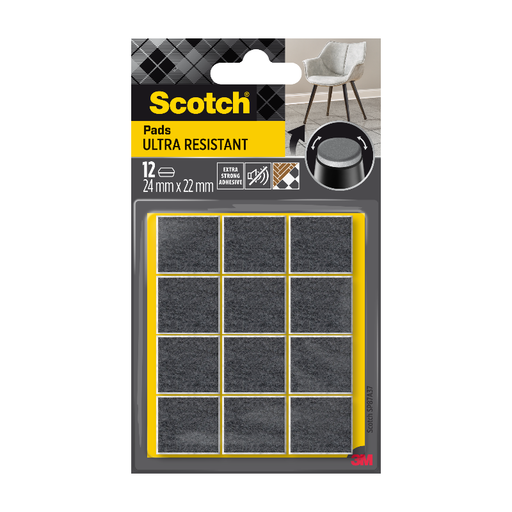
Why it stands out?: These pads were designed to meet the challenge of tiled floors. Their rounded edges and ultra-high-density dual-material structure give them unparalleled resistance when crossing grout lines. According to their manufacturer, 3M, this design makes them three times more resistant to wear under these conditions compared to straight-edged pads. In terms of noise, they promise a sound reduction of up to 30 decibels.
Highlights?:
Best for?? Perfect for tiled kitchens, bathrooms, and living areas. It's the ideal solution for the legs of chairs, stools, and small furniture that are moved frequently.
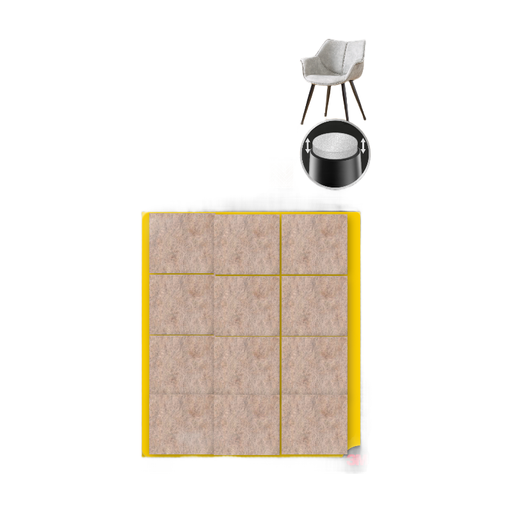
Why it stands out?: Made from natural wool fibres, these pads are distinguished by their softness and thickness. Their mission?: to offer absolute protection for the most precious surfaces, such as lacquered hardwood, glossy floors, or fragile tabletops. The 3M adhesive ensures an impeccable hold, while their beige colour blends in discreetly on light-coloured woods.
Highlights?:
Best for?? The choice for peace of mind for anyone who values their prized floors or fragile furniture. Essential for dining room chairs on a sealed hardwood floor or under decorative objects placed on a lacquered table.
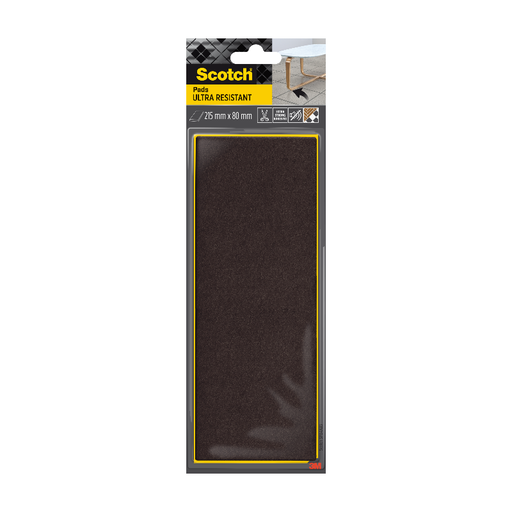
Why it stands out?: This large adhesive felt sheet (215 x 80 mm) is the 100% custom solution. A simple pair of scissors is all you need to cut the exact shape and size required for any furniture leg, appliance base, or object. Its ultra-high-density dual-material composition ensures the same effectiveness on smooth floors and rougher surfaces.
Highlights?:
Best for?? The go-to solution for DIY enthusiasts, owners of furniture with unconventional legs, or anyone looking for universal protection around the home.
Our selection covers the most common use cases, but every home has its own specific needs. Need special dimensions, original shapes, or different materials?? The available range is much more extensive.
To explore all the possibilities, take a look at our complete category of felt pads.
1. How do I properly apply an adhesive felt pad?? For maximum adhesion, the surface must be perfectly clean, dry, and free of grease. Wiping the bottom of the furniture leg with a cloth dampened with 70% alcohol is ideal. Remove the protective film, apply the pad in position, and then press firmly for about thirty seconds. It's best to wait a few hours before using the furniture to allow the adhesive to reach its optimal bond.
2. How often should I replace chair pads?? The lifespan of a pad depends on the furniture's use, its weight, and the type of floor. We recommend checking their condition every 6 to 12 months. Replace them immediately if they are worn, crushed, or starting to peel off. This ensures continuous protection.
3. Can I use the same pads on all types of floors?? It's not ideal. As we've discussed, the choice of material is essential. A wool pad, perfect for a fragile hardwood floor, will wear out prematurely on a rough tile surface. Conversely, a very dense synthetic pad might lack the softness needed for a delicate lacquered surface. Matching the pad to the floor is the key to effective and long-lasting protection.