
Livraison le jour même ou le lendemain

Qualité garantie

Débloquez vos offres de bienvenue: Livraison GRATUITE | Jusqu'à -80 % | 30 jours d'essai gratuits à JoyPlus
Téléchargez l'application
A scratched wooden floor, a chair that screeches across tiles, or a piece of furniture that's difficult to move can quickly become a source of expense and annoyance. Adhesive felt furniture pads offer a simple solution, provided you choose a model suited to the weight of the furniture, the shape of its legs, and the type of flooring.
Some offers mainly highlight "enhanced grip" or noise reduction, without specifying the conditions under which these promises hold true. Here are the criteria to check before buying, along with a selection of models suited to different uses.
A pad that is too small won't adequately cover the contact surface. It risks peeling off or leaving part of the leg rubbing directly against the floor. Conversely, a model that is too large can overhang, catch on tile grout lines, or compromise the furniture's stability.
Measure the diameter or width of the leg before choosing between a round, rectangular, or a pre-cut felt sheet to trim.
A strong adhesive doesn't always compensate for a dirty, damp, or uneven surface. Dust, wax residue, and grease significantly reduce its hold. Heavy furniture, frequently moved armchairs, and household appliances also put pads under considerable strain.
For regular use, opt for a dense construction, a full-coverage adhesive base, and a sufficiently thick felt layer.
The noise level depends on the weight of the furniture, the speed of movement, the type of floor, and the presence of grout lines. A reduction stated in decibels won't necessarily give the same result in every room. When a product listing states "up to -30 decibels", this value should be considered as data provided by the manufacturer, typically obtained under specific conditions.
Anti-noise pads can reduce friction and minor impacts, but they don't replace careful handling of the furniture.
Standard felt is suitable for chairs, side tables, and small indoor furniture. For a heavy piece of furniture or a floor subject to repeated movement, look instead for high-resistance felt pads or a dual-material construction. Models combining felt with a reinforced adhesive layer are designed to hold better than very thin protectors.
On a wooden floor, laminate flooring, or vinyl flooring, ensure the side in contact with the floor is clean, smooth, and free from particles that could cause scratches.
Always compare the pad's dimensions with the actual base of the furniture, not just the visible part of the leg.
Before applying, turn the furniture over and remove all dust. Clean the leg with a product suitable for the material, then let it dry completely. Cut the protector if necessary, remove the protective film, and press firmly for the duration stated on the product listing.
Avoid moving a heavy piece of furniture immediately. The adhesive needs time to bond, especially on slightly rough surfaces.
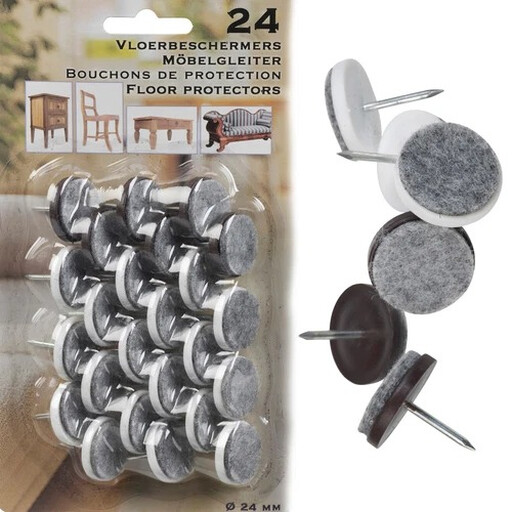
Why this choice suits this profile: this pack is ideal for those who want to equip several chairs, tables, or desks with a simple mechanical fitting.
The nail-on fixing reduces the risk of peeling off on compatible wooden legs. However, it does require a hammer and careful installation.
Pack of 24 pieces, two colour options, and nail-on fixing for indoor furniture.
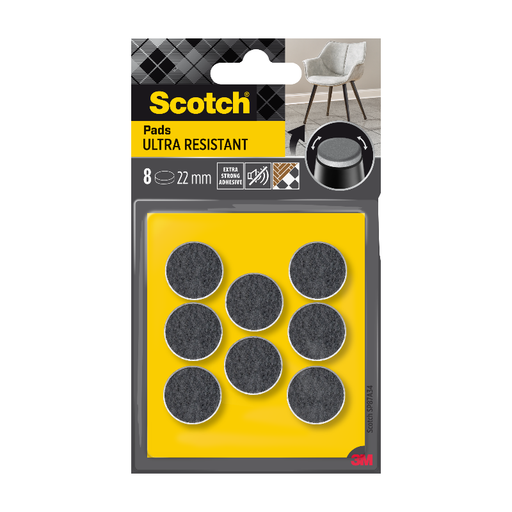
Why this choice suits this profile: this compact format is designed for furniture with fine finishes and for users seeking a discreet adhesive protector.
The dual-material construction and rounded edges address the limitations of protectors that are too thin or angular.
22 mm diameter, dual-material construction, and reinforced adhesive as stated on the product listing.
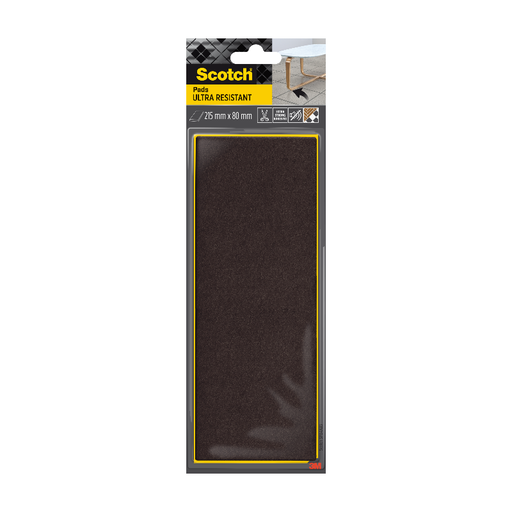
Why this choice suits this profile: the cut-to-size sheet is particularly well-suited to furniture with wide, irregular, or numerous legs, especially in a rented property.
Cutting to size avoids forcing a small pad onto a large base and allows you to tailor the material to each piece of furniture.
215 × 80 mm sheet, high-density dual-material felt, and extra-strong adhesive according to the description.
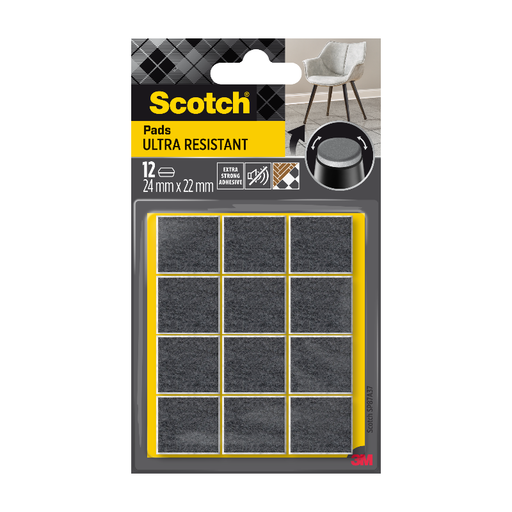
Why this choice suits this profile: this pack of 12 pieces allows you to equip several chair legs, stools, or small pieces of furniture on tiled floors.
According to the product listing, the rounded edge withstands moving over grout lines three times better than the straight model.
12 pads measuring 24 × 22 mm, rounded shape, and reinforced adhesive for tiled or rough floors.
We have compiled a comprehensive, real-time updated list of products that fully meet these strict selection criteria and European safety regulations.
To install your furniture leg protectors correctly:
Inspect the pads regularly to check for wear, dust build-up, or any peeling. A flattened pad or one loaded with small grit may no longer provide adequate protection for wood and tile floors. Replace it as soon as its surface is no longer uniform.
On vinyl or laminate flooring, also avoid leaving a very heavy piece of furniture resting on a damaged protector. For furniture that is moved frequently, check the fixing more often than for an item that always stays in place.
Yes, they are generally designed for hard floors, but their effectiveness depends on the cleanliness of the pad and the surface. Tiled floors, with their grout lines, and wooden floors may require different shapes. A rounded edge can make moving easier on a tiled floor, while a precise cut is essential on a delicate wooden floor.
The lifespan varies depending on the weight of the chair, the frequency of movement, the texture of the floor, and the quality of the installation. In a heavily used dining room, check them regularly. In a bedroom or under a piece of furniture that is rarely moved, they may stay in place for longer. There is no universal lifespan that applies to all homes.
Adhesive pads are fitted without tools and are suitable for furniture with a clean, flat, and sufficiently wide base. Nail-on models, like some felt leg protectors, require more preparation but may be better suited to compatible wooden legs. In a rented property, adhesive generally avoids damaging the furniture, provided you follow the manufacturer's instructions.