
Livraison le jour même ou le lendemain

Qualité garantie

Débloquez vos offres de bienvenue: Livraison GRATUITE | Jusqu'à -80 % | 30 jours d'essai gratuits à JoyPlus
Téléchargez l'application
By Joybuy’s Product Recommendations Manager
A coffee stain on a shirt, sauce on a tablecloth or muddy marks on children’s clothes do not necessarily require the same treatment. Yet many products are marketed as all-purpose solutions without clearly outlining their limitations. The result can be a poorly suited purchase, faded colours or a bottle that ends up at the back of the cupboard.
Before choosing a fabric stain remover, it is therefore worth considering three criteria: the type of stain, the fabric and the application method. Here are the key points to check, along with a selection of formats available on Joybuy for everyday laundry, stubborn stains and upholstery.
The phrase “for all stains” does not necessarily mean that a product is suitable for every fibre. Wool, silk, leather, waterproofed fabrics and certain treated textiles require special care. Several powder and spray stain removers in this selection explicitly state that they should not be used on wool, silk or leather.
A bleach-free stain remover can reduce the risks associated with chlorine, but reading the label remains essential. Always test the product on an inconspicuous area before treating the stain.
A larger pack is only worthwhile if it matches your usual laundry routine. A 2.7 kg stain-removing powder may suit a family running several washes a week. For a few isolated stains, a 500–750 ml spray or a 200 ml gel helps prevent overdosing and unnecessary storage.
Instead, compare the net quantity, recommended dosage and number of uses stated on the packaging.
Some products are marketed as suitable for short cycles or low-temperature washes. That does not guarantee the same results on an old, dried-in or deeply embedded stain. For grease, blood, make-up or wine stains, a pre-wash stain remover applied promptly can prove more effective than simply adding a product to the washing machine.
Greasy stains — oil, butter, sauces or foundation — generally require suitable surfactants. Enzyme-based formulas are more commonly designed to target organic stains, such as milk, chocolate, sebum and certain food marks. Active oxygen, meanwhile, is frequently used in powders and gels intended for oxidisable stains.
The Dr. Beckmann product designed for grease and oil stains, for example, specifies a targeted solvent-based formula for washable fabrics, excluding carpets and leather. For wine, coffee, tea or red-berry stains, the Dr. Beckmann Stain Devils Fruit & Drinks product states, according to its product information, that it contains oxygen-based bleaching agents and is free from chlorine, fragrance and colouring.
An effective stain remover from 20°C can make low-temperature washing easier, but the cycle temperature is not the only factor to consider. How fresh the stain is, the amount used, contact time and the type of fabric also play an important role.
Check that the product is suitable for coloured and white laundry, and always follow the care label. Wear gloves where recommended, avoid splashing into the eyes and keep products out of children’s reach. Corrosive or irritating products should be stored in their original, tightly closed packaging in a dry, well-ventilated place.
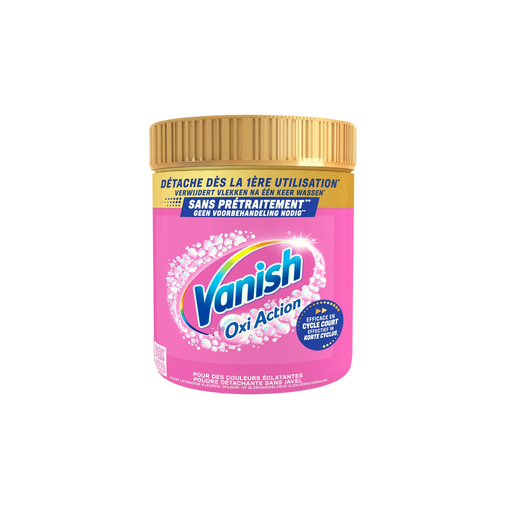
Why this choice suits this profile: its family-sized format is ideal for people who regularly use a machine stain remover on white and coloured laundry.
The product information states that it can be used from 20°C and on short cycles, while also specifying the dosage to follow on the packaging.
1.445 kg, a bleach-free formula, oxygen-based bleaching agents, surfactants and listed enzymes.
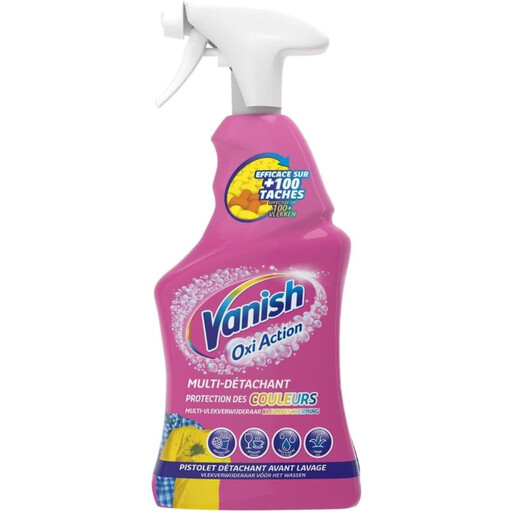
Why this choice suits this profile: its spray format lets you treat everyday or stubborn stains directly before starting a wash.
Targeted application avoids using a full dose of powder for a single stain. The product information nevertheless excludes wool, silk and leather.
750 ml bottle, application to both sides of the stain and a stated contact time of 1 to 2 minutes.
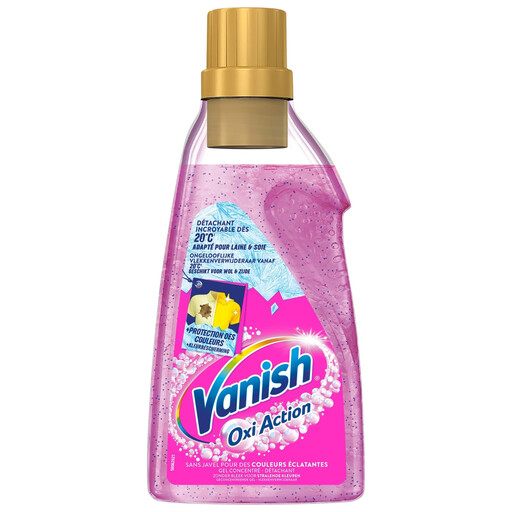
Why this choice suits this profile: according to its product information, it is intended for delicate fabrics such as wool and silk, provided that care instructions are followed.
It helps avoid automatically applying powder to a sensitive fibre. Testing on an inconspicuous area and checking the garment’s care label remain essential.
1.5 L gel format, measuring nozzle with scrubbing head and stated use from 20°C.
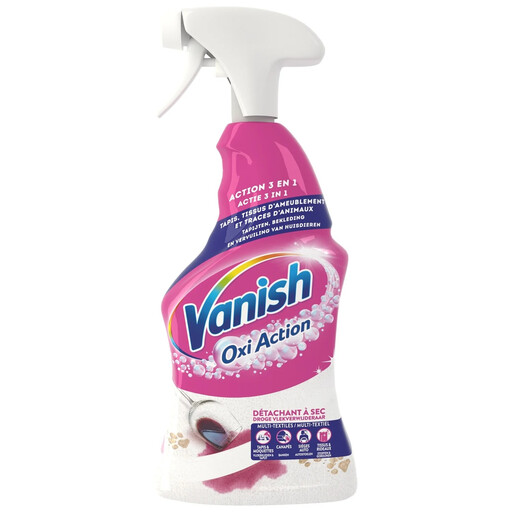
Why this choice suits this profile: it is indicated for carpets, fabrics and rugs, with application followed by blotting with a cloth.
This is not a laundry stain remover to add to the washing machine: its dry format is designed for targeted treatment of textile surfaces.
500 ml bottle, ready-to-use spray and a recommendation to test on an inconspicuous area.
Colour-catcher sheets are placed in the drum alongside your usual detergent. The VANISH models available in packs of 20 or 44 sheets are indicated for use from 30°C and should be discarded after use. They can be practical when washing mixed colours, but they do not directly treat grease, wine or mud stains.
For heavily stained laundry, choose a product suited to the type of soil and separate garments whenever required by the care label or dye.
Yes, but the result depends on the fibre, the type of stain and the permitted contact time. Do not allow the product to dry on the fabric beyond the stated duration. First test colourfastness on a concealed area.
Powder is generally better suited to regular machine washing, soaking or preparing a paste. Spray allows you to target a localised stain quickly. Gel provides precise application and may be suitable for certain delicate fabrics. In every case, follow both the product label and the garment’s care label.
No. A fabric stain remover generally complements detergent by treating a specific area or enhancing the wash. Always follow the recommended doses and never mix different chemicals, particularly products containing oxidising agents.