
Livraison le jour même ou le lendemain

Qualité garantie

Débloquez vos offres de bienvenue: Livraison GRATUITE | Jusqu'à -80 % | 30 jours d'essai gratuits à JoyPlus
Téléchargez l'application
A grease stain on a T-shirt, red wine on a tablecloth or mud on a pair of trousers – they don't all need the same treatment. Yet many shoppers still choose their fabric stain remover based on a simple promise of "fast action" or the shape of the bottle.
To avoid making the wrong choice, it's best to focus on three things: the type of stain, the surface to clean and the safety precautions. A formula designed for everyday laundry might, for example, be unsuitable for wool, silk, leather or upholstered surfaces.
The phrase "all fabrics" doesn't mean the product is suitable for every fibre. Some stain-removing sprays are only intended for cotton, polyester or machine-washable textiles. Others exclude wool, silk, leather, dry-clean-only garments or flame-retardant fabrics.
Before using any product, check the garment's care label and test it on an inconspicuous area. This precaution is especially important with a stain-removing powder that contains oxygen-based bleaching agents.
A pre-wash stain remover isn't necessarily more effective after several hours of dwell time. Depending on the formula, the active time may be just a few minutes. A pre-treatment gel, for example, may need targeted application followed by a quick wash, without letting the treated laundry dry out.
Always follow the dosage and dwell time stated on the packaging. Using too much product can make rinsing more difficult, increase the cost per wash and irritate your skin during handling.
The claim "active at low temperature" should always be read in the context of the instructions. Some powders work from 20 °C, while others claim effectiveness from 30 °C. The result also depends on the type and age of the stain, the programme you select and the detergent you use.
A formula that works with short cycles can be handy for everyday use, especially for families. However, it doesn't replace the need to check colourfastness and the manufacturer's recommendations.
An oxygen-based stain remover may contain oxygen bleaching agents, surfactants and sometimes enzymes. The enzymes are typically used to break down organic residues, while the surfactants help with degreasing.
The presence of active oxygen doesn't automatically mean the product is suitable for colours, wool or silk. Look for a clear statement such as "safe for colours and whites" or "suitable for wool and silk", then check the usage conditions in the instructions.
For clothing and machine-washable laundry, choose a product clearly intended for machine washing or pre-treatment. For a carpet, rug or sofa, go for a carpet and rug stain remover whose instructions involve absorption or dabbing with a cloth.
Do not apply a laundry formula to wood, metal, a treated surface or a non-washable textile without first checking its compatibility. The precautions may vary depending on the product's concentration and the nature of the surface.
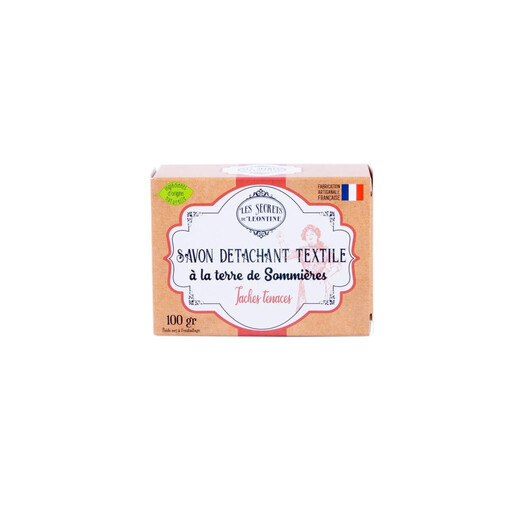
Why this choice suits this profile: Its solid 100 g format is perfect for people who want to treat grease or dirt stains occasionally without investing in a large bottle.
The product page recommends direct application, gentle rubbing and quick treatment – all of which help reduce the risk of overuse.
A soap that contains Sommières earth and grapeseed oil, and is suitable for fabrics, carpets and curtains.
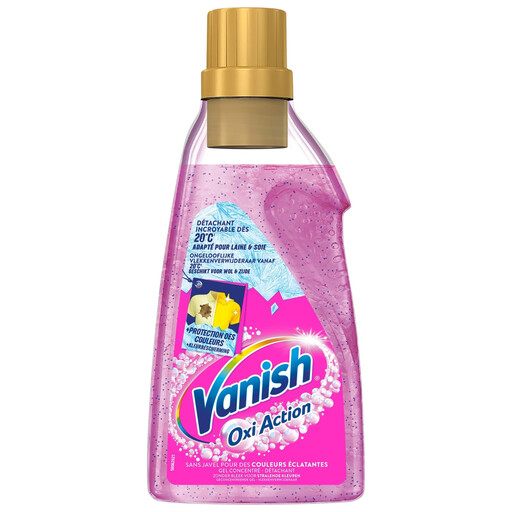
Why this choice suits this profile: Its 1.5 L gel format and dosing nozzle are designed for users who want a formula dedicated to certain delicate fabrics.
The product page explicitly mentions wool and silk, unlike many sprays that exclude these materials. However, always refer to the garment's care label.
A gel based on oxygen bleaching agents and non-ionic surfactants, claimed to be usable from 20 °C.
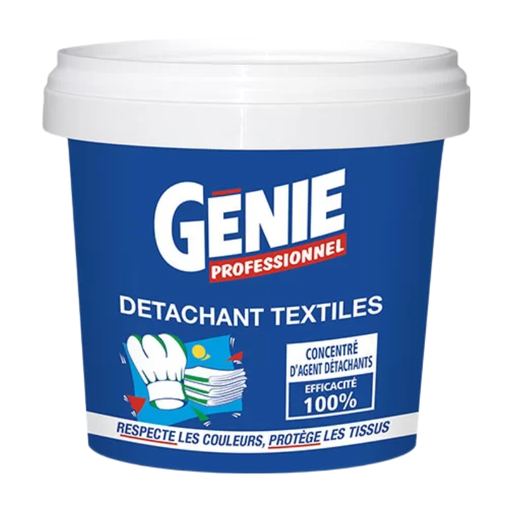
Why this choice suits this profile: Its one-kilogram pack and professional positioning meet the needs of laundries as well as households that regularly treat heavily soiled laundry.
The minimum temperature stated, set at 30 °C, is clearly indicated, as is the instruction not to use it on wool and silk.
A combination of oxygen agents, enzymes and surfactants in a formula that is claimed to be phosphate-free.
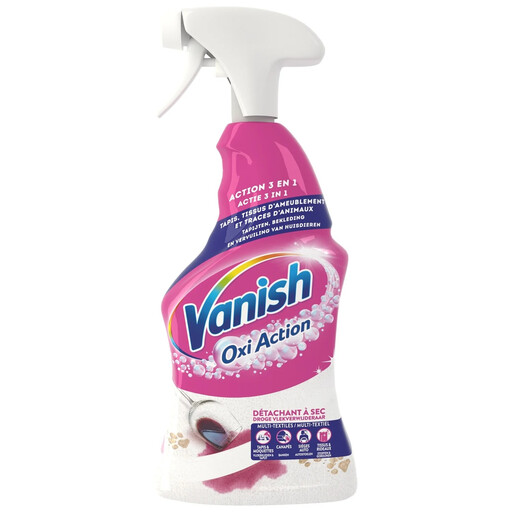
Why this choice suits this profile: This 500 ml spray is designed for carpets, fabrics and floor coverings, with application followed by dabbing with a dry cloth.
Its use is different from that of a stain remover for machine-washable laundry. Testing on an inconspicuous area is recommended before first use.
A ready-to-use spray designed for carpets, rugs and upholstery fabrics. It is not intended for wool, silk or leather.
We've put together a comprehensive, real-time updated list of products that meet these strict selection criteria and European safety regulations.
Choose a pre-wash stain remover based on the fabric and the type of stain. A spray or gel is suitable for targeted application, while a powder can be added to the wash cycle. Treat the stain promptly, follow the dwell time and do not let the product dry out if the instructions advise against it.
Some products can be used from 20 °C or 30 °C, but this doesn't guarantee the same result on every stain. The cycle temperature, dosage, age of the stain and type of fabric all affect effectiveness. Always check the product label and the garment's care label.
Store the product in its original packaging, tightly closed, in a cool place away from sunlight and moisture. Wear gloves if the instructions recommend it, avoid contact with eyes and never mix different products. Stain removers must be kept out of reach of children and should never be transferred into a food container.