
Livraison le jour même ou le lendemain

Qualité garantie

Débloquez vos offres de bienvenue: Livraison GRATUITE | Jusqu'à -80 % | 30 jours d'essai gratuits à JoyPlus
Téléchargez l'application
A coffee stain on a shirt, mud on a child’s trousers, or a splash of sauce on a tablecloth – these aren’t all treated the same way. Yet many households still choose their fabric stain remover based solely on the promise printed on the packaging or the price per litre.
The format, the ingredients and the compatibility with the fabric matter just as much as the claimed effectiveness. Here are the criteria to consider when choosing a laundry stain remover that’s right for you, without wasting product or damaging your clothes.
A stain remover for clothes that claims to be suitable for colours and whites may still exclude wool, silk, leather or fabrics that require dry cleaning. An oxygen-based formula, for example, shouldn’t be used without checking first: always consult the care label.
Before you buy, always check:
A 1 to 2.7 kg stain remover powder might be a good choice for a family that runs several washing loads a week. For treating the occasional stain, a 200 ml stain remover gel or a 500 to 750 ml spray will often be more practical.
The right calculation isn’t just about comparing the price on the label. You also need to consider the dosage per wash, whether targeted application is possible, and how long the product lasts after opening.
A pre-wash stain remover isn’t necessarily more effective if it sits on the fabric for several hours. Some products only need a few minutes of dwell time. Prolonged exposure, heat or sunlight can alter the colour, or even set the stain.
Always test on an inconspicuous area first, then follow the dwell time stated on the packaging to the letter.
Not all formulas target the same kinds of soiling. Enzymatic agents are generally associated with organic stains, such as milk, blood, chocolate or sebum. Surfactants help lift greasy residues, including oil, butter and certain sauces. Oxygen bleach is commonly found in products designed for oxidisable stains, such as wine or coffee.
These descriptions reflect the composition or intended use stated by the manufacturer; they don’t guarantee results on every fabric.
For wool and silk, only choose a product that explicitly states it is compatible with these fibres. Conversely, some powders and sprays exclude wool, silk, leather, flame-retardant carpets or garments that require professional cleaning.
For a carpet and rug stain remover or an upholstery stain remover, a mention that it can be used on upholstery fibres is essential. Testing on a hidden area is still recommended, especially on dark or printed fabrics.
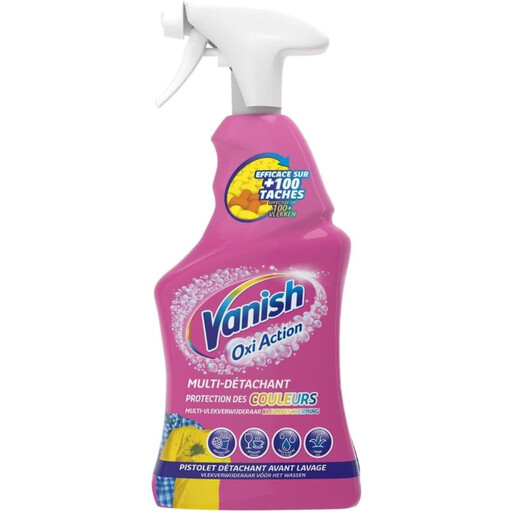
Why this choice suits this profile: its 750 ml spray format is ideal for treating everyday stains before washing, without forcing you to buy a large container.
The instructions recommend applying it to both sides of the stain, with a dwell time of one to two minutes. It clearly excludes wool, silk and leather.
Targeted application, 750 ml capacity and claimed compatibility with everyday or stubborn stains on white and coloured fabrics.
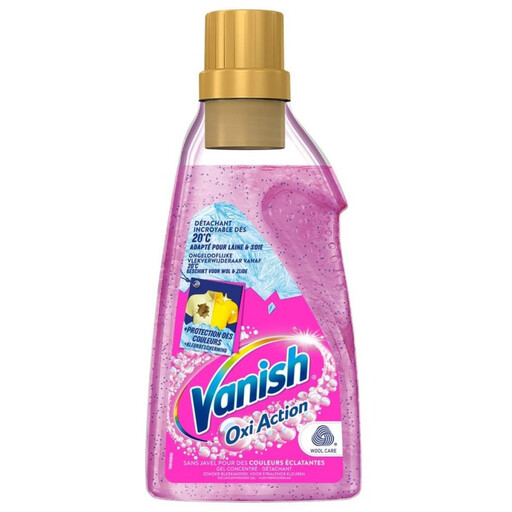
Why this choice suits this profile: its large format and applicator with a scrubbing head meet the needs of regular care, particularly for compatible delicate fabrics.
The product page states a bleach-free formula and claims it can be used on wool and silk. However, the instructions exclude treated surfaces and mixing with other products.
1.5 L gel, oxygen-based bleaching agents and the possibility of use from 20 °C, according to the label.
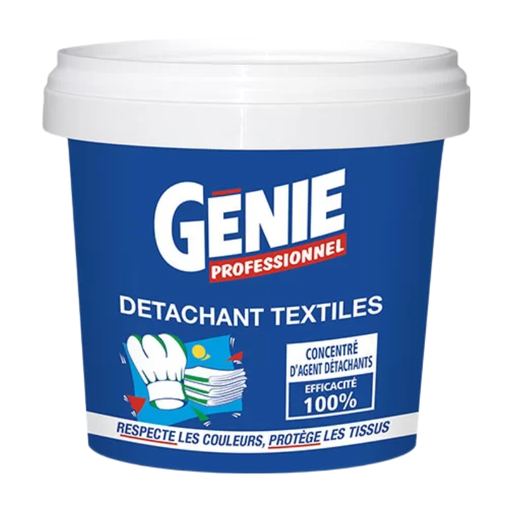
Why this choice suits this profile: this professional-grade format can be used by hand or in the machine, following the recommended dosage.
The stated composition distinguishes between oxygen bleach, enzymes and surfactants. The product page specifies that it is not suitable for wool or silk and is intended for professional use only.
1 kg powder, phosphate-free formula and the ability to treat greasy, organic and oxidisable stains.
We’ve put together a comprehensive, real-time updated list of products that meet these strict selection criteria and European safety regulations.
Products that carry hazard warnings, particularly regarding the risk of irritation or eye damage, must be handled in accordance with the pictograms and European safety instructions on the packaging.
Choose a product that explicitly states it is compatible with both. For coloured garments, do a patch test first. Products intended for whites may contain brightening agents and aren’t necessarily suitable for all colours.
Only if the instructions say so. Many powders and some sprays exclude these fibres. A stain remover gel labelled for wool and silk can be considered, provided you follow the temperature, dosage and dwell time stated on the label.
It depends on the product and is usually stated on the packaging or can be identified from the batch number. Store the product sealed, in a cool, dry place away from direct light. Powder must be kept protected from moisture; a diluted formula should generally not be stored in a sealed container.