
Livraison le jour même ou le lendemain

Qualité garantie

Débloquez vos offres de bienvenue: Livraison GRATUITE | Jusqu'à -80 % | 30 jours d'essai gratuits à JoyPlus
Téléchargez l'application
A coffee stain on a shirt, grease on a tablecloth or wine on a rug may not all need the same treatment. Yet many products are marketed as all-purpose, without clearly explaining their limitations. The result can be faded laundry, stubborn marks or a format that isn’t right for the job.
Choosing a fabric stain remover depends first and foremost on the material, the type of stain and how the product is applied. Here are the points to consider before buying a stain remover for your laundry, home or professional use.
A product described as suitable for “all fabrics” may still exclude wool, silk, leather, rugs or surfaces that need dry cleaning. These restrictions are usually listed in the directions for use, where they may be much less prominent than the product’s performance claims.
Before you buy, always check the list of compatible materials. For delicate clothing, test the product on an inconspicuous area and follow the care label instructions.
The claim “effective at low temperatures” doesn’t guarantee that every stain will come out just as well at 20 °C. Results also depend on the contact time, the amount used, the type of stain and how long it has been there.
An active oxygen-based stain remover may work for some oxidisable stains, while enzymes and surfactants target other types of residue. It’s better to check the ingredients and directions for use rather than relying solely on the temperature highlighted on the product.
A large tub of stain-removing powder is handy for regular laundry, but less suitable for a single stain on one garment. By contrast, a 50 ml bottle makes targeted application easy, but often works out more expensive per use.
The right size depends on how much laundry you need to treat, how often small spills happen and whether you need to treat stains before washing or directly on a fabric surface.
For everyday laundry, a powder added to your wash may be enough. A pre-wash stain remover in gel or spray form lets you target collars, cuffs, sleeves and particularly marked areas.
For rugs, carpets and upholstery, choose a formula specifically designed for those materials. You should be able to apply and blot the product without soaking the fabric excessively.
The grease, wine, coffee and blood stain remover category covers very different needs, so one product won’t always replace a specialist formula.
If you’re looking for a product without chlorine, you could choose a whitening formula based on active oxygen, provided it’s suitable for the fabric. The words “chlorine-free” don’t mean you can ignore the directions for use: some products may irritate the skin or cause serious eye damage.
Wear gloves if the label recommends it, don’t mix the stain remover with other products, and keep the tub or bottle out of children’s reach. For powders, close the container securely and store it away from moisture.
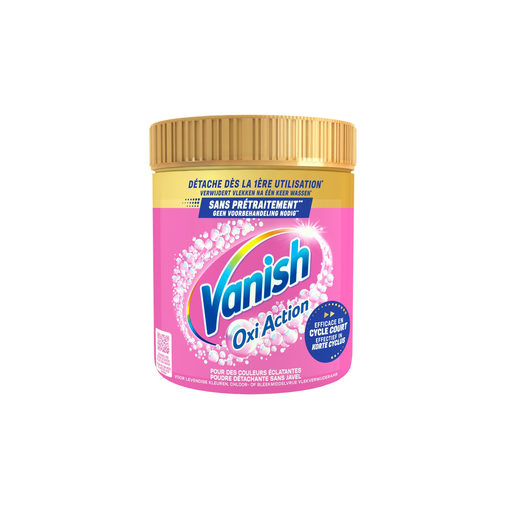
Why it suits this type of user : At 960 g, this pack is ideal for regular family laundry. The powder can be added to your wash, and the manufacturer says it can be used from 20 °C, in accordance with the instructions on the packaging.
According to its product details, it helps you avoid stocking up on several bottles to tackle everyday stains and contains no chlorine-based bleaching agent. However, testing it on an inconspicuous area is still recommended.
960 g pack, formula with oxygen-based bleaching agents, and suitable for machine washing or pre-treatment using the measuring cap.
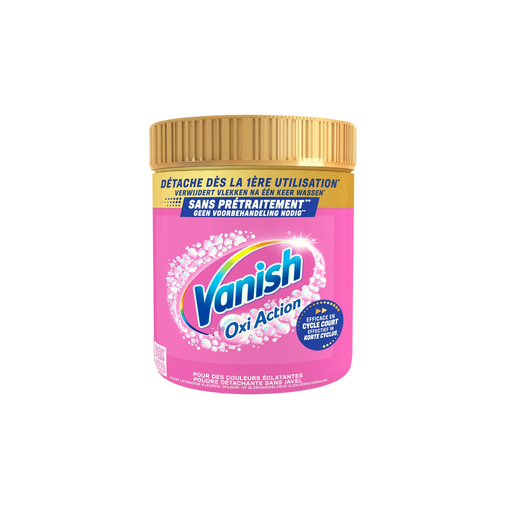
Why it suits this type of user : This 1.445 kg pack is designed for households that regularly wash both whites and colours, and want convenient dosing and better colour care.
The product details mention a chlorine-free formula with anti-fade action. You should still test it first and follow the instructions on the label.
Large pack, built-in dosing and stated suitability from 20 °C, both in the washing machine and for treating a stain locally.
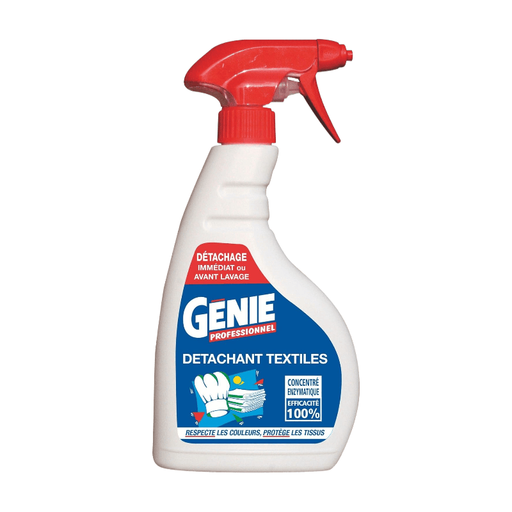
Why it suits this type of user : This ready-to-use spray is suitable for fabrics, rugs and upholstery. Use it before washing or to treat a stain directly on a fabric surface.
Its uses are clearly defined, unlike formulas intended only for laundry. For delicate fabrics, the manufacturer recommends testing it on a hidden area.
Targeted 500 ml spray. According to its product details, it tackles wine, coffee, blood, berry and foundation stains on fabrics, rugs and upholstery.
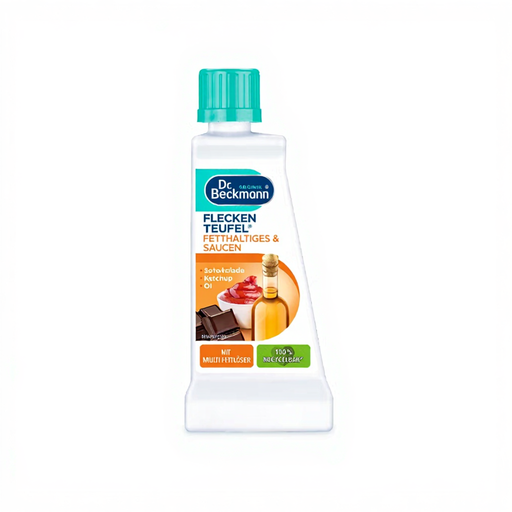
Why it suits this type of user : This small bottle is easy to store and can be applied directly to the affected area. It’s a good choice if you’re looking for a stain remover for grease marks on washable clothing.
The formula targets greasy stains, and the product details clearly state that it isn’t suitable for rugs or leather. This helps prevent unsuitable use.
50 ml pack, direct application and a formula designed for oil, butter, sauces, ketchup and chocolate.
We’ve put together a comprehensive, regularly updated list of products that meet these strict selection criteria and comply with European safety regulations.
Heat can set some stains. If the mark is still visible, don’t iron or tumble-dry the fabric until you’ve tried another treatment permitted by the instructions.
Some products state that they can be used from 20 °C, particularly powders containing active oxygen. However, results depend on the stain, the length of the cycle and the dosage. Always follow the manufacturer’s instructions and the care label on the garment.
Shelf life depends on the date and storage conditions stated on the packaging. Keep the powder in its original container, tightly closed, in a dry place away from moisture. Don’t use powder that has clumped together or been contaminated by another product without first checking that it’s still in good condition.
Only choose a stain remover for rugs and carpets whose product details explicitly list these materials as suitable. A ready-to-use spray generally allows targeted application, followed by blotting. Always test it on an inconspicuous corner to check colourfastness and make sure it doesn’t leave a ring.