
Livraison le jour même ou le lendemain

Qualité garantie

Débloquez vos offres de bienvenue: Livraison GRATUITE | Jusqu'à -80 % | 30 jours d'essai gratuits à JoyPlus
Téléchargez l'application
An ergonomic memory foam pillow can significantly improve your comfort when you wake up, but not every model suits every type of sleeper. Height, firmness, shape and care all directly affect the quality of support. If you choose poorly, a cervical pillow may even increase tension in your neck or shoulders.
Before placing your order, it is therefore best not to rely solely on promises such as ‘universal support’ or ‘comfort in every position’. Here are the criteria to consider when looking for a model suited to your body shape, sleeping position and habits.
A 12 cm pillow will not automatically suit everyone. Shoulder width, mattress firmness and your sleeping position determine the height you actually need.
A pillow that is too thick can force your neck to bend. Conversely, a pillow that is too flat may not provide enough support, especially on a firm mattress.
Viscoelastic foam gradually moulds itself to the contours of your head and neck. It can sometimes provide a cushioning, enveloping feel, but its firmness depends on its density, thickness and the ambient temperature. Memory foam does not necessarily mean softness.
To avoid unpleasant surprises, look at how the model is made: single-piece core, perforated foam, shredded foam or multi-layer construction. These choices affect weight distribution, the level of support and how easily you can change position.
Used every night, a pillow naturally accumulates moisture, perspiration and dust. A removable, washable cover makes care much easier, but that does not mean the foam core can go in the washing machine. The technical specifications should clearly distinguish between the care instructions for the cover and those for the foam.
Also be cautious of claims such as ‘hypoallergenic’ when no standard or certification is stated. A certification generally applies to the materials or to specific controlled substances; it does not replace the precautions required if you have a known allergy.
The dimensions should suit your bedding and sleeping style. A 60 × 60 cm square offers a generous surface, while a 50 × 70 cm model will fit more easily into many rectangular pillowcases.
The stated height — 8 cm or 12 cm, for example — is not enough on its own. A pillow with a central recess or raised edges will support your neck differently from a classic cushion of the same thickness.
A cervical or anatomical pillow often features a central cut-out, a contoured edge or an area specially designed to accommodate the shoulders. These features can help stabilise your head while you sleep, but they should not be taken as a medical promise to relieve neck pain.
If your tension is related to desk work, studying or sport, focus mainly on the following points:
Perforated foam or foam with ventilation channels encourages air to circulate through the material. It may suit people looking for a breathable memory foam pillow. The cover remains crucial, however: a removable, washable model makes everyday care much simpler.
Any certifications mentioned should be verifiable on the product page. Some models display STANDARD 100 by OEKO-TEX, CertiPUR or Sanitized, for example. These indications refer to a testing framework or a treatment claimed by the manufacturer; they do not guarantee protection against every possible allergic reaction for every individual.
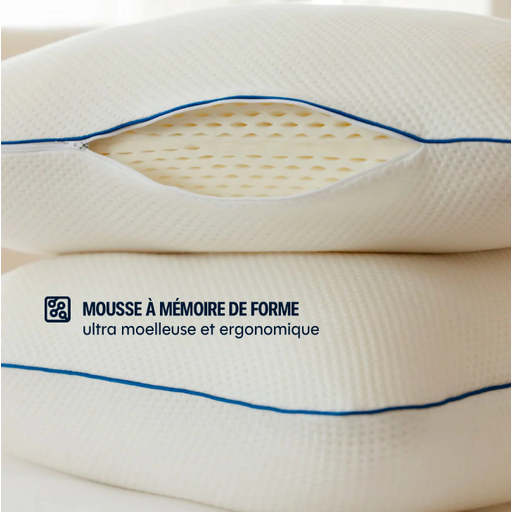
Why this choice suits this profile : Its perforated foam core and square format may suit everyday use, particularly when ventilation and hygiene are priorities.
The product details clearly distinguish the foam core from the washable cover, helping to avoid confusing full washing with cleaning the protective cover.
60 × 60 cm dimensions, 12 cm thickness, perforated foam and a removable, washable cover.
We have brought together a complete, real-time updated selection of products that meet these demanding criteria as well as European safety requirements.
After unpacking it, leave it to regain its shape in a well-ventilated room. Depending on the model, airing it for 24 to 48 hours may be necessary to disperse any manufacturing odour. Then place the highest part beneath your neck if the pillow’s design calls for it, and check that your head remains aligned with your back without excessive pressure.
Its usable life depends on the density of the foam, the weight placed on it, humidity and how well it is cared for. Permanent sagging, crumbling foam or an obvious loss of support are all signs that it may be time to consider replacing it. Follow the manufacturer’s recommendations and never wash the foam core if the care instructions prohibit it.
It may change the support and comfort you experience while sleeping, but it is not a substitute for medical treatment. If the pain persists, is accompanied by numbness or causes significant discomfort in your neck and shoulders, seek advice from a healthcare professional. When choosing your pillow, simply compare its height, shape, firmness and care requirements with your actual needs.