
Livraison le jour même ou le lendemain

Qualité garantie

Débloquez vos offres de bienvenue: Livraison GRATUITE | Jusqu'à -80 % | 30 jours d'essai gratuits à JoyPlus
Téléchargez l'application
An ergonomic memory foam pillow can completely transform the feeling of support you get during the night. But you still need to pick a model that suits the way you sleep. Height, firmness, shape and care all play a part in how comfortable you feel when you wake up.
People who sleep on their side generally need enough height to fill the gap between the shoulder and the head. On your back, a less thick pillow is often preferable, while those who are sensitive to heat should look for a breathable pillow instead. To avoid a nasty surprise, it's better to examine the concrete features of the product than to rely on the promises printed on the packaging.
A very thick pillow isn't necessarily more comfortable. On your side, sufficient height helps keep your head aligned with your spine. On your back, a pillow that's too high can actually force your neck forward. Your body shape, shoulder width and mattress firmness all come into play too.
A height of 12 cm, like on the 50 × 70 cm model shown later, doesn't provide the same support as an 8 cm cervical pillow with a recessed central zone. So you need to compare the dimensions and construction of the product, rather than just stopping at the word "ergonomic".
Memory foam gradually moulds to the contours of your head and neck. If it's too soft, though, it can feel like you're sinking in too much. If it's too firm, it might feel uncomfortable during the first few nights.
Multi-layer models try to balance these sensations by combining a soft top layer with a more stable base. This construction won't suit everyone, but it's an objective detail to check in the product specifications.
A poorly ventilated pillow can trap more heat and moisture. Perforations and built-in air channels in the foam help air circulate, without completely eliminating the feeling of warmth for all users.
The cover also deserves a close look. If it's removable and washable, it makes daily care much simpler. The memory foam core, on the other hand, generally shouldn't go in the machine unless the manufacturer explicitly says so.
For a memory foam pillow for side sleeping, choose a shape that supports your head without putting too much pressure on your shoulder. A side support or a well-defined cervical zone can be useful, but the overall width of the pillow also matters.
For a pillow for back sleeping, a slightly recessed central zone can help stabilise your head. People who regularly change position might be interested in models designed for both back and side sleeping, but check their actual height rather than just relying on the "all positions" claim.
Slow-recovery viscoelastic foam gradually adapts to the weight of your head. Some pillows use a single foam block, while others have a multi-layer structure:
These different layers can contribute to more even support for your neck and shoulders, but the feel depends on your individual body shape. People looking for a pillow for neck pain shouldn't treat this type of product as a medical device. If pain persists, it's best to seek advice from a healthcare professional.
A removable cover is a real plus for keeping your pillow hygienic. For a dust mite resistant pillow or one for sensitive people, check the exact certification claimed and what it covers. A textile certification doesn't mean that any allergic reaction is impossible.
The STANDARD 100 by OEKO-TEX mark means that textile items have been tested for certain undesirable substances, according to the relevant standard. It doesn't replace checking the full product composition. For breathability, look for perforations, air channels or a cover designed to help moisture escape.
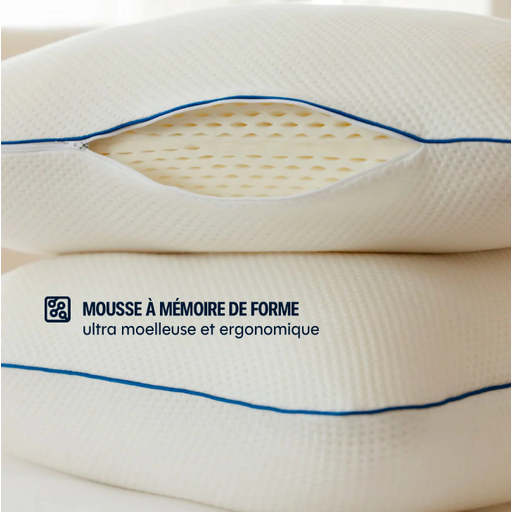
Why this choice suits this profile: Its 50 × 70 cm size fits many standard beds, while the removable cover makes care easier with daily use.
The perforated foam addresses the risk of limited air circulation, while the washable cover reduces the hassle of maintenance.
50 × 70 cm size, 12 cm thickness, perforated foam and a removable, machine-washable cover according to the product page.
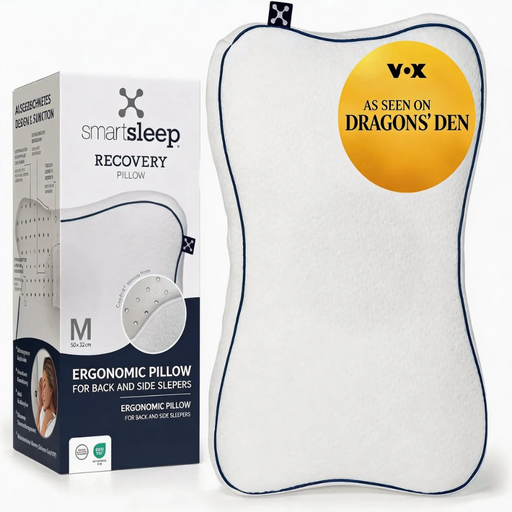
Why this choice suits this profile: Its head rest zone and built-in air channels target people who alternate between back and side sleeping.
The product page specifies use for back and side sleeping as well as the presence of air channels – two pieces of information that are more meaningful than a general promise of coolness.
Viscoelastic foam, built-in air channels and materials said to be OEKO-TEX certified.
We've put together a comprehensive, real-time updated list of products that meet these demanding selection criteria and European safety standards.
When you receive it, let the pillow regain its shape in a well-ventilated room. A manufacturing smell may linger on some new products; follow the airing time stated in the instructions. To preserve the foam:
It all depends on your sleeping position, shoulder width and mattress. An 8 cm model may suit some back sleepers, while a 12 cm pillow will provide more volume for people who sleep on their side. Start by comparing the actual dimensions and the shape of the support zone.
An adjustment period of several nights is common, especially when the pillow's shape is very different from your old one. If unusual or persistent discomfort occurs, stop using it and seek advice from a healthcare professional.
The cover can be washed if it's removable and the care label allows it. The foam core generally shouldn't go in the machine. Always check the instructions for your specific model before washing.