
Livraison le jour même ou le lendemain

Qualité garantie

Débloquez vos offres de bienvenue: Livraison GRATUITE | Jusqu'à -80 % | 30 jours d'essai gratuits à JoyPlus
Téléchargez l'application
A well-planned toolbox helps you avoid repeat purchases and makes everyday repairs, woodworking jobs and creative projects easier. However, the range of DIY tools can sometimes bring a few surprises. A very well-stocked set is not necessarily the most practical, a cordless drill may lack battery life, and a precision tool can quickly become frustrating to use if its accessories are not compatible.
This guide will help you sort through the features that really matter before choosing a multifunction tool kit, a cordless rotary tool or a square for your projects in France.
A tool set may contain several dozen pieces without actually meeting your needs. Some accessories are duplicates, while others will probably never be used. Instead, check that it includes the items you genuinely need for your projects: bits, drill bits, pliers, screwdrivers, measuring tools and storage accessories.
For small jobs around the house, a well-considered selection is often more useful than a case full of accessories that will be left at the back of a cupboard.
The maximum speed of a drill or rotary tool is not enough to assess its performance. You should also consider the precision of its settings, the type of battery, charging time, grip and compatibility with consumables.
A precision mini drill designed for engraving or polishing will not meet the same requirements as a drill intended for assembling furniture or fixing fittings.
A tool that is difficult to store may quickly lose some of its accessories. Mislaid bits and mixed-up parts also waste valuable time during every job. A case with dedicated compartments can therefore make a real difference in everyday use.
Before placing your order, also check the diameter of the accessories. The Fanttik F2 Master, for example, uses 2.3 mm accessories, or 3/32 inches. Consumables with a different diameter will not automatically be compatible.
For a cordless drill, check the nominal voltage, battery capacity and charging system. A capacity expressed in mAh indicates the amount of stored energy, but actual runtime varies according to the load applied, the material being worked on and how frequently the tool is used.
For small jobs, a compact model that charges quickly may prove more practical than a bulkier device. Also check whether the battery is removable or integrated, and whether it is possible to buy a second one.
The speed should be suited to the job at hand:
Several speed settings allow you to adjust the rotation without having to hold the trigger continuously. According to its product specifications, the Fanttik F2 Master offers five adjustable speeds and a stated maximum speed of 25 000 rpm. These figures reflect the manufacturer’s stated specifications and do not, on their own, guarantee identical results on every material.
For woodworking, fitting out interiors or installing shelves, a stable carpenter’s square is essential. In particular, look for:
An 18 cm aluminium angle ruler is easy to carry and fits neatly into tight spaces. However, it will not replace a longer instrument when checking large workpieces.
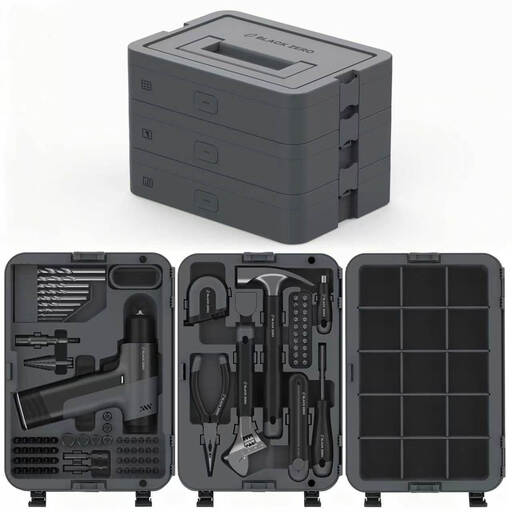
Why this choice suits this profile : This set combines a drill with several hand tools in a well-organised case. It is suitable for everyday repairs, assembling furniture and getting started with DIY projects.
The dedicated drill compartment and internal dividers prevent the accessories from getting mixed up and make it easier to check the contents of the case.
Nominal voltage of 16 V, 1 600 mAh battery, stated no-load speed of 0 to 1 000 rpm and case measuring 329.5 × 236.5 × 75 mm.
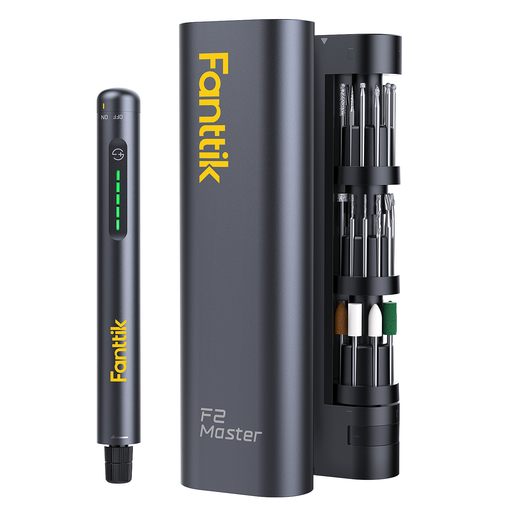
Why this choice suits this profile : Weighing 100 g, this compact model is aimed at makers, model builders, 3D printer users and DIY enthusiasts who need an easy-to-handle rotary tool for detailed work.
The rotating magnetic accessory holder helps you find the 35 included accessories and reduces losses caused by scattered storage.
Five speeds, LED lighting, stated USB-C charging time of 60 minutes and compatibility with 2.3 mm accessories for sanding, polishing, drilling and engraving.
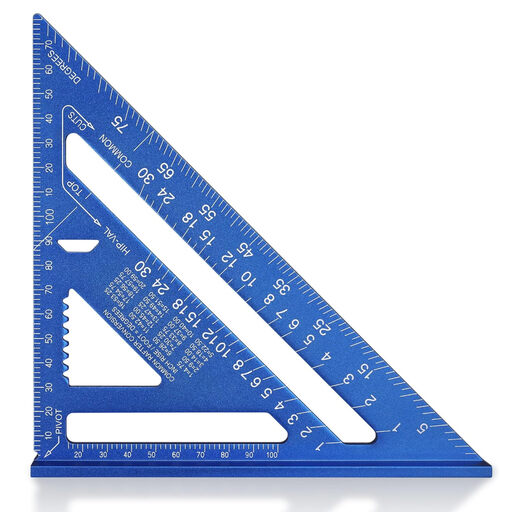
Why this choice suits this profile : This square is designed for woodworkers, tradespeople, engineers and DIY enthusiasts who regularly mark out, make angled cuts or check workpieces.
Its metric and imperial graduations, protractor and straight-edge guide function mean you do not have to rely on a single measurement reference.
Aluminium alloy construction, length of 180 mm, stated weight of 233 g and angle measurement from 0 to 90 degrees.
We have put together a complete, real-time updated selection of products that meet these demanding criteria and European safety standards.
To extend the life of your DIY tools, a few simple habits are all you need:
To clean an aluminium square, use a dry cloth. Avoid impacts and twisting, which could affect its alignment.
A kit suitable for everyday repairs should include a cordless drill, screwdriver bits, screwdrivers, pliers and measuring tools. A case with dedicated slots makes storage easier and lets you quickly check that no parts are missing.
Yes, provided you choose a model with adjustable speed and accessories compatible with the chuck diameter. For detailed work, also consider the weight, casing shape and visibility of the work area. A compact engraving tool is suitable for small surfaces, but it will not replace a machine designed for prolonged work on thick materials.
The cost of use depends mainly on the electricity consumed during recharging, the number of cycles supported by the battery and the possible replacement of consumables. To keep costs under control, choose a device suited to your needs and avoid using a powerful drill for light tasks. Wear items such as drill bits and screwdriver bits should also be included in your budget.