
Same-day & Next-day Delivery

Quality Guaranteed

Unlock Your Welcome Offers: FREE Delivery | Up to 80% OFF | Free 30-day JoyPlus trial
Download the APP
The world of cordless power tools promises freedom and efficiency. However, behind the marketing slogans lie pitfalls that can turn a good investment into a costly disappointment. Before you commit, you need to know how to decipher spec sheets to make a choice that truly fits your needs.
As the Head of Product Recommendations at Joybuy, my mission is to help you navigate this landscape. Let's break down the common mistakes to avoid and the decisive criteria for outfitting your workshop or garden without making a wrong turn.
The market is saturated with tempting offers, but beware of deals that seem too good to be true—they often hide design flaws or frustrating limitations. Here are the main things to watch out for.
To avoid these traps, focus on three technical aspects that make all the difference.
The brushless motor is a game-changer for DIY and gardening tools. Unlike traditional motors, it operates without carbon brushes—wear-and-tear parts that generate friction and heat.
Before buying your first tool, think about your entire future toolkit. Opting for a brand that offers a wide range of tools compatible with the same battery is a guaranteed way to save money and space.
A tool's power isn't just about its voltage.
Here are a few models that meet specific needs, in line with the performance and durability criteria we've just discussed.
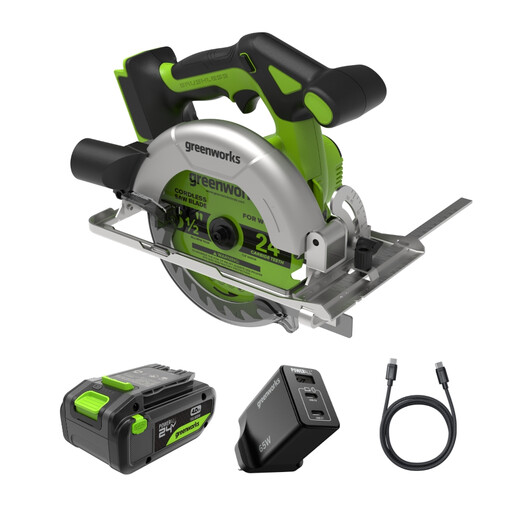
Why we chose it: Ideal for woodworking and interior renovation projects that demand impeccably clean cuts. Its versatility for angle cuts and its design focused on blade visibility make it a powerful ally for building furniture or laying flooring.
It features a high-efficiency brushless motor, ensuring stable performance and a longer lifespan compared to classic brushed motors.
High cutting speed (5,000 RPM) and a bevel cut capacity of up to 45°, promising flawless finishes on all your projects.
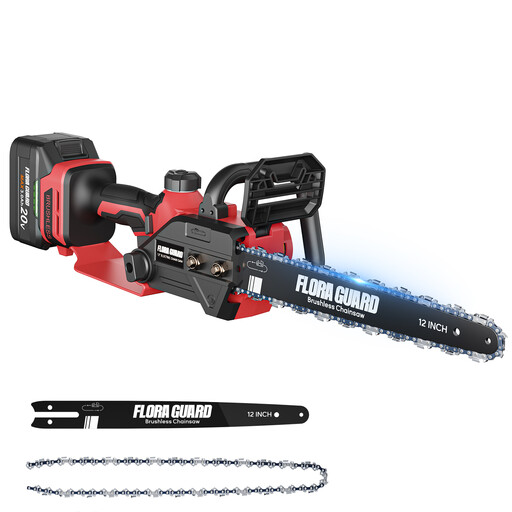
Why we chose it: Designed for regular maintenance of green spaces, this battery-powered chainsaw effortlessly tackles branches and logs up to 30 cm in diameter. An excellent tool for preparing firewood or felling small trees.
It comes with two 4,000 mAh batteries and, most importantly, is compatible with the Makita 20V ecosystem. This checks two crucial boxes: runtime and versatility.
Its 1,200 W brushless motor delivers formidable cutting power, and the two-battery pack ensures you can get through the longest jobs.
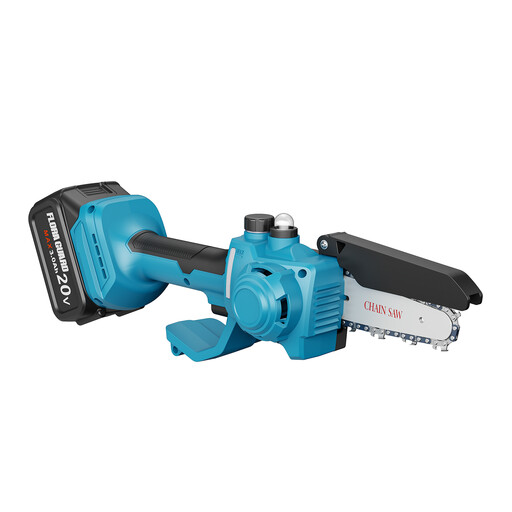
Why we chose it: Perfect as a supplementary cordless pruner. Its light weight and compact size make it ultra-manoeuvrable for trimming high branches, shaping shrubs, or making quick cuts without the hassle of a heavier machine.
Its compatibility with Makita 18V/20V batteries makes it an ideal addition for those already invested in the ecosystem, saving you from buying into a new charger system.
Exceptional manoeuvrability and light weight for precise, less fatiguing work. Its 600 W brushless motor delivers enough power for branches up to 15 cm.
We have curated a complete range of products that meet our quality criteria and European safety standards.
Yes, without a doubt for regular use. The initial price difference is quickly recouped through a longer lifespan, better battery life, and consistent performance. The absence of wear-and-tear parts like carbon brushes also reduces maintenance to a bare minimum.
A lithium-ion battery's life is measured in charge cycles (typically between 500 and 1,000). In practice, with normal use and proper storage (away from frost and extreme heat, ideally stored at 50% charge for long periods), a quality battery will last you 3 to 5 years.
Generally, no. The only exception is if the tool manufacturer explicitly states compatibility (as with the Makita-compatible batteries mentioned earlier). While adapters do exist, their use is strongly discouraged: they can void your warranty, damage your equipment, and bypass electronic safety circuits, posing a real safety risk. The golden rule: always use the batteries specified by the manufacturer.