
Livraison le jour même ou le lendemain

Qualité garantie

Débloquez vos offres de bienvenue: Livraison GRATUITE | Jusqu'à -80 % | 30 jours d'essai gratuits à JoyPlus
Téléchargez l'application
Buying cordless power tools can make home jobs much easier – provided you don't just look at the stated voltage or the number of accessories in the kit. A poorly suited drill-driver, a battery that's hard to replace, or torque that's difficult to control can quickly turn a bargain into a wasted expense.
Here are the key criteria to consider before choosing a drill, an electric screwdriver, a cordless impact wrench or an electronics repair kit.
A battery showing 16, 18 or 21 V isn't enough to judge a tool's performance. The torque in Nm, no-load speed, motor type and battery capacity all play a part too. A machine with a high voltage can lack runtime or precision if its battery has a low capacity.
For everyday jobs around the house, a drill-driver with several torque settings and two speeds will usually let you switch from screwdriving to drilling wood or light metalwork without changing tools.
A case packed with bits is only useful if the accessories match the screws and materials you'll actually encounter. Check for wood and metal drill bits, common screwdriver bits, sockets and an adaptor. For small repairs, a 128-piece precision screwdriver set should also include bits suitable for phones, laptops, consoles and household appliances.
The number of pieces alone says nothing about their quality or lifespan. Look at the material stated, such as chrome-vanadium steel, as well as the quality of the case and how well small parts are held in place.
Lithium-ion batteries are valued for their light weight and low self-discharge, but their capacity, measured in Ah, directly affects runtime. With two batteries, you can keep working while the other charges. Also check the charging time, connector type, availability of a spare battery and overcharge protection.
Before placing your order, make sure the voltage of the tool, battery and charger all match. If the spec sheet has conflicting information, consult the detailed features provided by the seller.
Torque, expressed in newton-metres, indicates the rotational force available. A 25+1 or 25+3 setting usually corresponds to several torque-limiting positions, plus a drilling mode and sometimes a hammer mode. These settings prevent damaging screw heads or going through a fragile material.
A variable-speed trigger and two mechanical gears are particularly handy: the low gear favours control and screwdriving, while the high gear is better for drilling. A cordless hammer drill can be enough for some light masonry work, but it won't always replace a rotary hammer in hard concrete.
A 10 mm keyless chuck lets you change accessories quickly, without a key. However, the stated drilling capacities should be interpreted according to the material. The values given for wood and metal don't mean the tool will be comfortable in all thicknesses.
For everyday tasks, use suitable drill bits and start at a moderate speed. In mechanical work, a cordless impact wrench stands out mainly for its loosening torque and drive square, not its drilling capacity.
For use in the UK, check for a correctly affixed UKCA or CE mark, a clear English-language manual, the product responsible person's contact details and warranty information. These elements alone don't guarantee quality of use, but they are essential checkpoints under current European regulations.
A non-slip handle, LED light, trigger lock and easily accessible reverse switch can make the tool more pleasant to use. Always assess the weight with the battery fitted, especially for overhead work or long renovation sessions.
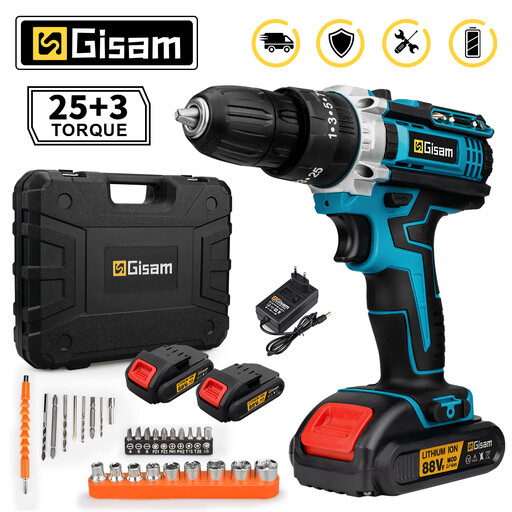
Why this choice suits this profile: its two batteries, two speeds and 2 to 10 mm chuck are ideal for small assembly, drilling and mounting jobs around the house.
The torque settings and variable speed reduce the risk of over-tightening screws, while the case includes the essential accessories to get started.
Stated torque of 25 Nm, 25+3 positions, two 1.3 Ah lithium-ion batteries and LED light.
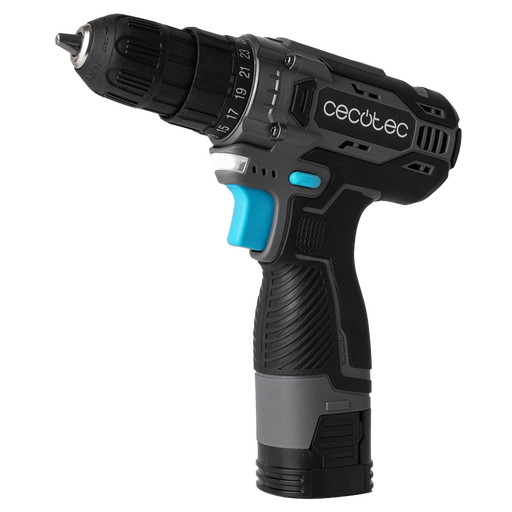
Why this choice suits this profile: this kit is aimed at users looking for a versatile cordless drill-driver with accessories, case and batteries for regular projects.
The 25+1 torque positions and two gears mean you don't have to use a single setting for every task.
Stated torque of 38 Nm, speed up to 1,500 rpm, two 2 Ah batteries, 10 mm keyless chuck and LED light.
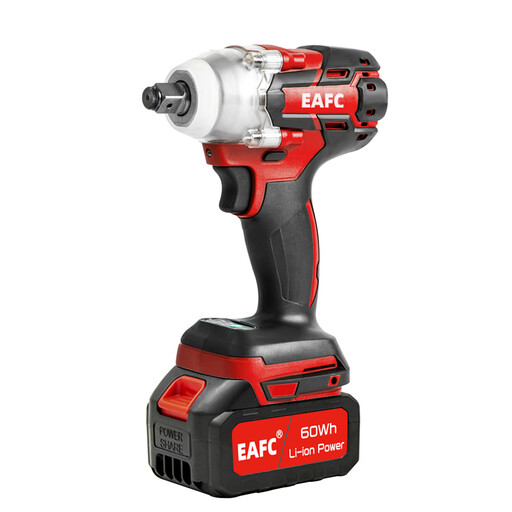
Why this choice suits this profile: this cordless impact wrench is designed for car enthusiasts and users who regularly work on wheel nuts or heavy-duty assemblies.
Its specialist use prevents you from straining a drill-driver for jobs that need a drive square and higher torque.
Stated torque of 200 Nm, 60 Wh lithium-ion battery, LED light, variable speed control and forward/reverse function.
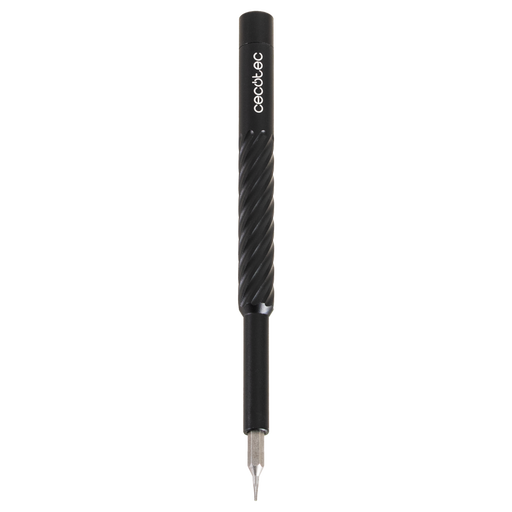
Why this choice suits this profile: this electronics repair kit complements cordless equipment for taking apart devices, sorting small screws and working on delicate assemblies.
The variety of bits reduces the risk of using the wrong type, while the closed case makes storing small parts easy.
128 pieces, bits stated as CR-V steel, magnetic bits and integrated magnet in the case.
For occasional jobs, a battery of around 1.3 to 1.5 Ah can be enough. For assembling furniture, renovating or doing lots of drilling, a capacity of 2 Ah or more usually gives you better runtime. Also compare weight, charging time and the option to buy an extra battery.
It all depends on how often you use it, how you store it, how you charge it and whether you respect the tool's limits. Keep lithium-ion batteries in a dry place, avoid extreme temperatures and use the supplied charger or an explicitly compatible model. Regular maintenance of the chuck and accessories also helps keep everything accurate.
The running cost mainly includes the electricity for charging, replacement batteries and accessories. A single charge uses very little power, but a proprietary battery that's hard to find can push up the long-term cost. Before ordering, check the availability of spare parts and charger compatibility.