
Livraison le jour même ou le lendemain

Qualité garantie

Débloquez vos offres de bienvenue: Livraison GRATUITE | Jusqu'à -80 % | 30 jours d'essai gratuits à JoyPlus
Téléchargez l'application
Choosing a disinfectant spray is not something to take lightly. A product designed for fabrics won't necessarily work on a worktop, while a surface disinfectant should never be applied to skin. The right choice depends less on the fragrance or the number of promises on the label, and more on the intended use, the contact time and the compatibility with the surface.
A product can remove dirt, reduce unpleasant odours or claim antibacterial action. These functions are not interchangeable. A multi-surface disinfectant cleaner can combine several of them, while a deodorising disinfectant may be intended for air and fabrics.
If the surface is visibly dirty, first check that the formula actually removes grease, limescale or residue. Disinfection comes next, provided you follow the contact time stated on the label.
A fabric disinfectant may be fine for curtains, sofas or carpets, but not necessarily for leather, silk or velvet. Meanwhile, a chlorine-based formula can attack certain metals, discolour fabrics or damage delicate surfaces.
Before first use, check the list of compatible surfaces and test on an inconspicuous area. This precaution is especially recommended for coloured fabrics, sealants, varnished surfaces and electronic equipment.
Eucalyptus, mint, lemon or lavender scents make the product more pleasant to use, but they do not prove its disinfectant effectiveness. Claims like "99.9%" must be considered alongside the scope of application, test conditions and contact time.
A product can also be chlorine-free while still requiring strict precautions. The absence of chlorine does not mean it is harmless or universally compatible.
For surfaces, look for an explicit mention such as surface disinfectant, kitchen, bathroom or fabrics. For minor wounds, only use a product intended for skin or wound cleaning. A surface spray must never be used as an antiseptic wound spray.
Biocidal products must be used in accordance with the instructions on their label. In particular, check the usage category, precautions to take, the manufacturer, the batch number and, where stated, the shelf life after opening.
The terms bactericidal, fungicidal and virucidal do not refer to the same activity. When European standards appear on the packaging, they provide a more precise basis for comparison:
These references do not remove the need to follow the required dilution, the amount to apply and the contact time. The surface should generally remain sufficiently wet for the entire required period.
A 500 to 750 ml spray is often suitable for regular household cleaning. A 300 or 600 ml aerosol can be practical for fabrics and air, but requires adequate ventilation. Ethanol-based formulas are flammable, while products containing hypochlorite must never be mixed with acidic products.
For the kitchen, look for the mention food-contact disinfectant and check whether rinsing is necessary. In all cases, do not spray near a flame, avoid inhaling the mist and keep the bottle out of reach of children.
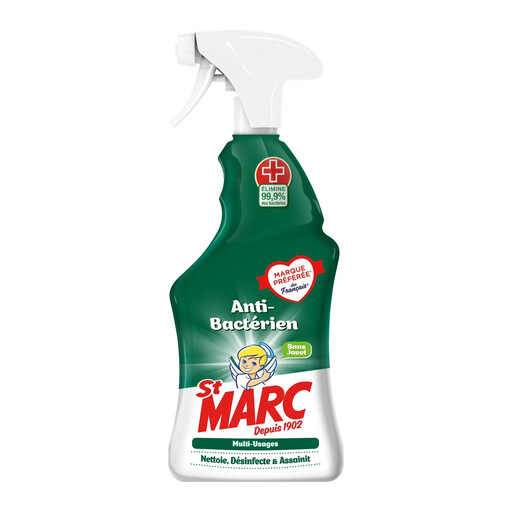
Why this choice suits this profile: Its 750 ml format and compatibility with several surfaces make it a practical option for regular cleaning of washable surfaces around the home.
Its chlorine-free formula avoids automatically reaching for a chlorinated product in every room. However, it is still intended for surfaces only and must be used in accordance with the label.
A standard format, lemon fragrance and benzalkonium chloride at 0.096 g per 100 g of product.
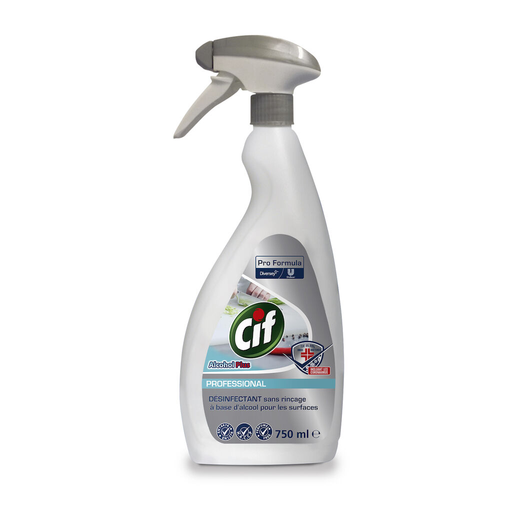
Why this choice suits this profile: It is aimed at those looking for a ready-to-use spray for small surfaces, particularly in a kitchen or professional environment.
The stated ethanol concentration and the standards listed on the product page allow you to compare the product concretely, rather than relying on a simple marketing promise.
80% denatured ethanol, a 750 ml format and stated compatibility with indirect food contact, according to the label.
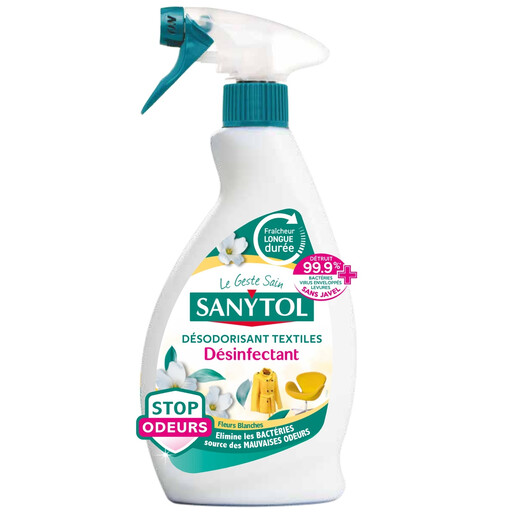
Why this choice suits this profile: Its fabric-specific purpose meets the needs of households that care for sofas, curtains or textiles that cannot be machine washed.
The product page states it is for fabrics and recommends a prior test on a hidden area. Leather, silk and velvet, which are not mentioned, should be avoided.
500 ml, a fine mist spray, air drying and a eucalyptus fragrance. Do not apply to skin or to a wound.
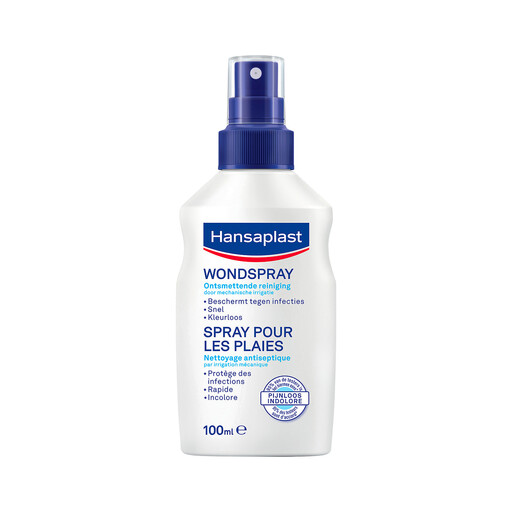
Why this choice suits this profile: This spray is formulated for external cleaning of minor wounds, not for household cleaning.
Its explicit indication for wounds prevents you from misusing a surface disinfectant on skin. Serious wounds or those showing signs of infection require medical advice.
A 100 ml format, Ringer's solution and polyhexanide at 0.04%, as stated on the product page.
We have compiled a comprehensive, real-time updated list of products that meet these demanding selection criteria and European safety regulations.
No. A household disinfectant is not a skincare product. For a minor cut or graze, use a product specifically designed for wound cleaning, such as a suitable antiseptic spray. If you experience significant pain, swelling, persistent redness or have a large wound, seek advice from a healthcare professional.
It depends on the instructions. Some products are advertised as no-rinse for indirect food contact, while others require rinsing with drinking water. After application, always follow the instructions corresponding to the surface and intended use.
The duration varies depending on the formula and the manufacturer's instructions. Close the bottle after each use, avoid high temperatures and check the packaging for the expiry date, batch number and storage conditions.