
Livraison le jour même ou le lendemain

Qualité garantie

Débloquez vos offres de bienvenue: Livraison GRATUITE | Jusqu'à -80 % | 30 jours d'essai gratuits à JoyPlus
Téléchargez l'application
Keeping your home clean and healthy is a priority, especially with children or pets around. The multi-surface disinfectant spray seems like a miracle solution: a quick spray and the job is done. But once you're in the aisle, faced with dozens of products making tempting promises, it's hard to know what to look for and avoid making the wrong choice.
As the Head of Product Selection at Joybuy, my role is to help you see things more clearly. Let's forget the jargon and focus on what really matters. Here are the most common pitfalls to avoid and the essential criteria for choosing a product that truly meets your needs.
Marketing can be formidable. Many products don't live up to their promises, with an undeniable result: disappointment and a cabinet overflowing with useless bottles.
To make the right choice, there's no secret: you have to look closely at the label. Here are the three criteria that truly make a difference in terms of effectiveness and versatility.
Behind this jargon lies crucial information: what types of microorganisms does the product act against?
For a kitchen disinfectant cleaner or for items used by young children, this criterion is non-negotiable. The "food-contact safe" mention assures you that the product will not leave toxic residue where you prepare or eat your food. However, this doesn't mean you shouldn't follow the instructions to the letter, which often recommend rinsing with clean water.
Bleach (sodium hypochlorite) is a powerful disinfectant, but it can be corrosive and discolour textiles. Common alternatives include:
The choice will therefore depend on the balance you're looking for between disinfecting power, surface safety, and your own sensitivity to the products.
Rather than an endless list, we've selected a few products that check all the boxes for specific needs.
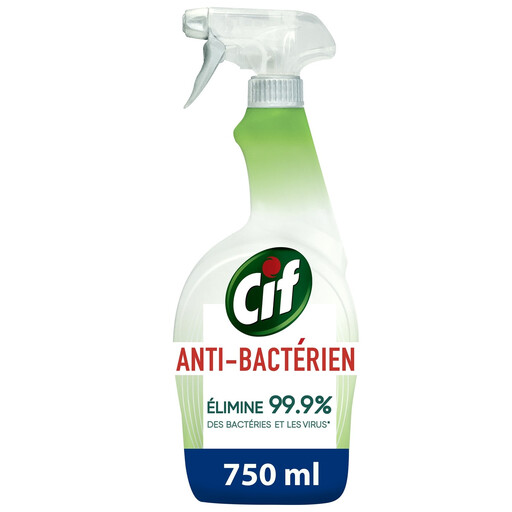
Why it stands out: Perfect for handling daily messes with kids. Its bleach-free formula and food-contact certification make it a trusted ally for high chairs, plastic toys, and countertops.
It sidesteps the misleading "safe" label trap: its formula is clearly bleach-free and food-contact safe, removing any ambiguity about its use.
It eliminates 99.9% of bacteria and viruses (according to the manufacturer) without the overpowering smell or risks associated with bleach.
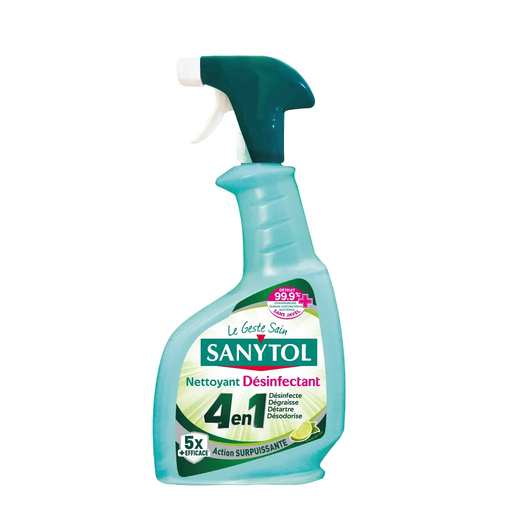
Why it stands out: For those who seek maximum effectiveness from a single product. Its 4-in-1 formula tackles germs, odours, grease, and limescale, making it a formidable weapon for the kitchen and bathroom.
It avoids the disappointing "all-in-one" trap with specific agents that attack grease and limescale, where a simple disinfectant would show its limits.
Its powerful hydrogen peroxide formula cleans deeply without bleach. The bonus? It's also food-contact safe, making it ultra-versatile.
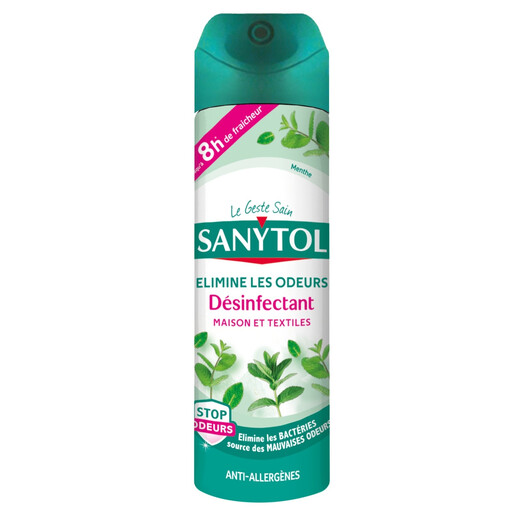
Why it stands out: Living with pets also means dealing with odours. This spray was designed for hard surfaces, but especially for textiles (pet beds, rugs, sofas), by tackling odours at their source.
It pushes the boundaries of "multi-surface" by including textiles, a weak point for many of its competitors. It doesn't just mask odours; it eliminates them by neutralising the bacteria that cause them.
Its dual-purpose for surfaces and fabrics makes it the ultimate versatile solution for a home with pets.
Explore our full selection of products that meet our strict selection criteria and current regulations.
No, the term "multi-surface" has its limits. The rule of thumb: always read the label. Most are designed for hard, non-porous surfaces (tile, laminate, plastic, stainless steel). They are often not recommended for unfinished wood, marble, brass, or certain painted surfaces. When in doubt, always test on a small, hidden area first.
Yes, it is highly recommended. Even with a food-contact safe certification, manufacturers almost always advise letting the product sit and then rinsing the surface with potable water. This is an essential precaution if food will be placed directly on it.
An antibacterial product kills bacteria. A virucidal product, on the other hand, neutralises viruses. Be aware that not all products do both. For complete protection, especially against cold or flu viruses, choose a spray that is both bactericidal and virucidal (look for the EN 14476 standard).