
Livraison le jour même ou le lendemain

Qualité garantie

Débloquez vos offres de bienvenue: Livraison GRATUITE | Jusqu'à -80 % | 30 jours d'essai gratuits à JoyPlus
Téléchargez l'application
Choosing a household disinfectant isn’t just about picking the name on the label. From bathroom sprays and multi-surface products to bleach-free formulas and fabric solutions, the uses – and the precautions – can vary enormously.
The most common pitfall? Buying a product that claims to be all-purpose, but isn’t actually suited to the surface you need to treat. A limescale remover won’t necessarily replace a biocide, and a surface disinfectant should never be applied to skin. To avoid wasted purchases and mishandling, there are three key criteria to consider.
A product can remove grease, soap scum or limescale without claiming any disinfectant action. Conversely, a disinfectant may require a prior clean if the surface is heavily soiled. So start by clearly identifying its function: cleaning, disinfection, deodorising, or a combination of several actions.
A claim like “99.9%” alone won’t help you choose between two products. Instead, look at the target micro-organisms, the contact time, whether dilution is needed, and the standards listed on the label. References EN 1276, EN 13697 and EN 14476 refer to different protocols, depending on the claimed action.
Bleach, alcohol, hydrogen peroxide and acidic agents don’t mix well with all surfaces. Leather, silk, certain metals, natural stone and delicate fabrics require special care. Even if a spray seems tough enough for anything, it’s always best to test it on an inconspicuous area first.
In the kitchen, choose a kitchen disinfectant that’s compatible with surfaces that may come into indirect contact with food. The instructions should state whether rinsing with drinking water is necessary. In the bathroom, a bathroom disinfectant cleaner can combine antibacterial action with limescale removal. However, it should never be mixed with an acidic product or bleach.
A standard limescale remover will do a fine job on water marks and soap residue, without guaranteeing validated disinfection. If you can see visible mould, go for a mould cleaner and follow the action time, ventilation and protective equipment instructions to the letter.
Bleach-free disinfectant formulas can be based on ethanol, benzalkonium chloride or hydrogen peroxide, depending on the product. A ready-to-use spray is handy for small surfaces, while a 5-litre container is better suited to regular floor cleaning or professional use.
An aerosol designed for fabrics, such as a disinfecting fabric deodoriser, should be sprayed from a distance and left to dry completely. It must never be sprayed onto skin, near a flame, or in a poorly ventilated room.
To verify a claim of eliminating bacteria and viruses, check the standards on the packaging. Disinfection only works if the surface stays wet for the entire required time. Wiping away a surface cleaning spray immediately can therefore significantly reduce its effectiveness.
Biocidal products must be used in line with their label. Wear gloves when recommended, avoid contact with eyes, and never mix different cleaners. Chlorine-based products, in particular, can release dangerous gases when they come into contact with acidic solutions.
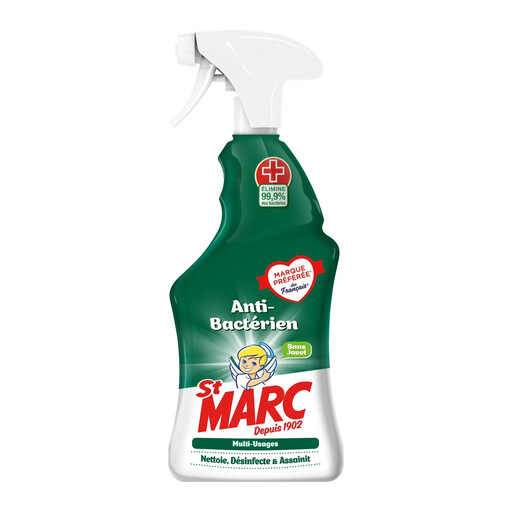
Why this choice suits this profile: Its 750 ml spray format and bleach-free formula are ideal for daily cleaning of washable surfaces in a family home.
Its antibacterial function is clearly distinguished from simple fragrance, and the listing specifies it’s a surface product, not a body care item.
A bleach-free formula, lemon fragrance and direct application to washable surfaces. The listing claims action against 99.9% of bacteria.
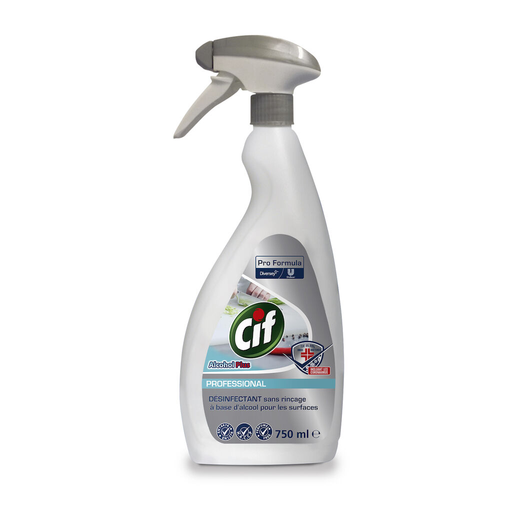
Why this choice suits this profile: Ready to use, this product is suitable for kitchens, professional spaces and small surfaces that need frequent cleaning.
The listing specifies the ethanol concentration, the no-rinse requirement and the relevant standards, rather than relying on a vague, hard-to-verify promise.
80% denatured ethanol, with claimed bactericidal, fungicidal and virucidal action, plus compatibility with indirect food contact.
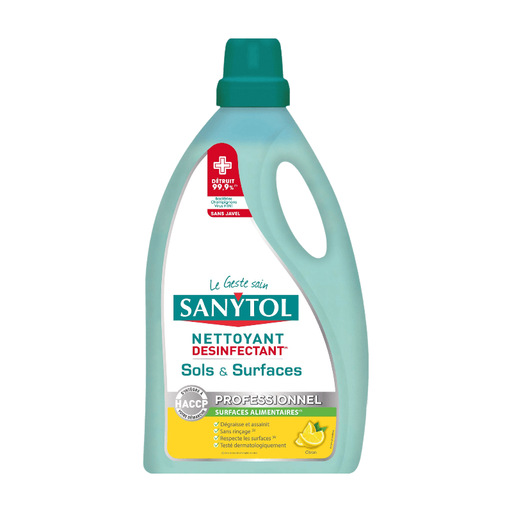
Why this choice suits this profile: With its 5 litres, this container meets the needs of repeated floor and surface cleaning in a large house, commercial premises or a public-access building.
The large format stops you from going through lots of small bottles, while the listing provides dilution and contact time instructions to check directly on the label.
A bleach-free formula, lemon fragrance and references to standards EN 13697, EN 1650 and EN 14476. Rinsing with drinking water is required for surfaces that come into contact with food.
We’ve put together a comprehensive, real-time selection of products that meet these strict criteria and European safety requirements.
No. Check the list of compatible materials on the label. Surfaces that come into contact with food, fabrics, metals, varnished wood and fragile materials may need specific products. With a surface disinfectant spray, also follow the application distance and contact time.
An antibacterial cleaner generally removes dirt while also acting against certain bacteria. A multi-surface disinfectant, on the other hand, claims a biocidal action that is subject to precise usage conditions. Rely on the standards, the target micro-organisms and the action time, rather than just the product name.
No. A wound-cleaning spray, such as Hansaplast Wound Cleaning Spray, is formulated to clean minor injuries and has its own usage precautions. It should not be used on floors, handles or worktops. Conversely, a surface disinfectant must never be applied to skin. For a serious, painful or unusual-looking wound, seek medical advice promptly.