
Livraison le jour même ou le lendemain

Qualité garantie

Débloquez vos offres de bienvenue: Livraison GRATUITE | Jusqu'à -80 % | 30 jours d'essai gratuits à JoyPlus
Téléchargez l'application
A star accessory in our kitchens, a good dish sponge is the cornerstone of an effective clean. Yet, faced with overcrowded shelves, choosing the right one can be a real headache. Between marketing promises and a jungle of options, it's easy to end up with a product that falls apart after three washes or, worse, scratches your best pans. As a product expert for Joybuy, my mission is to help you see clearly and make an informed choice that's perfectly suited to your daily routine.
Before unveiling our top picks, let's review the most common pitfalls when buying a household cleaning tool.
To avoid these traps, you just need to master a few key criteria. Understanding these aspects will ensure you choose a sponge that meets your expectations for both effectiveness and longevity.
The choice of material has a direct impact on your sponge's absorbency, lifespan, and environmental footprint.
The abrasive side is for tough jobs, but be warned, not all are created equal.
A washable sponge is a smart investment. Being able to put it in the washing machine (usually at 40°C or 60°C) allows you to deep-clean it and extend its life. It's a simple step to reduce waste and save money. Some models are designed to withstand dozens of washes.
Rather than a long list, we've chosen to match products with user profiles. The goal? To help you find the sponge that will fit perfectly into your daily life.
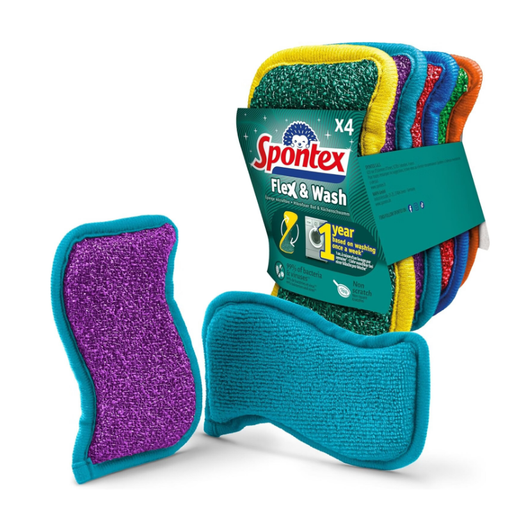
Why we recommend it: For anyone who wants to reduce waste without sacrificing efficiency. This reusable sponge is the ultimate practical and economical long-term solution.
It tackles the "false durability" trap head-on. Designed to last up to a year (or 52 washes), it puts an end to throwaway culture.
Its dual-sided design (soft microfibre and non-scratch scourer) and ergonomic S-shape make it ultra-versatile, from the kitchen to the bathroom.
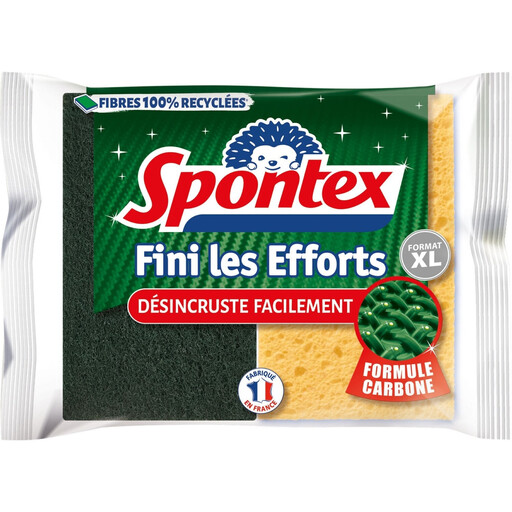
Why we recommend it: Perfect for those who regularly battle with gratin dishes, barbecue grills, and other carbonised residues. This Spontex sponge is a true force of nature.
It makes no promises of gentleness. Its carbon-reinforced scouring side is designed for one thing only: to pulverise the most stubborn dirt, without ever falling apart.
Its effectiveness on burnt-on residue is formidable. Its robustness makes it the perfect ally for the most thankless cleaning jobs.
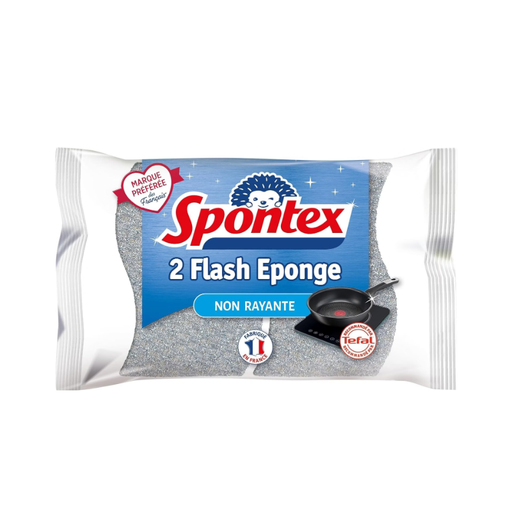
Why we recommend it: An essential for anyone who cares about their non-stick pans, ceramic hobs, and delicate dishes. Its greatest quality? The peace of mind it provides.
It directly addresses the problem of "hidden scratches". Its special scouring side is designed to clean deeply without ever damaging the most sensitive surfaces.
Recommended by Tefal, it's a seal of approval for your modern cookware. Bonus: it rinses very easily and stays clean for longer.
We have put together a complete selection of products that meet our demanding selection criteria.
For hygiene reasons, it's advisable to replace your sponge every two to four weeks, or as soon as it starts to smell bad or break down. If you opt for a washable sponge, a weekly wash in the machine at 60°C will extend its life while ensuring perfect hygiene.
Yes, provided it is properly maintained. A machine wash at the correct temperature (check the manufacturer's instructions) eliminates almost all bacteria. A well-maintained reusable sponge is therefore often more sanitary than a disposable sponge that has been used for too long.
In the bathroom, the enemies are different: limescale, soap scum, and mould stains. It's best to opt for a dedicated bathroom sponge, with a scouring side that's effective against scale but gentle on enamel, ceramic, or glass. Some models are even designed with a special shape to easily clean around taps or in shower grouting.