
Livraison le jour même ou le lendemain

Qualité garantie

Débloquez vos offres de bienvenue: Livraison GRATUITE | Jusqu'à -80 % | 30 jours d'essai gratuits à JoyPlus
Téléchargez l'application
A dish rack? A trivial purchase, you might think. Yet, the wrong choice can quickly turn your countertop into a damp, unhygienic mess. At our editorial office, we comb through user reviews to identify the most persistent problems. Before you buy, here are the classic mistakes that turn a good idea into a purchase you'll regret.
Here are the three most common design flaws that turn a dish rack into a bad idea in disguise:
To avoid these mishaps, here are the key points to check. They are your guarantee of durability, hygiene, and practicality for your future kitchen organiser.
The choice of material has a direct impact on your dish rack's longevity and maintenance.
A good drainage system is non-negotiable. Look for a model with a removable and easy-to-empty drip tray. The smartest options include a swivel spout that directs water straight into the sink. This saves you the chore of manually emptying the tray and prevents limescale build-up.
Evaluate your daily needs. Do you live alone, or do you have a large family?
To illustrate our advice, here are a few models that meet different needs and tick all the right boxes for design.
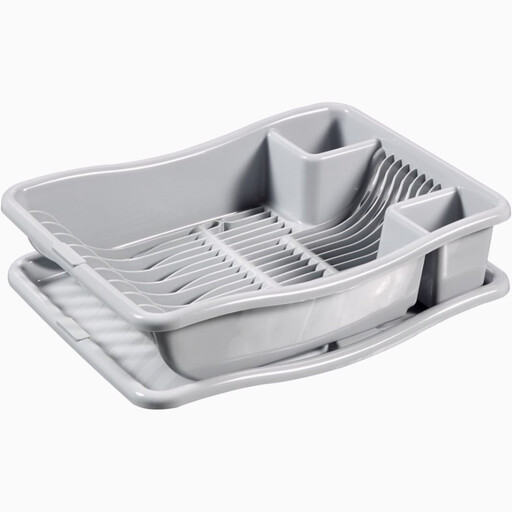
Why it stands out: Its compact size is a godsend for small apartments or kitchens where every inch counts. It easily holds the daily dishes for one or two people without monopolising the countertop.
The integrated tray collects water, preventing puddles and stagnation on your countertop. Made of plastic, it eliminates any risk of rust.
Compact yet sturdy construction. Easy to clean, it's even dishwasher-safe for hassle-free maintenance.
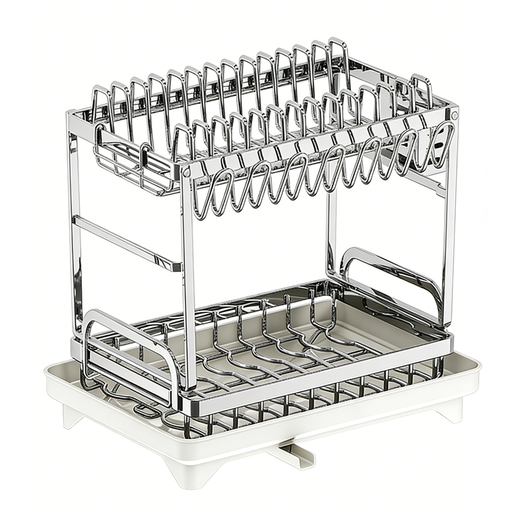
Why it stands out: Its two-tier structure doubles the drying capacity without taking up an extra inch of countertop space. It's the perfect solution for handling the flood of dishes after family meals.
The drainage pipe continuously channels water directly into the sink, putting an end to stagnant water. Its mixed-material design (stainless steel and PP) is engineered for optimal rust resistance.
High vertical capacity and dedicated compartments for impeccable organisation. The active drainage system keeps the countertop spotless.
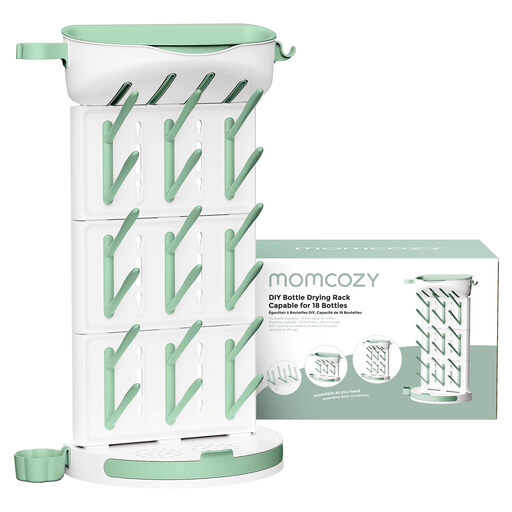
Why it stands out: Designed for new parents, it can dry up to 18 bottles and all their accessories (nipples, rings, caps) or breast pump parts in a perfectly hygienic and organised way.
It solves the headache of small, unstable parts on a conventional dish rack. The removable tray manages water run-off, and its BPA-free plastic construction is a guarantee of safety for everything baby-related.
Very high capacity and a fully customisable design. Easy to disassemble for a deep clean or to take with you when travelling.
Discover our full selection of products that meet our demanding selection criteria and safety standards.
For a plastic or stainless steel model, weekly cleaning is recommended. Empty and wash the drip tray with hot, soapy water. For stubborn limescale marks, diluted white vinegar works wonders. Many plastic models are top-rack dishwasher-safe for a deep clean.
304 stainless steel (also known as 18/8) contains chromium and nickel, which give it excellent resistance to rust and corrosion under normal kitchen use. However, no steel is 100% immune to rust. To preserve its finish, avoid prolonged contact with very salty or acidic foods and dry it from time to time.
Although both are used to drain water, their functions are very different. A stainless steel colander is mainly used for rinsing food (vegetables, pasta, rice) or draining it quickly before cooking. A dish rack, on the other hand, is a kitchen organiser designed for air-drying dishes (plates, glasses, cutlery) after washing, holding each item in a stable and organised manner.