
Livraison le jour même ou le lendemain

Qualité garantie

Débloquez vos offres de bienvenue: Livraison GRATUITE | Jusqu'à -80 % | 30 jours d'essai gratuits à JoyPlus
Téléchargez l'application
A dish drying rack should let plates, glasses and cutlery dry without turning your countertop into a permanent puddle. Yet some models boast generous capacity or a polished finish, only to prove difficult to clean, unstable or simply too bulky for the kitchen.
In small French kitchens, the choice mainly comes down to three factors : the space genuinely available, water management and accessory organisation. Here are the criteria to review before buying, along with a selection of models suited to different needs.
A two-tier dish drying rack can hold more items by making use of vertical space. However, you still need to check its width, depth and the clearance required above it. An overhead cabinet, window or cupboard may make installation difficult—or even impossible.
Conversely, a very compact model may be ideal for one person but lack enough dividers for the plates, bowls and glasses used during a family meal. Practical capacity therefore depends on the internal layout, not just the stated number of items.
A dish drying rack with a drip tray protects the countertop, provided the tray is easy to remove and clean. A tray that is too shallow can quickly overflow. An outlet that can be directed towards the sink, or installation directly above it, reduces the risk of puddles but requires a stable surface and precise positioning.
The stainless steel dish drying rack is popular for its understated appearance and resistance to moisture. Stainless steel does not, however, prevent water marks or soap residue. The structure should be wiped down regularly, without using steel wool or abrasive cleaners. For plastic components, also check their heat resistance and whether they include small removable parts.
Measure the available space before comparing products :
A space-saving dish drying rack may be narrow, vertical or extendable. An extendable sink rack, for example, must be adjustable to a length compatible with the edges of the sink. The Maxcook model featured below extends from 29 to 44 cm, with a width of 15.5 cm and a height of 10.5 cm.
A good dish drying rack should allow water to drain away or collect without leaving dishes sitting in a puddle. In particular, compare :
A sink-mounted dish drainer installed directly in the sink helps limit splashes on the countertop. It must nevertheless remain stable and avoid obstructing the drain.
304 stainless steel is commonly used for accessories exposed to moisture. It offers reliable corrosion resistance in normal household use, but does not eliminate the need for regular maintenance. Polypropylene is lightweight and easy to wash, but should be kept away from flames and not loaded beyond its capacity.
Always observe the maximum load specified by the manufacturer. For example, the Curver models featured below state a maximum load of 6 kg or 8 kg depending on the reference. Distribute plates and glasses evenly rather than concentrating the entire load on one side.
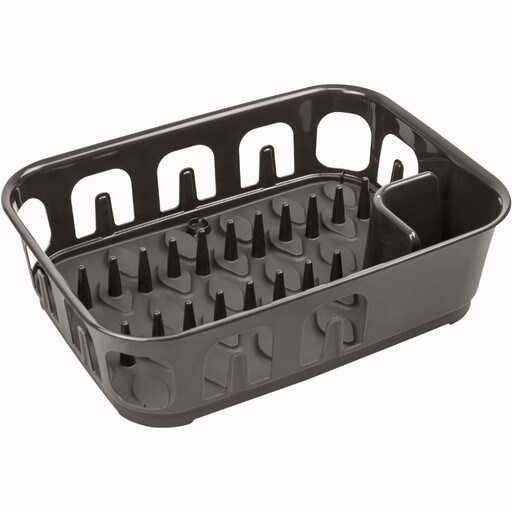
Why this model suits this profile : its square 39.1 × 29 × 10.9 cm format is well suited to everyday use while offering sensible capacity.
The integrated tray collects water, while the cutlery holder keeps smaller utensils separate from the plates.
Polypropylene construction, side cup holders and a stated maximum load of 6 kg, to be distributed evenly.
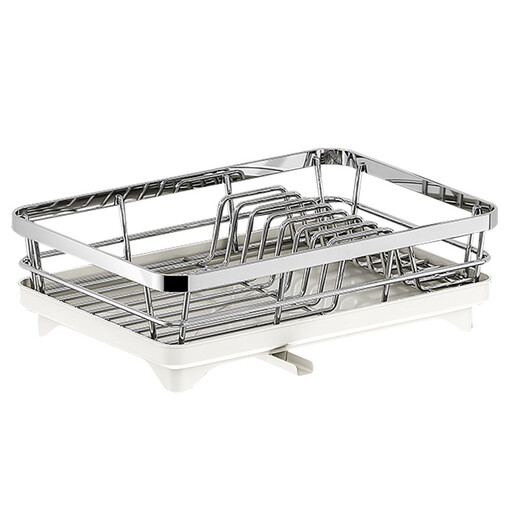
Why this model suits this profile : it combines a stainless steel structure with dedicated compartments for plates, bowls, cups and cutlery.
The removable tray comes out easily, helping prevent stagnant water and simplifying cleaning.
Stainless steel frame and polypropylene lower tray, with no assembly required and an integrated drainage system.
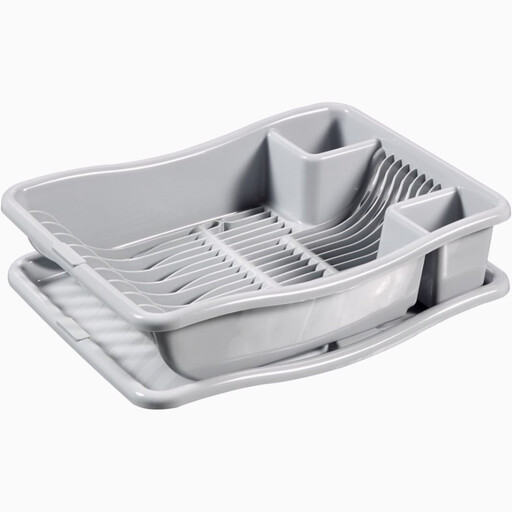
Why this model suits this profile : its 29 × 10.5 × 39 cm format and dividers are suited to households that dry several items after every meal.
The tray collects water, while the integrated cutlery holders keep utensils from spreading around the sink.
Stated capacity of 12 plates, removable tray and an indicated maximum load of 8 kg.
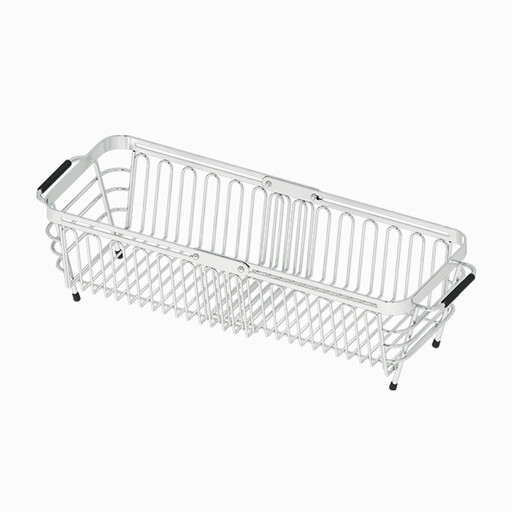
Why this model suits this profile : it sits above the sink and can also be used to rinse and drain fruit and vegetables.
Water drains directly into the sink, eliminating the need to empty a tray and preventing additional moisture on the countertop.
304 stainless steel, adjustable length from 29 to 44 cm, width of 15.5 cm and a draining mesh base.
We have put together an updated selection of products that meet these purchasing criteria and the safety requirements applicable in France.
Place it on a level surface near the sink, leaving enough room to remove the tray. Empty the tray regularly to prevent water from stagnating. If the model has a drainage outlet, direct it towards the sink and check that the entire unit remains perfectly stable.
Its lifespan depends on the material, the load it supports, exposure to water and maintenance. A 304 stainless steel model is perfectly suitable for a humid environment, provided it is rinsed and dried regularly. Avoid abrasive products, repeated impacts and overloading the compartments.
It can free up countertop space by making use of vertical clearance, but first measure the space available beneath overhead cabinets. In a very narrow kitchen, an expandable sink rack or a separate utensil holder may sometimes leave more usable surface available. Base your choice on the dishes you actually use every day rather than on an impressive theoretical capacity.