
Livraison le jour même ou le lendemain

Qualité garantie

Débloquez vos offres de bienvenue: Livraison GRATUITE | Jusqu'à -80 % | 30 jours d'essai gratuits à JoyPlus
Téléchargez l'application
Choosing the right power tool can often be a headache. Between marketing promises, unreadable spec sheets, and a jungle of models, it's easy to end up with an unsuitable tool. To help you see more clearly, we've broken down the pitfalls to avoid and the criteria that really matter before you buy.
The excitement of a new DIY project often leads to impulse buys. Here are three common mistakes that can end up being costly, both in money and frustration.
To make the right choice, forget the marketing jargon and focus on the features that will truly make a difference for your projects.
Torque, expressed in Newton-metres (N·m), represents your machine's rotational force. It's crucial to distinguish between:
For a cordless screwdriver dedicated to furniture assembly, a torque of 5 to 15 N·m is more than enough. For a versatile drill/driver, aim for between 30 and 60 N·m. Finally, a cordless impact wrench for automotive work will require a loosening torque of at least 300 N·m.
The runtime and power of your battery-operated tools depend on two key indicators:
Before you decide, check the battery's compatibility with tools you already own or plan to buy. Investing in a brand with an extensive ecosystem can prove very economical in the long run.
Classic "brushed" motors use carbon brushes that wear down through friction. In contrast, brushless motors are electronically controlled. Their advantages are numerous:
For regular or intensive use, investing in a brushless tool is more than worthwhile.
Rather than aiming for the illusory universal tool, it's better to choose one that is tailored to your needs.
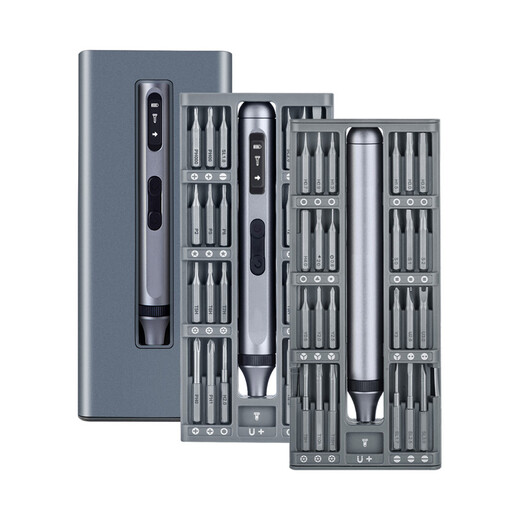
Ideal for: Delicate tasks like electronics repair, watchmaking, model building, or precision assembly. Too much torque would be counterproductive and risk damaging screws and components.
This tool doesn't claim to be versatile. By specialising in low, controlled torque (0.3 N·m), it avoids the "jack-of-all-trades" pitfall of being mediocre at everything.
Supplied with 48 bits, it covers a wide spectrum of precision screws. Its aluminium body ensures an excellent grip for detailed work.
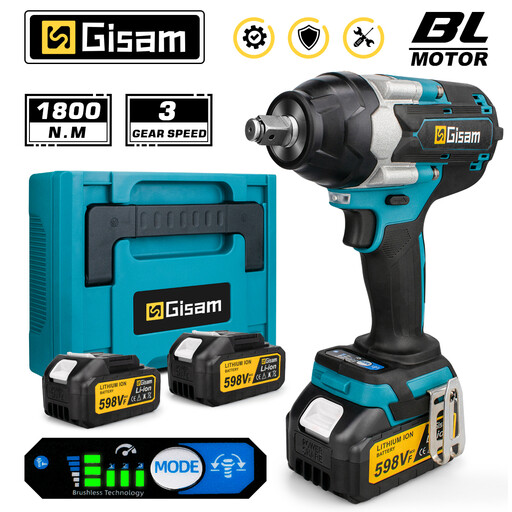
Ideal for: Heavy-duty jobs that demand colossal loosening torque: changing tyres, removing a CV axle, or dismantling rusted suspension components. The essential tool for automotive work.
This machine makes its intentions clear: it's compatible with the Makita 18V battery ecosystem, thus avoiding the proprietary platform trap. Its monstrous torque is justified by its highly specific use case.
A breakaway torque of 1800 N·m to tackle the most stubborn nuts. Its brushless motor guarantees endurance and performance.
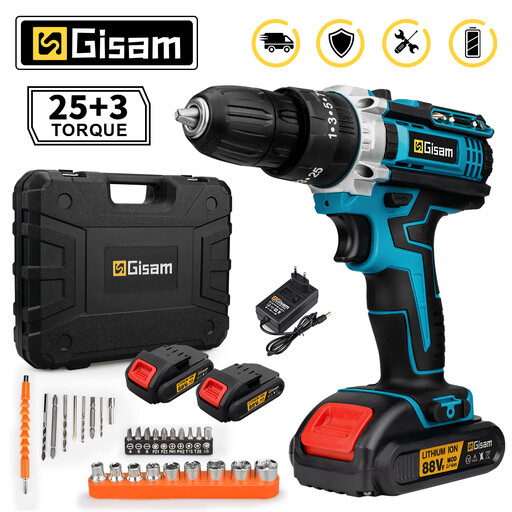
Ideal for: A 3-in-1 drill/driver (drilling, driving, hammer action) that is comfortable in most situations: assembling furniture, installing shelves, drilling into drywall or brick walls.
Thanks to its 25-position adjustment collar, the torque is always under control. No more stripped screws or damaged materials—a classic pitfall of low-end tools with poorly regulated brute force.
It comes with two batteries so you never run out of power, and a case of accessories to get you started right out of the box.
Discover our full selection of products that meet our selection criteria and current safety standards.
The lifespan of a lithium-ion battery is measured in charge cycles (generally between 500 and 1,000). In practical terms, for moderate use, a well-maintained battery (stored away from frost and extreme heat, never fully discharged) can remain effective for 3 to 5 years.
As a general rule, no. Each manufacturer uses proprietary connectors and electronics to lock you into their ecosystem. However, some brand alliances exist (like the Power for ALL Alliance around Bosch or the CAS) that guarantee cross-compatibility. Third-party adapters also exist, but be warned: using them will usually void your tool's warranty.
Absolutely not; it all depends on the application. Excessive torque for a precision task (driving into soft wood, assembling flat-pack furniture) risks splitting the material, stripping the screw head, or driving the screw in too deep. This is precisely why good drill/drivers have a clutch ring to adjust the torque.