
Livraison le jour même ou le lendemain

Qualité garantie

Débloquez vos offres de bienvenue: Livraison GRATUITE | Jusqu'à -80 % | 30 jours d'essai gratuits à JoyPlus
Téléchargez l'application
The ceramic bowl is a cornerstone of our kitchens. It's a breakfast companion, a comforting vessel for hot soup, and the perfect showcase for a mixed salad. However, buying one can quickly lead to disappointment. An attractive design can hide poor quality, and marketing promises rarely stand up to the test of daily use. To help you see things more clearly, we've broken down the common pitfalls to avoid and the essential criteria to check before you buy.
Behind a stylish appearance, you can sometimes find flaws that ruin the experience after just a few months. Here are the points to watch out for to avoid throwing your money away.
For a successful purchase, focus on a few key features that make all the difference in durability and versatility.
Understanding the type of ceramic is the first step. It's not just a matter of aesthetics, but of resistance and daily use.
There's a right bowl for every use. Capacity and shape should therefore be tailored to your habits.
For hassle-free use, always check for the official icons guaranteeing microwave and dishwasher compatibility. Also, think about storage: a designer bowl with a stable base and straight sides will be much easier to stack than a model with a narrow base and flared shape. A set of stackable bowls is a significant space-saver.
Rather than an endless list, we've chosen to select products for specific user profiles. Each choice illustrates how to avoid the pitfalls and find the perfect bowl for your daily life.
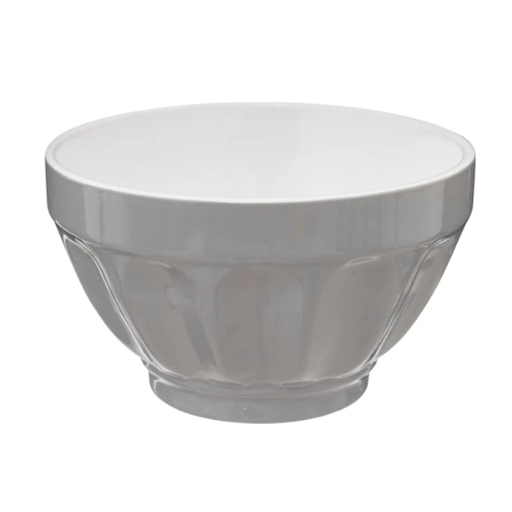
Why we chose it: Ideal for those looking to add a touch of style to their table without sacrificing practicality. Its ribbed texture and sophisticated grey colour instantly elevate the presentation of a soup, salad, or breakfast.
This bowl is made of earthenware, a material chosen for its aesthetic appeal. By clearly identifying it, you avoid the trap of mistaking it for stoneware. It's perfect for careful use, as long as you handle it with a little extra care, knowing its nature.
Its ribbed design offers a modern, artisanal aesthetic. Its 60 cl capacity makes it very versatile, from a breakfast bowl to a soup bowl.
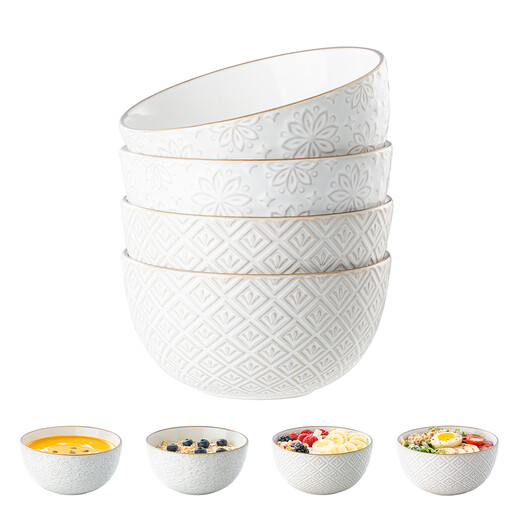
Why we chose it: This set of bowls is designed for family life. Sturdy, stackable, and with a large capacity (approx. 85 cl), it's suitable for every meal, from morning cereal to evening noodles. Each bowl features a different embossed pattern, adding a charming touch.
Made from high-quality stoneware, this set bypasses the problem of fragility. This non-porous material ensures excellent resistance to shocks and scratches, as well as perfect compatibility with the oven, microwave, and dishwasher.
The stackable design is a major asset for optimising storage space, a crucial point in a family kitchen. Its versatility (oven, freezer, microwave) makes it a true everyday ally.
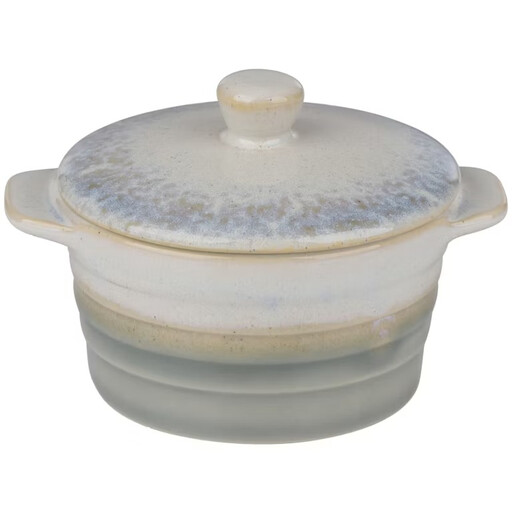
Why we chose it: Perfect for those who love elegant presentation and serving individual portions. This set of mini ceramic casseroles allows you to cook and serve soups, gratins, or desserts like crumbles directly at the table.
This product is explicitly designed for the oven, which removes any ambiguity about its heat resistance, unlike a standard bowl. Its robust construction is built for baking.
The "oven-to-table" functionality is its main asset. The lid helps keep dishes warm and adds a touch of elegance to the presentation, which is ideal for entertaining guests.
If you're looking for a container to take your meals on the go, discover our selection of products that combine practicality and food safety.
The main difference lies in the firing temperature and porosity. Stoneware is fired at a very high temperature, which vitrifies it, making it non-porous and very durable. Earthenware is fired at a lower temperature, remains porous, and must be glazed to be waterproof. In practice, stoneware is better suited for heavy daily use, while the more fragile earthenware is often chosen for its aesthetics.
Not always. Only bowls that are explicitly guaranteed by the manufacturer as oven-safe should be placed in one. A bowl that is merely "microwave-safe" is not necessarily able to withstand the high, prolonged temperatures of a conventional oven. Always check the manufacturer's instructions to avoid any risk of cracking or breaking.
Impacts are the main cause of chipping. Avoid clanking them together in the sink or dishwasher. When storing, if your bowls aren't perfectly stackable, you can place a paper towel or a felt divider between each bowl to cushion contact. Be especially careful with the rims of earthenware bowls, which are notoriously more vulnerable.