
Livraison le jour même ou le lendemain

Qualité garantie

Débloquez vos offres de bienvenue: Livraison GRATUITE | Jusqu'à -80 % | 30 jours d'essai gratuits à JoyPlus
Téléchargez l'application
Buying mixing bowls seems straightforward… until you end up with one that’s too small, an awkward shape that won’t stack, or a material that can’t go in the oven. Whether it’s a serving bowl, a dedicated mixing bowl for baking, or an everyday soup bowl, their uses don’t always overlap.
Before comparing prices, it’s best to avoid three common pitfalls:
To choose the right mixing bowls, start by thinking about how you’ll use them:
Diameter matters too. A wide, shallow pasta bowl makes for a great presentation, while a tall mixing bowl helps prevent splashes when you’re using a whisk or hand mixer. For a salad bowl, measure the space in your cupboards and check whether several pieces can be stacked easily.
A stainless steel bowl is ideal for food preparation, especially when you need to mix ingredients or work over a bain-marie. It resists corrosion and is easy to clean. However, unless the manufacturer states otherwise, it should not be placed directly on a heat source.
Ceramic bowls and porcelain bowls offer a polished look at the table. They can, however, crack after a knock or a sudden change in temperature. The manufacturer’s details should specify whether they are suitable for the oven, microwave and dishwasher.
A glass bowl lets you easily keep an eye on the contents and is well suited to cold preparations. A decorative or handmade model may need hand washing and might not be suitable for reheating.
Eco-friendly disposable bowls can be handy for a picnic or event. Even so, check their intended use, their resistance to hot liquids and the recycling guidelines in your area. The “eco-friendly” label doesn’t necessarily mean the product is compostable in all UK recycling streams.
A set of bowls is genuinely practical when the sizes are complementary and the pieces stack neatly. For regular use, make sure to check:
For preparations that can’t take direct heat, the LILY COOK Bain Marie Bowl is designed for gently melting chocolate, butter, cheese or making sauces. Its dimensions of 26 × 11 × 6 cm and stainless steel construction are for a specific purpose: it sits over a pan of simmering water and must not be placed directly on a hob.
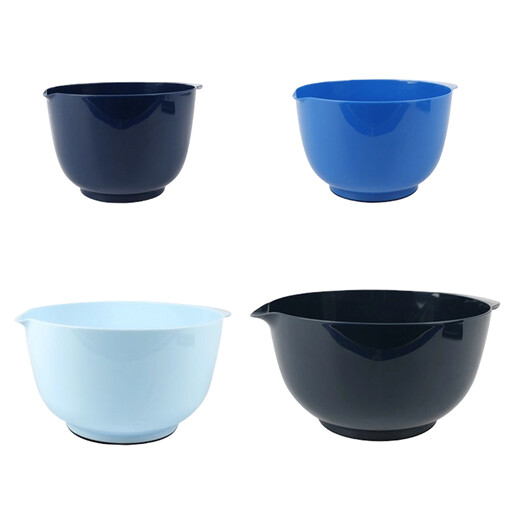
Why this suits this profile: This set brings together four reusable bowls for preparation, salads and baking. Their stackable design is especially handy in a small kitchen.
The non-slip base and stackable shape solve two common problems with all-purpose bowls: lack of stability and clutter in the cupboards.
Four-piece set, stated BPA-free design, reusable and stackable bowls.
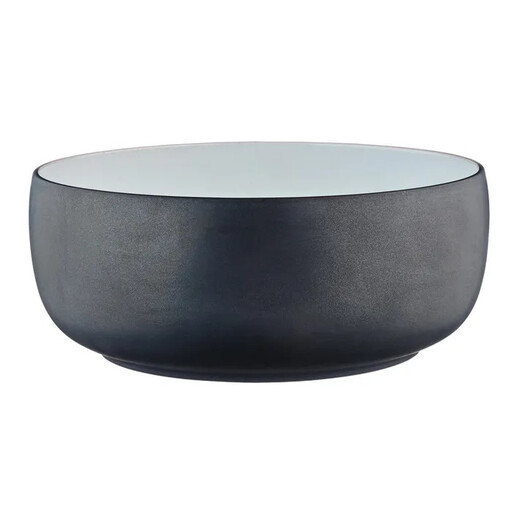
Why this suits this profile: With their two generous diameters and onyx finish, these salad bowls let you present salads, fruit and side dishes in elegant, matching tableware.
The dimensions are clearly stated and the two pieces stack, which prevents buying bowls that are the wrong size for serving or storage.
Two ceramic bowls with diameters of 25 and 29.5 cm, a smooth surface and stackable storage.
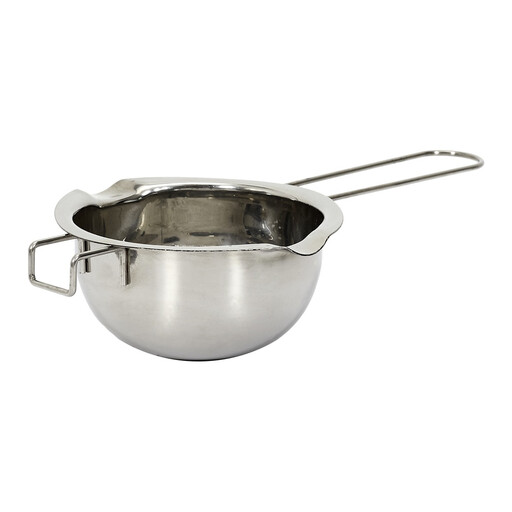
Why this suits this profile: This stainless steel bowl meets the needs of home bakers, cooks and professionals who regularly work with ingredients sensitive to direct heat.
Its use is clearly specialised: this isn’t a simple salad bowl, but a container designed for a bain-marie, with no direct contact with the hob.
Stainless steel, dimensions of 26 × 11 × 6 cm and stated dishwasher compatibility on the product page.
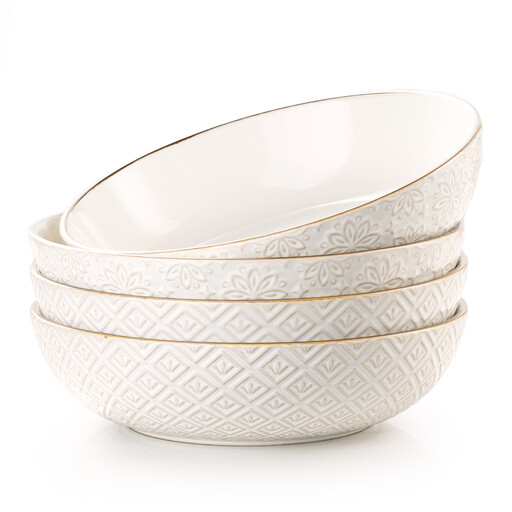
Why this suits this profile: Their 21.6 cm diameter and depth work well for pasta, salads, soups, cereals and family-style meals.
The four-piece set avoids having to mix and match bowls of different sizes, while the stackable design makes everyday storage simple.
Ceramic stated as dishwasher, oven, microwave and fridge safe.
For preparation and baking, stainless steel and certain reusable plastics are practical, especially when the bowl has a stable base. Ceramic can also work, but its weight and potential fragility make it less suited to repeated handling.
A volume of 500 to 800 ml is generally right for a single portion of soup, pasta or cereal. For a more generous meal, go for a wide, deep model. Remember to check its external dimensions to make sure it fits in your dishwasher and cupboards.
Its lifespan depends on the material, how often it’s washed and any knocks it takes. Regularly inspect ceramic, porcelain and glass bowls. Replace any piece that has a crack, a significant chip, warping or a surface that’s become difficult to clean. Disposable bowls, on the other hand, are intended for single use and should be recycled according to the guidelines for their material.