
Livraison le jour même ou le lendemain

Qualité garantie

Débloquez vos offres de bienvenue: Livraison GRATUITE | Jusqu'à -80 % | 30 jours d'essai gratuits à JoyPlus
Téléchargez l'application
A salad bowl can be used to mix batter, wash vegetables, serve a salad or store food. However, the wrong model can quickly become bulky, unstable or difficult to clean. Before placing your order, it is therefore worth looking beyond colour and marketing claims.
A large diameter does not guarantee a generous capacity. A very wide, shallow bowl may hold fewer ingredients than a deeper salad bowl of a similar size. For baking, liquid mixtures or kneading, check the depth, the shape of the sides and the stated capacity.
A lightweight salad bowl or one with a completely smooth base may slide across the worktop when you whisk eggs or mix a thick preparation. Conversely, a model that is too heavy can be difficult to move, especially once it is full.
A silicone base, rolled edges or a wider shape can improve stability. However, they are no substitute for a little caution: an overfilled bowl can still tip over.
A stainless steel salad bowl generally stands up well to repeated use. It can, however, develop light scratches and should be rinsed after prolonged contact with salt or acidic ingredients. Ceramic offers a more polished presentation, but requires greater care to avoid thermal shock and chips.
The dishwasher-safe label should also be checked on a case-by-case basis. It does not necessarily mean that accessories, lids or flexible bases can withstand the same washing cycles.
Do not choose based on appearance alone. For a mixing bowl used every day, ease of care, weight and resistance to knocks often matter more than the finish.
A set of salad bowls is useful if you prepare several ingredients at the same time. Nesting models help minimise the space taken up in a cupboard. Compare the dimensions of each piece: a set described as compact may still require considerable storage height.
In a small kitchen, choose a stackable salad bowl or a set with gradually increasing diameters. For a family, several capacities make it easier to prepare a vinaigrette, batter, filling or dish to share.
A salad bowl with colander can combine washing and draining fruit or vegetables. The holes should be fine enough to retain small foods while still allowing water to drain away properly.
A salad bowl with lid can be used to store food in the refrigerator or temporarily protect it from splashes and dust. However, check that the lid closes securely and is compatible with the stated cleaning method.
For serving, a wide salad bowl makes it easier to mix and serve ingredients. A deeper pasta bowl is suitable for individual portions, soups and certain preparations, but does not necessarily replace a large salad bowl intended for preparation.
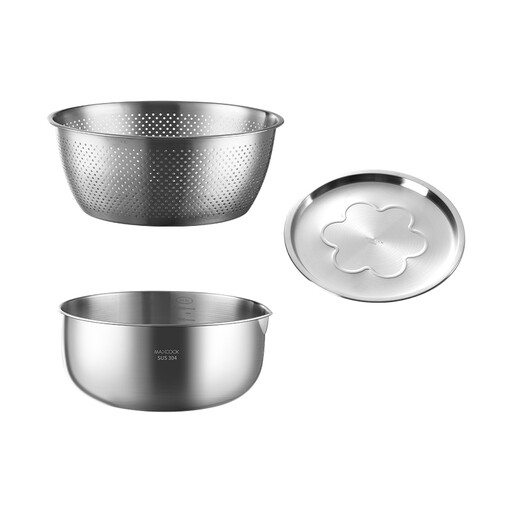
Why this choice suits this profile : This set of three 304 stainless steel bowls covers everyday needs without requiring multiple purchases.
The deep design helps reduce splashes, while the bowls nest together for easy storage.
Three pieces, measurement markings, draining function and stated dishwasher compatibility.
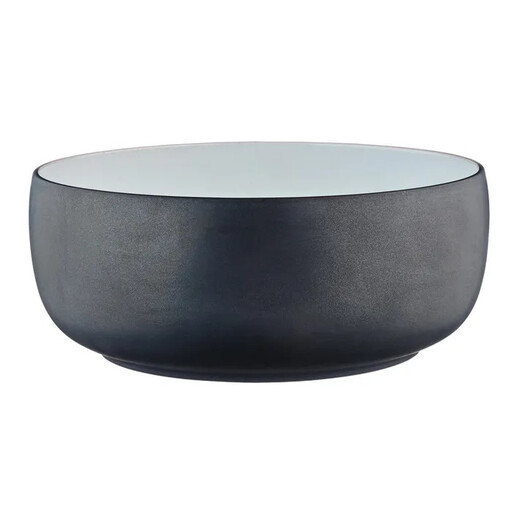
Why this choice suits this profile : This ceramic duo is designed for those looking for coordinated servingware that works just as well every day as it does when entertaining guests.
Both diameters are clearly stated, and the stackable design means you do not need to dedicate an entire cupboard to your servingware.
Two sizes, smooth surface and onyx-colour finish. Avoid sudden temperature changes.
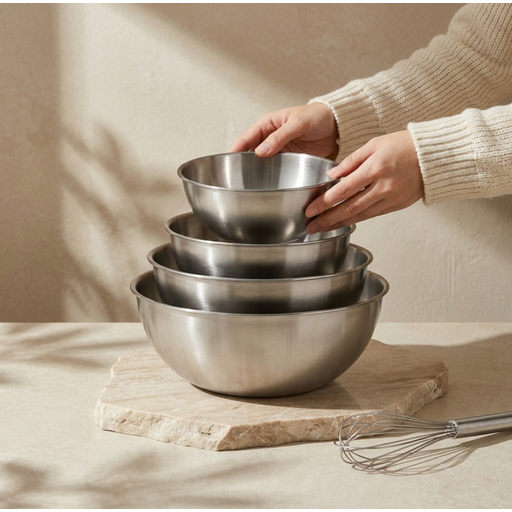
Why this choice suits this profile : The four sizes, from 19 to 28 cm, are well suited to family meals, baking and frequent storage.
The graduated sizes mean you do not need to take out an oversized bowl for every task, while the bowls nest together easily.
304 stainless steel, four capacities, rolled edge and stated dishwasher compatibility.
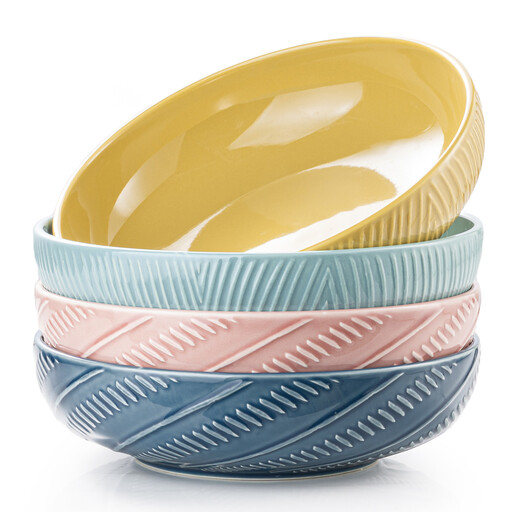
Why this choice suits this profile : Their 21.6 cm size is suitable for individual portions of pasta, salads, soups and dishes with sauce.
The size is specified for each piece, and the stackable design helps reduce the space taken up by a four-bowl set.
Ceramic stated to be dishwasher-, oven- and microwave-safe. Handle the bowls carefully after heating them.
We have brought together a complete, real-time updated selection of products that meet these purchasing criteria as well as European safety requirements.
To preserve a dishwasher-safe salad bowl, start by following the product-specific instructions. In all cases:
A silicone base can go in the dishwasher if the manufacturer permits it. However, hand washing can sometimes help preserve its grip and colour.
Stainless steel is generally suitable for mixing, whisking and kneading thanks to its reasonable weight and easy-to-rinse surface. A non-slip base can improve stability on the worktop. For serving at the table, ceramic or porcelain offers a more elegant presentation, although it is often heavier.
Not always. This type of bowl is useful for washing and draining small quantities of vegetables, fruit or salad. For larger amounts or very quick draining, a separate colander is often more suitable. Also check the size of the holes and how the two parts fit together.
A set of three or four sizes will generally cover everyday needs: small preparations, main mixing, washing and serving. If you cook regularly or prepare several recipes at the same time, a set of stackable salad bowls saves space while keeping several capacities close at hand.