
Livraison le jour même ou le lendemain

Qualité garantie

Débloquez vos offres de bienvenue: Livraison GRATUITE | Jusqu'à -80 % | 30 jours d'essai gratuits à JoyPlus
Téléchargez l'application
Whether you're a passionate weekend mechanic or a seasoned professional, the quality of your automotive garage equipment is non-negotiable. The problem is, the market is saturated with products making lofty claims that often hide critical flaws. Knowing how to distinguish a reliable tool from a dangerous gadget is therefore essential—not just for the quality of your repairs, but above all, for your safety.
Before you invest in new gear, it's crucial to understand the most common pitfalls so you can avoid them.
This guide will help you decipher technical specifications to make an informed choice, focusing on the criteria that truly matter for safe and effective vehicle maintenance.
To equip yourself with quality professional or amateur mechanical tools, you need to look beyond the marketing. Here are the technical points to inspect first on lifting and tightening equipment.
The stated capacity (e.g., 3-ton or 6-ton jack stands) is one thing, but it's worthless without a robust design and validation from an independent body.
For car repair tools like torque wrenches, precision is the true indicator of quality.
Every mechanic has different needs, and for every need, there's a tool. Here are our recommendations, chosen for their quality and their ability to overcome the pitfalls we've just discussed.
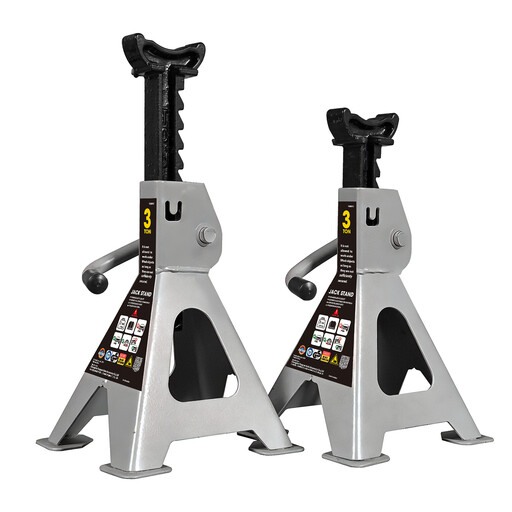
Why this pick? Ideal for the individual performing routine maintenance (oil changes, tyre changes, brakes) on their sedan, sports car, or SUV. An excellent balance of capacity, certified safety, and versatility.
Its thick steel structure, fully welded base, and dual EN 1494 and GS certifications eliminate any risk associated with low-end jack stands that have precarious stability.
Its adjustment range (276-420 mm) makes it compatible with both low-profile chassis and SUVs. The crisp, audible locking click at each notch confirms it is securely in place.
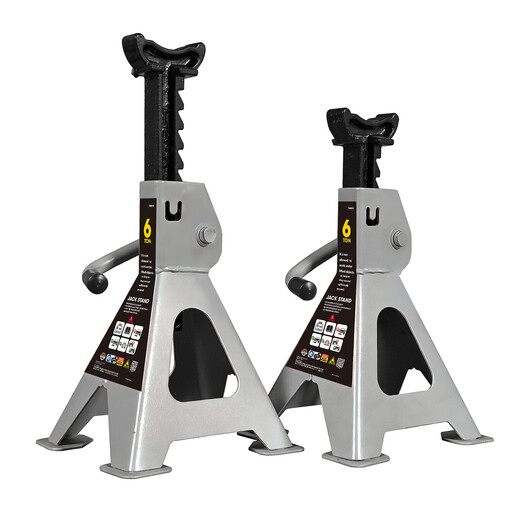
Why this pick? Designed for owners of large SUVs, 4x4s, vans, or motorhomes. Their true 6-ton load capacity and superior lifting height are essential for working on heavy, high-clearance vehicles.
They offer a true, EN 1494 certified load capacity, unlike products that overstate their performance. Their professional-grade welded steel structure is built for intensive use.
Their wide height range (388-580 mm) and the rubber pads that protect the chassis make them a perfect tool for the demands of heavy vehicles.
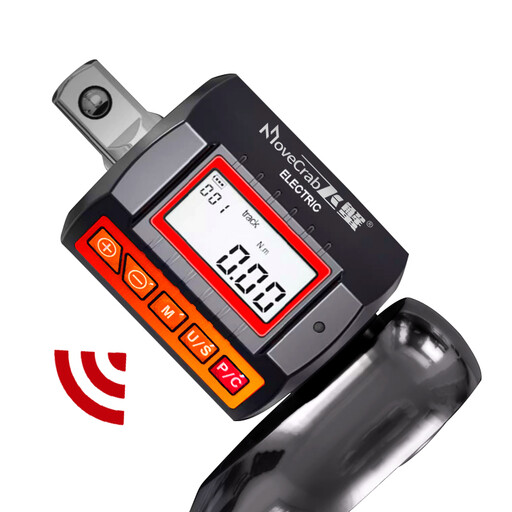
Why this pick? The perfect solution for those who already own a good set of ratchets and want to add high-precision torque functionality without investing in multiple torque wrenches. Ideal for automotive, motorcycle, and even bicycle mechanics.
It offers a certified digital accuracy of ±2%, far superior to many entry-level mechanical wrenches. Its audible and visual alarm prevents any risk of over-tightening.
Ultra-versatile thanks to its wide torque range (6-200 N·m), multiple measurement units, and the included 1/4" and 3/8" adapters. It transforms any standard ratchet into a tool with surgical precision.
Equipping yourself for precision mechanics doesn't stop at lifting and tightening. Wheel balancing, for example, is another crucial step for safety and driving comfort.
Should a torque wrench be recalibrated? Yes, absolutely. For regular use, an annual check is good practice to ensure its accuracy, especially for mechanical models. After each use, it is imperative to "unload" the wrench (set it back to its lowest value) to avoid leaving the spring under tension, which preserves its calibration. Digital adapters are less prone to this drift but must be handled with care.
Can I use a single jack stand to work under my car? No, never! This is an extremely dangerous practice. You must always use jack stands in pairs on a flat, hard, and stable surface to ensure the vehicle is balanced. Never rely solely on the jack to support the car's weight once you are underneath it.
What's the difference between 3-ton and 6-ton jack stands? A pair of 3-ton jack stands is generally sufficient for most passenger cars and SUVs, as you only lift one axle at a time (which is about half the vehicle's weight). The 6-ton models offer a much more comfortable safety margin and are essential for heavier vehicles (large 4x4s, commercial vans, motorhomes) or for intensive professional use.