
Livraison le jour même ou le lendemain

Qualité garantie

Débloquez vos offres de bienvenue: Livraison GRATUITE | Jusqu'à -80 % | 30 jours d'essai gratuits à JoyPlus
Téléchargez l'application
Whether for simple peace of mind or to comply with European travel regulations, many drivers are looking to equip their vehicles with a first-aid kit. It seems like a simple purchase, but it's full of potential pitfalls. Choosing the wrong DIN 13164-compliant kit can make your investment useless, or even dangerous in an emergency.
To avoid throwing your money down the drain, here are the most common mistakes to steer clear of:?
Being well-equipped isn't just about checking a box. It's about making a thoughtful choice for your safety and peace of mind on the road.
To ensure your car first-aid kit will actually be useful when you need it most, verify these essential points. They are what separate a mere gadget from genuine safety equipment for your vehicle.
The DIN 13164 standard is a German specification that precisely defines the mandatory contents of a vehicle first-aid kit. It serves as the benchmark in many European countries. A certified kit must contain a specific list of items, including:?
Demanding this compliance guarantees you'll have the right equipment for the most common situations and be in line with regulations when travelling abroad.
Every sterile item in your car emergency kit (dressings, bandages, etc.) has an expiration date. A quality kit should offer consumables with a shelf life of at least 4 to 5 years. Be sure to check this information before buying, as a kit that expires quickly is a poor investment. Our advice:?check your kit once a year to replace any used or expired items.
The bag or box that holds your supplies is just as important. It should be:?
A brightly coloured container (like red) is also a plus, making it instantly visible.
Instead of just a simple product list, we've selected models that meet specific needs while avoiding the common pitfalls.
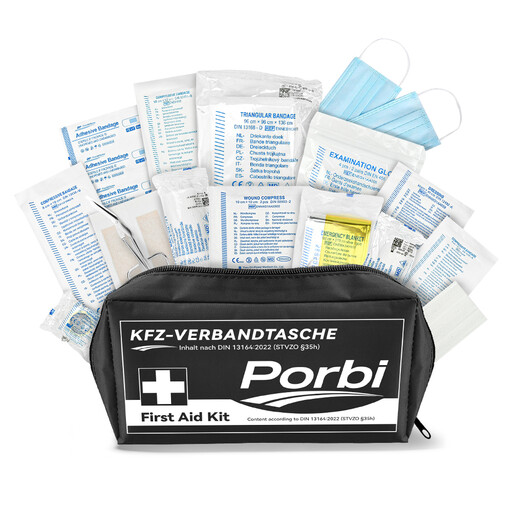
Why we chose it: Perfect for professionals or frequent travellers crossing Europe. Its discreet black colour and compact size allow it to be stored easily in a company or personal vehicle without drawing attention, while ensuring full compliance for inspections.
This kit provides a detailed list of its certified DIN 13164 contents, so you avoid the risk of an incomplete purchase. It's your guarantee of being perfectly equipped.
A complete, certified kit in a discreet and durable bag. It provides peace of mind on the road, whether for work or holidays.
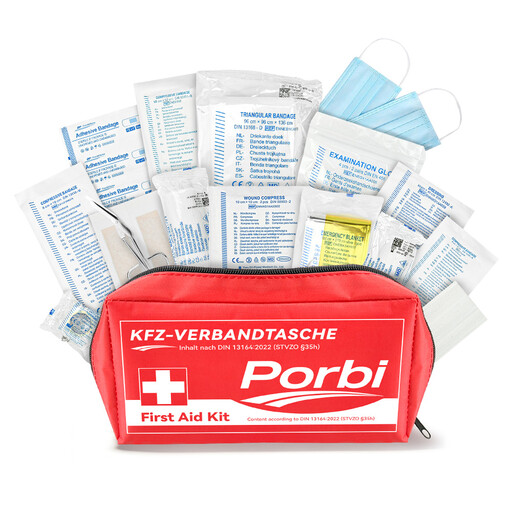
Why we chose it: For family holiday departures, visibility is key. This kit's bright red colour makes it immediately locatable in a packed boot or under a seat—a crucial detail in an emergency where every second counts.
Its robust bag protects the sterile components from being crushed by luggage or other items. No more damaged and unusable supplies right when you need them most.
Its bright colour helps you find it in an instant during a stressful situation. Its sturdy design is built to withstand the rigours of family travel.
We've put together a complete selection of products that meet our strict criteria and current safety standards.
For private vehicles (category M1), a first-aid kit is not mandatory in France, but it is still highly recommended by road safety authorities. However, it is mandatory for certain commercial vehicles. Be aware, though:?if you travel to other European countries like Germany or Austria, it is mandatory for all vehicles there.
A DIN 13164 standard first-aid kit is very comprehensive. It includes a variety of bandages, dressings, sterile compresses, a pair of scissors, single-use gloves, an emergency blanket, adhesive tape, and a first-aid guide. The list is standardised to ensure you have everything needed to administer first aid.
The bag itself is designed to last, but the sterile items inside have an expiration date. Generally, the shelf life of the components is 4 to 5 years from the manufacturing date. It is therefore advisable to check the dates annually and replace any expired or used items to ensure your kit is always ready for use.