
Livraison le jour même ou le lendemain

Qualité garantie

Débloquez vos offres de bienvenue: Livraison GRATUITE | Jusqu'à -80 % | 30 jours d'essai gratuits à JoyPlus
Téléchargez l'application
A dead battery, a puncture on the motorway or an accident in a poorly lit area does not always leave time to improvise. Yet many motorists choose their car emergency equipment based solely on the advertised peak current, the number of accessories included or a vague promise of universal compatibility.
In France, the right choice depends primarily on the vehicle, how often you drive and how easy the equipment is to use. An SUV, pick-up, motorhome, motorcycle and city car do not have the same requirements. Here are the key points to check before putting together a genuine car safety kit suited to your needs.
A portable jump starter may display an impressive peak current without necessarily being suitable for your engine. Always check:
A model designed for a city car will not necessarily be suitable for a motorhome diesel engine. Conversely, an oversized device may be heavier and bulkier than necessary.
The “150 PSI” label alone is not enough to assess inflation speed. You should also examine the airflow rate, hose length, screen readability and whether the unit features automatic shut-off. A car air compressor may reach a high pressure while still taking several minutes to inflate a tyre.
Before choosing a 12 V tyre inflator, check the recommended pressure in your vehicle’s manual. The value displayed by the compressor does not replace the manufacturer’s specifications. For SUV, pick-up and motorhome tyres, airflow and battery runtime are particularly important.
A window breaker hammer and a seat-belt cutter should remain within easy reach of the driver’s or front passenger’s seat—not at the bottom of the boot. Another frequently overlooked detail is that tempered side windows are manufactured differently from windscreens, while some rear windows are laminated.
The product descriptions for the smosun models presented below specify that the tool is intended for tempered side windows. It should therefore not be considered suitable for the windscreen, panoramic glass roof or laminated glass. A fixed, visible and easily accessible location matters just as much as the tool itself.
A standalone jump starter is only useful if it is charged. Some devices advertise extended standby times, but regular maintenance remains essential: recharge every three to six months depending on the model, store in a dry place and check the condition of the cables.
For family use or long journeys, choose a device with:
To avoid setting errors, a compressor equipped with a digital display and automatic shut-off is considerably more convenient. PSI, bar and kPa units make it easier to compare the displayed value with the figure specified in your vehicle’s manual. Do not run the compressor continuously beyond the duration stated in its instructions, and allow it to cool down when necessary.
A car first-aid kit should be identifiable within seconds. Check its contents carefully: gloves, sterile dressings, plasters, an emergency blanket and scissors should all be included among the essentials. Reference to the DIN 13164 standard can make comparisons easier, but it does not replace checking the requirements applicable in France.
The storage area should also contain the car breakdown tools suited to your vehicle: a safety vest and warning triangle in line with French requirements, jump leads or a jump starter, a torch, gloves, a pressure gauge and tyre-repair equipment appropriate to your tyres.
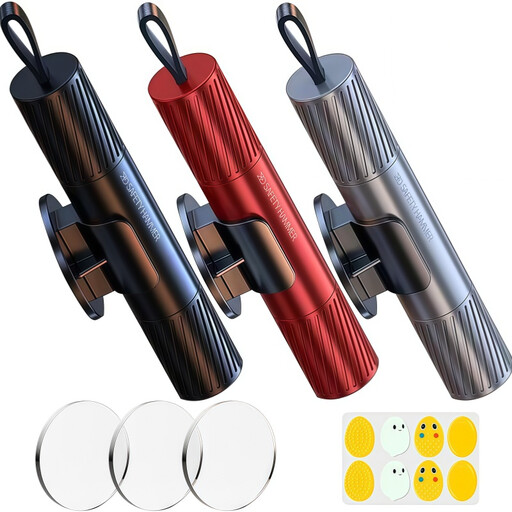
Why it suits this profile : this compact format is ideal for drivers who want to add an emergency escape tool to a city car or family vehicle without sacrificing valuable space.
The product description clearly states that the tool is limited to tempered side windows and excludes laminated glazing. This prevents users from assuming broader compatibility than the product actually offers.
The product combines a window breaker and seat-belt cutter in a tool presented as compact, with a non-slip handle. The set contains three pieces.
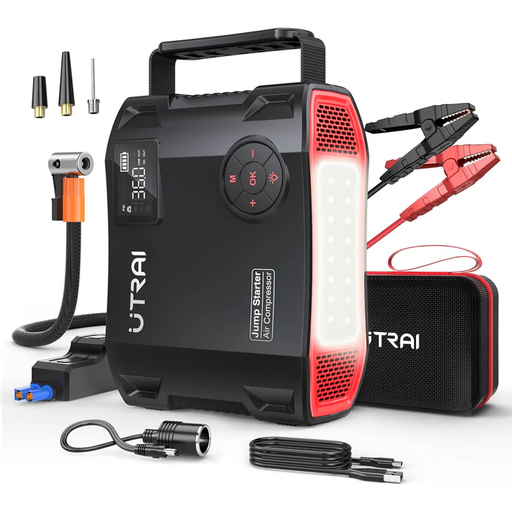
Why it suits this profile : it is designed for long-distance travellers and families who want starting assistance, inflation, lighting and USB charging combined in a single device.
The product description details its stated compatibility with petrol vehicles and diesel engines up to 10 litres, as well as the need to recharge the device every three to four months.
The product description mentions a 150 PSI compressor, a 45 L/min airflow rate, an LCD display, a 1,600-lumen light and a DC output of up to 160 W.
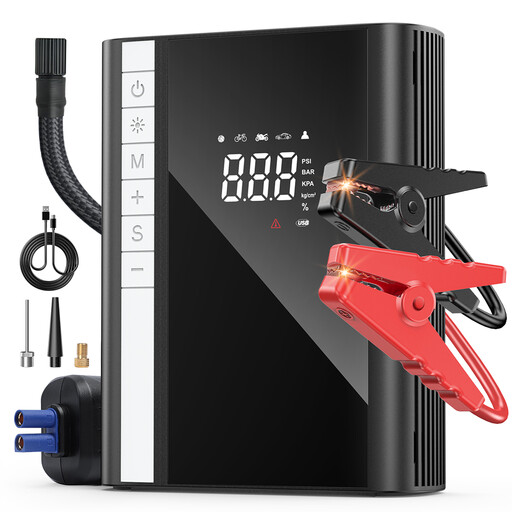
Why it suits this profile : it is intended for SUVs, pick-ups and motorhomes, where starting assistance and inflation may require greater power.
The product description specifies the vehicle types it is designed for rather than claiming universal compatibility. Nevertheless, check your engine capacity before buying.
The device combines a jump starter, air pump and emergency light, reducing the number of accessories you need to keep in the vehicle.
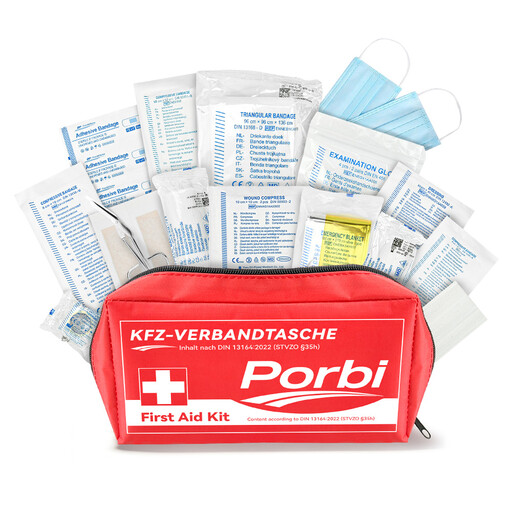
Why it suits this profile : its varied contents are suitable for vehicles used for holidays, daily commutes and family trips.
The published list details the plasters, dressings, gloves, bandages, emergency blanket, scissors and masks included. This allows you to compare the contents rather than relying solely on the packaging.
The manufacturer states that the contents comply with the DIN 13164 standard. Check the expiry dates of consumables and replace any items that have been used or damaged.
We have brought together an up-to-date selection of rescue products to help you compare equipment suited to breakdowns, accidents and road travel.
Store each item according to its function:
Regularly test the torch, inspect the cables and check that the compressor is working properly. Recharge portable batteries in accordance with the recommendations in their instructions. Avoid leaving electronic devices in a vehicle exposed to high temperatures for extended periods.
Start with the legally required equipment, then add a torch, gloves, a car first-aid kit, a battery jump-start device and a way to reinflate the tyres. The contents should then be adapted to your journeys and vehicle.
Its lifespan depends on the internal battery, storage conditions and frequency of use. Periodic charging—generally every three to six months, depending on the instructions—helps preserve its runtime. Also remember to inspect the cables and connectors.
No. It can only temporarily restore pressure when the air loss remains compatible with this type of use. A serious puncture, damaged sidewall or persistent leak requires inspection and repair by a professional.