
Livraison le jour même ou le lendemain

Qualité garantie

Débloquez vos offres de bienvenue: Livraison GRATUITE | Jusqu'à -80 % | 30 jours d'essai gratuits à JoyPlus
Téléchargez l'application
Nothing beats the pleasure of fresh bread, with its crispy crust and soft, fluffy crumb. Yet, keeping it fresh for more than 24 hours is often an uphill battle. A well-chosen bread box is the solution, but the market is flooded with models making sometimes misleading claims. Our mission is to help you see things more clearly and make an informed decision, avoiding the pitfalls that turn a good investment into mere kitchen clutter.
Before looking at specific models, it's crucial to know the most common mistakes. A poor purchase can not only waste your money but also cause your bread to go stale faster.
To make the right choice, focus on a few key parameters that will determine the effectiveness and longevity of your bread box.
The choice of material directly affects preservation and maintenance.
Before you choose, think about your consumption habits. A single person won't have the same needs as a large family. If you regularly buy large loaves or multiple pastries, a large bread box is essential. Also, consider the shape: some models are specifically designed for baguettes, while others, more squarish, are perfect for round loaves or boules.
The bread box is an object that sits on your countertop, so its aesthetics matter. Whether it's a modern bread box with clean lines, a Scandinavian model, or a black bread box for a contemporary look, harmony with your kitchen is a real bonus.
Some models go a step further by integrating clever features. The bread box with a cutting board lid is an excellent example of smart design. It not only saves space but also allows you to slice bread directly on a suitable surface, often with grooves to catch crumbs.
Here are a few options that cater to different user profiles, taking into account quality and practicality.
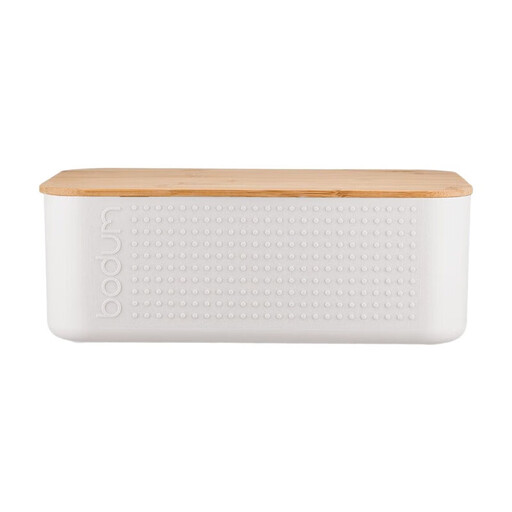
Why it's a great choice: Because it perfectly combines function and aesthetics. Its minimalist white and wood design fits seamlessly into a modern or Scandinavian-inspired kitchen, turning a simple storage item into a decorative element.
Its bamboo lid is not completely airtight, ensuring the necessary ventilation to release moisture. The BPA-free plastic body is durable and easy to clean.
Its highly durable bamboo lid doubles as a cutting board. An incredible space-saver that's remarkably practical for daily use. Its generous capacity is ideal for several loaves or pastries.
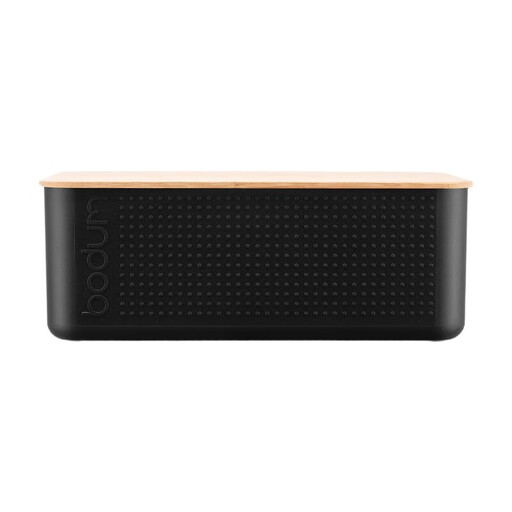
Why it's a great choice: Ideal for families or heavy bread consumers who need maximum volume and functionality. Its very large capacity and understated design are suited for intensive use and optimised storage.
Its generous dimensions solve the problem of boxes being too small for country loaves or baguettes. The sturdy plastic is dishwasher-safe, eliminating the maintenance hassles of more fragile materials.
It's a true 3-in-1: storage box, cutting board with a crumb catcher, and serving tray. The ultimate all-in-one solution.

Why it's a great choice: This isn't a classic bread box, but a brilliant alternative for fans of modular storage. This set allows you to store rolls, brioches, or sliced bread in ultra-durable, stackable containers.
316 stainless steel is one of the most robust and hygienic materials available. It won't warp, crack, or retain any odours, unlike low-quality plastics and woods.
A set of 3 sizes (600ml, 1100ml, 2200ml) for maximum versatility. Freezer and dishwasher safe, these boxes are a durable storage solution for the entire kitchen.
Discover our full selection of products that meet our strict quality criteria and safety standards.
Under good conditions, a bread box can extend your bread's freshness by an average of 2 to 4 days, compared to just one day left in the open. The exact duration depends on the type of bread (sourdough keeps better) and the ambient humidity. The goal is to slow down the staling process, not stop it completely.
The body of the box (plastic or metal) can usually be washed with soap and water, or even in the dishwasher if the manufacturer specifies. For the bamboo lid, the golden rule is simple: never put it in the dishwasher or submerge it in water. Clean it with a slightly damp cloth and a little mild soap if necessary. Dry it immediately and let it air-dry completely before putting it back on to prevent any warping or mould.
Absolutely not, and that's actually the secret to good preservation! Minimal air circulation is necessary to allow moisture to escape. The best-performing models are precisely those that are not 100% airtight or that incorporate discreet vents. This creates a balanced microclimate that preserves the crust without drying out the crumb.