
Livraison le jour même ou le lendemain

Qualité garantie

Débloquez vos offres de bienvenue: Livraison GRATUITE | Jusqu'à -80 % | 30 jours d'essai gratuits à JoyPlus
Téléchargez l'application
A well-organised cupboard is not just about how many containers it holds. To choose the right airtight food storage containers, you need to look closely at the material, size, intended use and ease of cleaning. From storage jars sold in sets to BPA-free plastic food containers and oven-safe glass models, the differences can make a real difference to your everyday routine.
Before you add anything to your basket, here are the common mistakes to avoid and the key criteria to consider when looking for practical containers—whether you want to store dry foods, organise a cupboard or prepare meals in advance.
A lid fitted with a silicone seal limits contact with air and moisture. That does not necessarily mean the container is suitable for every type of food or use. Rice, pasta, flour, cereals and nuts are generally very well suited to this type of storage.
Before pouring in a hot liquid, carbonated drink or preparation intended for the freezer, check the manufacturer's recommendations. Some plastic containers are not suitable for the oven, microwave or high temperatures.
A set of twelve pieces may look appealing on paper, but choosing the wrong sizes can quickly turn your cupboard into a construction game. Measure the depth of your cupboards, the height between shelves and the space available in the fridge.
Stackable jars make better use of vertical space, provided their bases are stable and the lids are genuinely designed to support stacking. For batch cooking, rectangular containers are often easier to line up and store than cylindrical jars.
A container may be dishwasher-safe even though its lid or seal needs to be washed by hand. Removable seals should be taken out, cleaned and dried separately to prevent moisture from building up. A clean lid that has been refitted correctly also helps maintain an effective seal.
Glass food storage containers are non-porous and generally retain fewer odours and stains left by certain foods. They are particularly suitable for anyone who wants to store, reheat or freeze meals in the same container, provided the product details confirm that these uses are permitted.
Borosilicate glass handles changes in temperature better than ordinary glass, but it is not unbreakable. Avoid thermal shock: do not plunge a hot container into cold water or place it directly in the freezer.
BPA-free plastic food containers are lightweight and less prone to breakage. They are practical for cupboards, transporting meals or storing large quantities. However, their heat resistance varies from one model to another. The “BPA-free” label does not automatically mean that the container is suitable for the oven or microwave.
To organise a cupboard effectively, it is best to combine several sizes:
Rectangular containers often make better use of space in the fridge and freezer. Transparent containers make it easier to identify the contents and see at a glance how much is left.
For containers intended for meal prep, check in particular:
A container that suits your habits will be taken out of the cupboard far more often than one bought simply because it looks attractive.

Why this choice suits this profile : With four capacities, from 0.25 to 2 litres, this set lets you build up your collection gradually with sizes suited to dry foods, leftovers and everyday meals.
The range of capacities helps prevent you from accumulating containers that are too large or unsuitable. The airtight lids are designed for food storage, but no use in the oven or on a heat source is indicated.
BPA-free plastic, twelve containers, airtight lids and handwashing or dishwasher cleaning, according to the product instructions.
Why this choice suits this profile : Its textured borosilicate glass, acacia lid and silicone seal combine visible storage with an attractive presentation on the worktop.
The product details specify that the wooden lid must be washed by hand and that the jar must not contain boiling liquids. Its usage limitations are therefore clearly defined.
750 ml capacity, borosilicate glass, silicone seal and dishwasher-safe body. The acacia lid requires separate care.

Why this choice suits this profile : With its 2-litre capacity, this container is ideal for family portions, batch cooking and storing meals in the fridge or freezer.
The product details set out the permitted uses and require the lid to be removed when using the microwave. They also advise against hobs and significant thermal shock.
Borosilicate glass body, 2-litre capacity, removable seal and stated compatibility with the dishwasher, freezer and microwave.
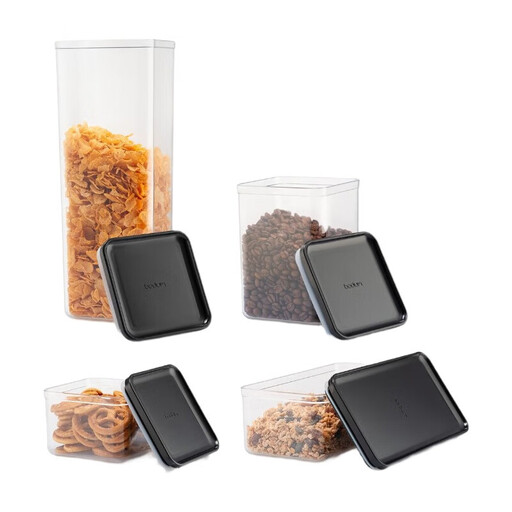
Why this choice suits this profile : With capacities ranging from 0.5, 1 and 1.2 to 2.6 litres, the twelve jars make it easy to organise bulk purchases and the whole family's provisions consistently.
The capacities are clearly stated, and BPA-free plastic is lighter than glass, particularly in the larger sizes. However, the product details exclude use in the oven, microwave and with boiling liquids.
Stackable design, transparent body, lids with silicone seals and dishwasher cleaning indicated for the different components.
We've brought together a comprehensive, real-time updated selection of products that meet these demanding criteria as well as European safety regulations.
How long a container lasts depends on how often it is handled, its material and the condition of its seals. To keep your airtight food containers in good condition :
A seal that no longer holds properly or a deformed lid can compromise airtightness. If this happens, replace the affected part rather than continuing to use the container to transport liquids.
Yes. Jars with airtight lids are suitable for many dry foods, subject to the manufacturer's recommendations. Fill them with completely dry products and avoid mixing a newly opened food with older contents.
Glass is resistant to odours and stains, while BPA-free plastic is lighter and more convenient to transport. For meal prep, the right choice mainly depends on your routine : check whether the model is suitable for the fridge, freezer, microwave and dishwasher.
Dry every component before filling the jar, use a clean spoon and do not place food that is still hot in a container that is not designed for it. An airtight lid helps limit moisture ingress, but it does not replace storage in a dry, cool place away from direct light.