
Livraison le jour même ou le lendemain

Qualité garantie

Débloquez vos offres de bienvenue: Livraison GRATUITE | Jusqu'à -80 % | 30 jours d'essai gratuits à JoyPlus
Téléchargez l'application
A well-organised pantry doesn’t have to start with buying the biggest set available. With airtight food storage containers, some marketing claims can be confusing: a lid advertised as perfectly sealed without any detail about the seal, a multitude of sizes that don’t match the foods you actually eat, or a material that’s a pain to clean day in, day out.
Whether you live in a flat, are kitting out a family kitchen, a coffee corner or a catering space, three common pitfalls keep cropping up:
A kitchen storage container set should cover several uses. Small sizes are good for spices, nuts, ground coffee or leftovers. Medium containers are handy for cereals, sugar and snacks. Large models are best for pasta, rice, flour or foods bought in bulk.
Think about shape too: rectangular boxes generally make better use of deep shelves, while cylindrical jars fit neatly on a worktop or in a coffee corner. Stackable dry food containers help you save vertical space, provided the base is stable and the lids can support stacking properly.
Airtightness usually depends on how well the lid fits with a silicone seal, or on an equivalent mechanism. The word “airtight” doesn’t automatically mean the container is suitable for liquids, hot food or freezing. You need to check the product’s specifications for any restrictions.
For coffee, tea, spices and dry goods, choose a lid that’s easy to remove but tight enough to limit air and moisture ingress. The seal must stay clean, dry and free from distortion. A transparent lid or a see-through container also lets you check the level without opening several boxes.
Glass food containers offer good visibility and generally retain fewer odours than some plastics. However, they are heavier and can break if dropped. Borosilicate glass is often valued for its resistance to temperature changes, but you should always confirm the usage conditions in the product’s specifications.
BPA-free plastic containers are lightweight and easy to handle in cupboards, for transport or for meal prep. Check they are suitable for food contact, the dishwasher and different temperatures. Never put a container in the oven, microwave or near a heat source unless it explicitly states it’s allowed.
Allow food to cool before sealing an airtight meal container, then dry the lid and seal thoroughly. Residual moisture can encourage bad odours and reduce the shelf life of dry goods.
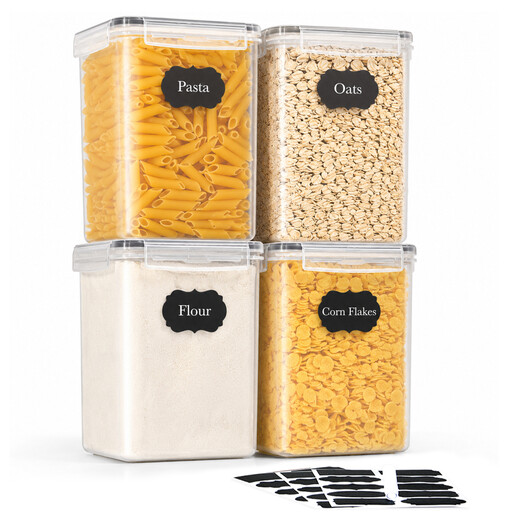
Why this suits this profile: With just four containers, this set lets you start with the foods you use most – like pasta, rice, sugar or flour – without investing in a large set straight away.
The limited number of pieces stops you filling a cupboard with sizes you’ll never use. The labels and tags mentioned make it easy to identify the contents.
Four-piece set, designed for dry food storage and includes labels according to the product description.
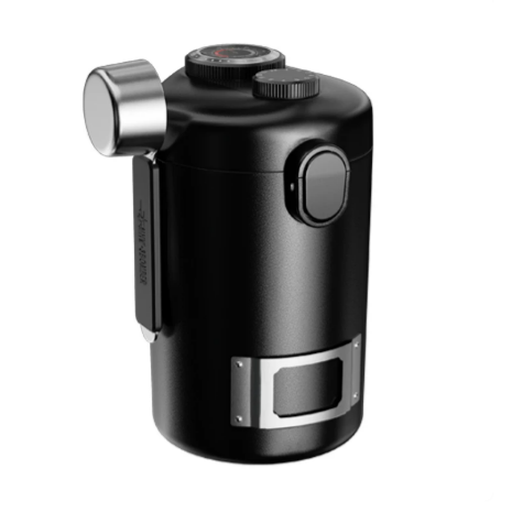
Why this suits this profile: This airtight jar is aimed at coffee lovers who want to organise their coffee corner with a dedicated container and a humidity dial to use as a simple reference.
The description mentions a silicone seal and a humidity tracking dial presented as a guide, not a high-precision measuring instrument.
Desk-friendly size, materials stated as food-contact safe and a double structure suitable for coffee, tea or dry goods.
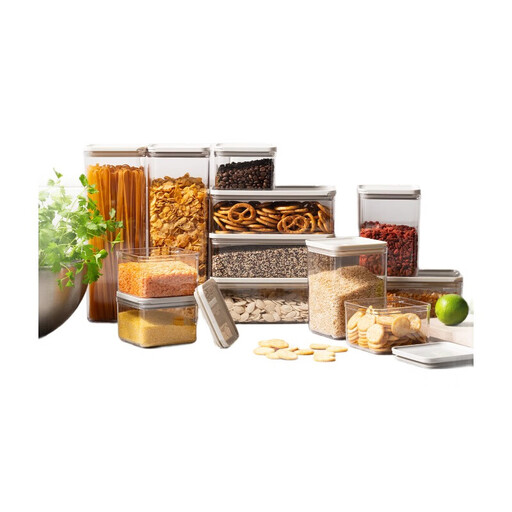
Why this suits this profile: With 12 containers and four stated capacities, this set is ideal for a family, meal prep or a kitchen that needs plenty of storage.
The volumes of 0.5 L, 1 L, 1.2 L and 2.6 L stop you using an oversized box for small portions. The lids are designed for stacking.
BPA-free plastic as stated, lids with silicone seals, 12 pieces and dishwasher compatibility indicated in the description.
We’ve put together a comprehensive, real-time selection of products that meet these demanding criteria and European safety standards.
For taking meals on the go, the JORDAN&JUDY set of 10 borosilicate glass containers includes five boxes of 1,040 ml and five of 370 ml. It could work for office lunches or preparing portions in advance. The product page for the food container set lets you check the features before buying.
The Bodum PRESSO set of 12 containers offers volumes of 0.25 L, 0.6 L, 1 L and 2 L, with BPA-free plastic as stated and airtight lids. It’s suitable for storing coffee, tea, snacks and dry goods: see the Bodum PRESSO set.
For these dry foods, go for a volume of 1 to 2.6 litres, depending on how much you buy and the depth of your cupboard. A container that’s too large leaves a lot of empty space, while one that’s too small means you’ll need multiple boxes.
Wash the container before first use, then dry the box, lid and seal separately. Avoid abrasive products and regularly check for cracks, distortion or signs of wear on the seal. If the closure no longer holds properly, it’s best to replace the affected part or the container.
Not always. The limits depend on the material and the manufacturer’s instructions. For a set of food containers, always check the permitted temperatures and any restrictions regarding the oven, microwave, freezer or hot liquids.