
Livraison le jour même ou le lendemain

Qualité garantie

Débloquez vos offres de bienvenue: Livraison GRATUITE | Jusqu'à -80 % | 30 jours d'essai gratuits à JoyPlus
Téléchargez l'application
A multi-purpose strong glue can save the day when repairing a handle, assembling a model-making component or putting a decorative element back in place. But relying solely on claims such as “extra strong” or “instant” on the packaging can lead to disappointment: a fragile repair, tricky application or incompatibility with the material.
Before buying, three common pitfalls are worth bearing in mind:
Start by identifying the two surfaces you need to join precisely. A universal glue or liquid cyanoacrylate is suitable for many repairs involving wood, metal, rubber, porcelain, ceramic and certain plastics.
However, the “multi-material” claim does not replace checking the product information. PE, PP and PTFE are often unsuitable for standard instant glues. When choosing plastic glue, look for compatibility that is explicitly stated, or a system with an activator designed for difficult-to-bond plastics.
For wood, a specialist glue may sometimes be more suitable than an instant adhesive. A water-resistant wood glue rated D3 is designed for indoor joints exposed to moisture, as well as sheltered outdoor areas.
The quantity matters too: a thin layer is generally easier to control than excess glue that overflows and leaves visible marks.
When repairing a shoe, flexible pipe or ball, choose a formula that remains slightly flexible and claims resistance to water, twisting and temperature changes. When securing a rigid decorative piece, transparency and application precision may be more important.
Do not confuse moisture resistance with permanent immersion. Even water-resistant glue must be used according to its instructions, allowing it to dry completely before exposing the repair to water or mechanical stress.
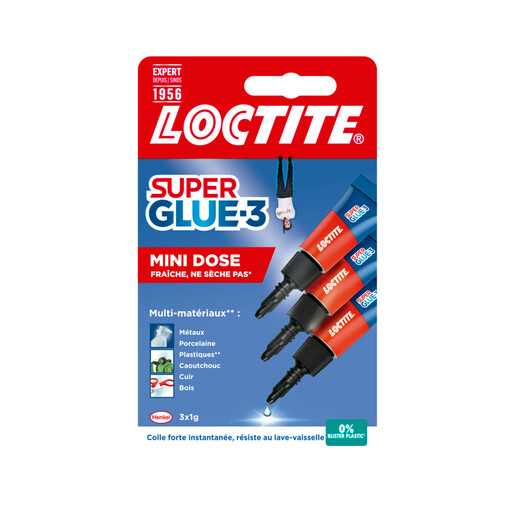
Why this choice suits this profile: With three 1 g doses, this pack is ideal for occasional small repairs, so you will not be left with an opened bottle sitting in a drawer for months.
The individual doses help prevent waste caused by a tube drying out after a single use.
Three 1 g doses, a transparent cyanoacrylate formula and stated compatibility with wood, rubber, porcelain, leather and certain plastics.
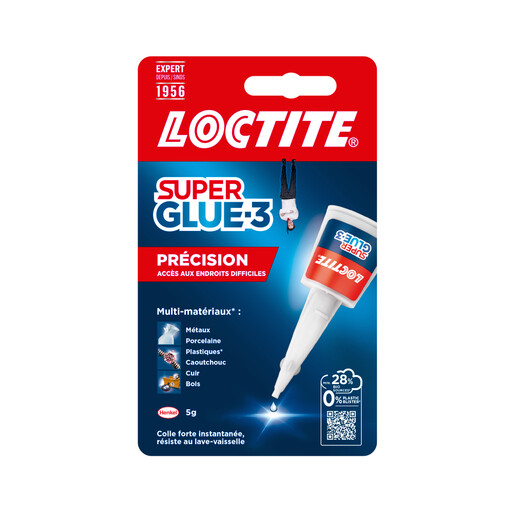
Why this choice suits this profile: Its long nozzle makes it easier to work on visible objects, costume jewellery, frames and models, with drop-by-drop application.
The precision nozzle helps prevent excess glue and drips when repairing small surfaces.
5 g bottle, transparent finish and stated water resistance once fully cured.
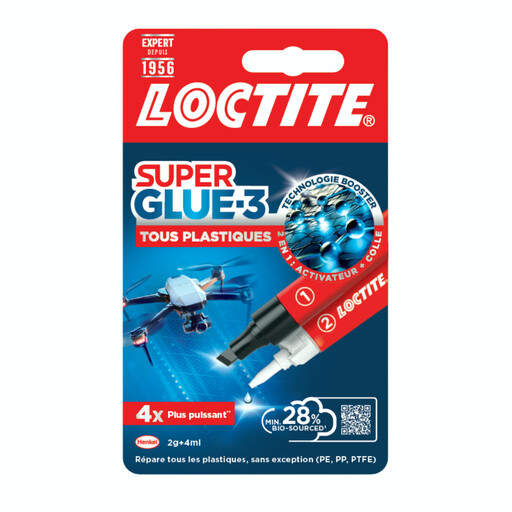
Why this choice suits this profile: The combination of a 2 g tube and an activator pen is designed for repeated repairs to plastic items, particularly everyday accessories and craft components.
The activator prepares difficult-to-bond plastics, rather than assuming that a universal glue will adhere to every polymer.
A two-part system, transparent application and stated suitability for different types of plastic. A preliminary test is still recommended.
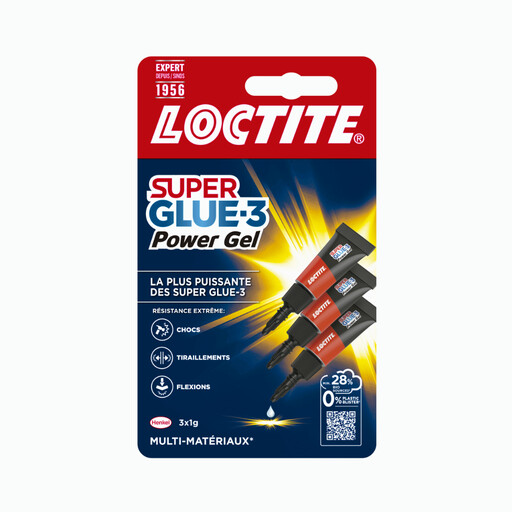
Why this choice suits this profile: Enriched with rubber, this gel is suitable for shoe soles, flexible pipes, inner tubes and items exposed to movement.
Its texture helps prevent drips, while its flexibility accommodates twisting better than a liquid glue that becomes rigid.
Three mini tubes, with stated resistance to water, impact, twisting and temperature changes.
For a neat, long-lasting repair, follow these steps:
Cyanoacrylate glues can bond skin and eyelids in just a few seconds. Wear suitable gloves, work in a well-ventilated room and avoid contact with the eyes. In the event of an accident, do not try to force the bonded areas apart and consult the manufacturer's instructions.
We have put together a comprehensive, real-time updated selection of products that meet these strict criteria and European safety requirements.
A gel glue enriched with rubber is generally better suited to materials that bend or undergo twisting. Check its compatibility with leather, rubber or fabric, then allow it to dry for the recommended time before wearing the shoe.
It depends on the size, formula and storage conditions. Mini doses are particularly practical for occasional use. After each application, clean the nozzle if necessary and seal the container tightly. Heat, humidity and a poorly closed cap speed up drying.
No. Some products claim to resist moisture or dishwasher cycles once fully cured, but that does not mean they can withstand prolonged immersion. For a project exposed to water, choose a formula whose product information clearly states that it is suitable for this use.