
Livraison le jour même ou le lendemain

Qualité garantie

Débloquez vos offres de bienvenue: Livraison GRATUITE | Jusqu'à -80 % | 30 jours d'essai gratuits à JoyPlus
Téléchargez l'application
A favorite mug shatters, the sole of a shoe peels off, a toy breaks... When faced with these small everyday mishaps, the first instinct is often to reach for a tube of strong adhesive. Yet, who hasn't cursed at a bond that won't hold, unsightly drips, or worse, fingers hopelessly stuck together? Choosing a glue might seem trivial, but the shelves are overflowing with products making vague promises, often resulting in failed repairs and wasted money.
As a product expert at Joybuy, my mission is to help you see things more clearly. Let's forget the marketing jargon and focus on what's practical. Here are the most common pitfalls to avoid to finally find the glue you need.
The 3 Mistakes to Stop Making When Choosing a Strong Adhesive:
For a successful bond, the secret is simple: match the glue to the project. Here are the three technical points to check before you head to the checkout.
These two glue families meet very different needs.
Before choosing, precisely identify the materials to be glued. A wood glue is formulated to penetrate wood fibers, while a plastic glue may require a primer to adhere to smooth, non-porous surfaces. Always read the packaging to check for compatible materials and, most importantly, excluded materials (often PE, PP, PTFE/Teflon). For bonding metal, a specific epoxy glue is often a better choice to withstand mechanical and thermal stress.
The format of the glue directly influences the quality of your work.
Rather than a long-winded list, here are targeted recommendations that address specific needs and avoid the pitfalls we've just discussed.
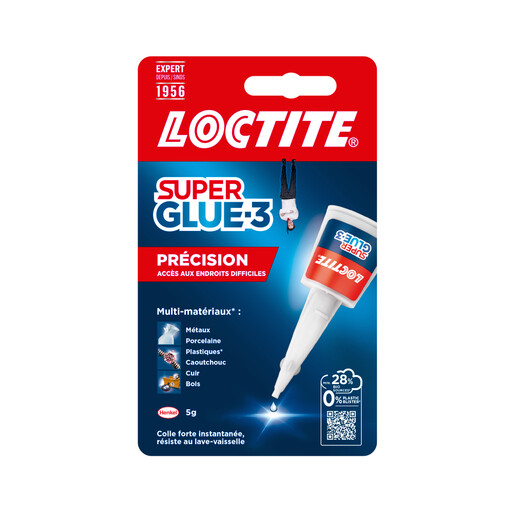
Why we chose it: Ideal for repairing small items (jewelry, eyeglass frames, fine ceramics) where cleanliness and precision are essential.
Its extra-long nozzle allows for drop-by-drop application, preventing drips and waste (pitfall #2). It's a targeted solution, not a generic liquid glue.
Precision applicator: Reaches hard-to-access areas. Resistance: The formula is water and dishwasher-resistant once cured.
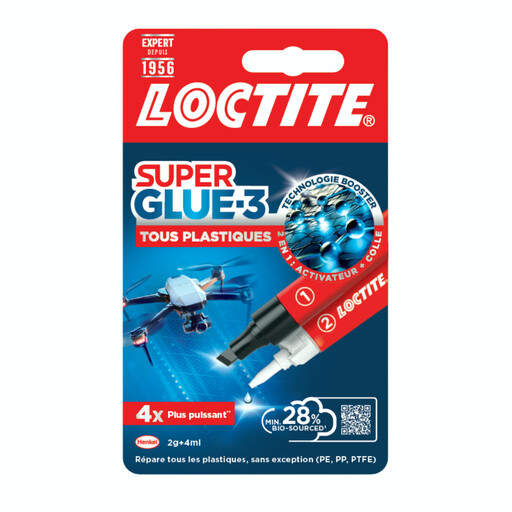
Why we chose it: For anyone who has failed to repair plastic items (toys, car accessories, appliances) with a standard glue.
It debunks the "universal" glue myth (pitfall #1) with its two-step system: an activator pen prepares the surface of difficult plastics (PE, PP) before applying the cyanoacrylate glue.
2-in-1 system: The activator ensures adhesion where other glues fail. True versatility: Effective on all types of plastics.
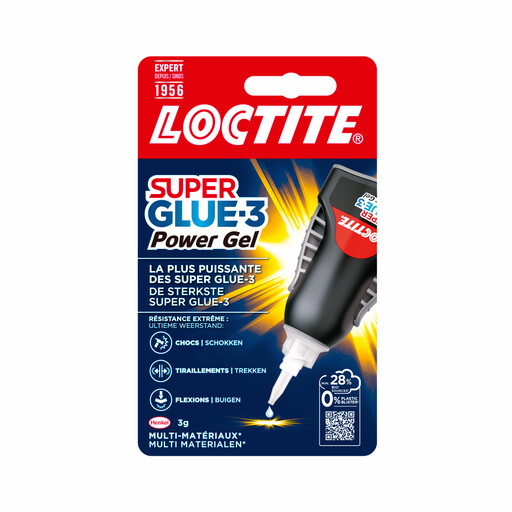
Why we chose it: Perfect for repairing objects on vertical surfaces or flexible materials like shoe soles, hoses, or rubber seals.
Its rubber-infused gel formula doesn't drip, which bypasses the problem of liquid glues on vertical surfaces (pitfall #2). The "control" bottle ensures a mess-free application.
Gel texture: Doesn't run and allows for slight repositioning. Flexibility: Ideal for flexible materials subject to bending and impact.
We have selected a full range of products that meet these demanding selection criteria.
It depends on the type of glue. A cyanoacrylate glue allows you to handle the object within a few seconds to a minute (this is the "setting time"), but its maximum strength is only reached after 12 to 24 hours. An epoxy glue has a setting time indicated on the package (e.g., 5 minutes), but it also requires about 24 hours for a full cure and optimal strength. Respecting this full cure time is crucial.
No, and this is a common source of error. Standard cyanoacrylate glues are ineffective on so-called "oily" or low-surface-energy plastics like polyethylene (PE) and polypropylene (PP). For these materials, it is imperative to use a specific plastic glue, often equipped with a bonding primer, like the Loctite Super Glue-3 All Plastics.
If you get super glue on your fingers, do not pull them apart. Soak the area in warm, soapy water and gently peel the skin apart, for example, with the edge of a nail file. For surfaces, acetone (found in some nail polish removers) is often effective, but you must test it on an inconspicuous area first, as it can damage certain plastics and varnishes. For dried glue, removal is often mechanical (careful scraping).