
Same-day & Next-day Delivery

Quality Guaranteed

Unlock Your Welcome Offers: FREE Delivery | Up to 80% OFF | Free 30-day JoyPlus trial
Download the APP
By the Joybuy Team, Your Product ExpertsUpdated August 27, 2026
A clogged drain? It's easily one of the worst daily hassles. Water pooling in the sink, the shower turning into a wading pool, foul odours creeping up... Faced with this nightmare scenario, the first instinct is often to rush to the supermarket for a drain cleaner. But be warned: not all products are created equal. The wrong choice can be completely ineffective and may even damage your pipes.
To avoid throwing your money down the drain, here are the pitfalls to avoid before you check out:
To cut through the noise and find the right product to unblock your drains, forget the marketing slogans and focus on a few key technical criteria.
The active ingredient is the product's engine. There are two main families:
The product's texture has a direct impact on its effectiveness, especially in standing water:
An essential habit: always check the label to ensure the product is compatible with your plumbing. Some drain cleaners should be avoided in toilets (toilet unblocker), especially those with a septic tank. Likewise, PVC, copper, or lead pipes do not all react the same way to aggressive chemicals. The "safe for all pipes" claim is reassuring, but caution is still advised for old or fragile systems.
We've selected products that have proven their worth, each tailored to a specific need. You're sure to find the perfect solution for your problem.
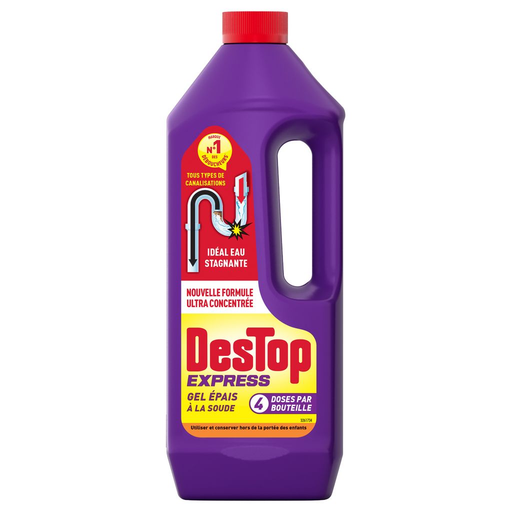
The ideal scenario: A surprise clog in the sink or shower? You need an immediate and reliable solution. Its versatility makes it the first-aid product you should always have on hand.
Its thick gel formula is no "gentle" solution. It's designed to slice through standing water and act at the heart of the clog, without getting diluted along the way.
Dense, soda-based gel formula. Compatible with all types of pipes, which minimises the risk of error.
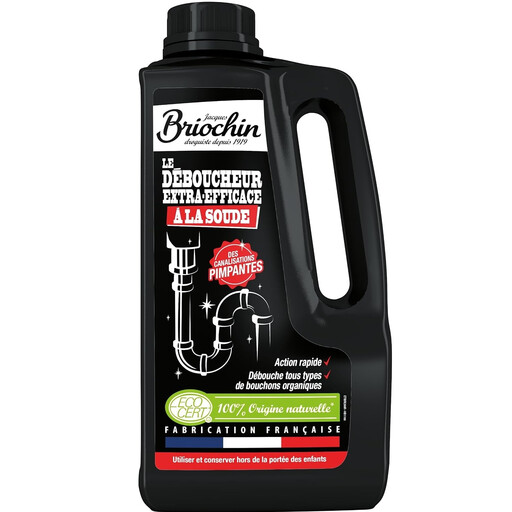
The ideal scenario: You're fed up with recurring clogs in the bathroom (hair, soap) or kitchen (grease). You're looking for a targeted, powerful, and uncompromising solution.
No empty promises here. Its power comes from a high concentration (20%) of caustic soda, an active ingredient with proven effectiveness against organic matter.
High concentration of caustic soda (20%). A concentrated formula for a targeted attack on grease, hair, and soap scum.
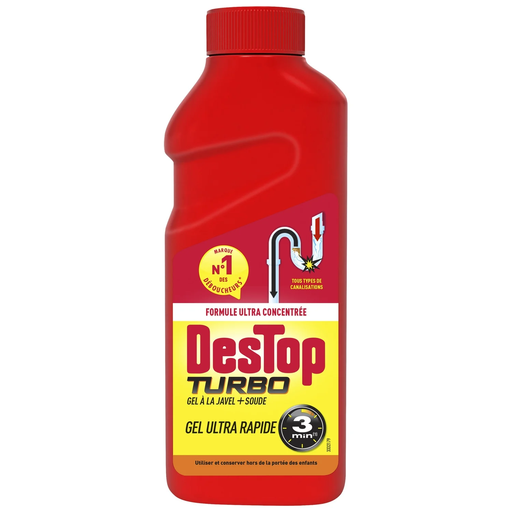
The ideal scenario: You've tried everything else without success. This is the last resort before calling a plumber, with a formula designed for the most stubborn blockages.
This product doesn't pretend to be a maintenance solution. Its name, "Turbo," and its "professional strength" promise say it all: this is a shock treatment, a far cry from weaker products.
Fast-acting shock formula, developed for the most stubborn clogs. Easy-to-measure for precise application.
1. How long should you let a drain cleaner work? The contact time varies enormously depending on the product and the type of clog. For express action, some gels like Destop Express work in 5 minutes. For tougher clogs, it's often recommended to let it work for 30 minutes, or even several hours (or overnight if the instructions allow). The golden rule: always read the directions on the packaging carefully.
2. Can you use a chemical drain cleaner with a septic tank? Extreme caution is required. Products based on caustic soda or sulfuric acid can destroy the essential bacteria for your tank's proper functioning. If you have a septic tank, you must use products labelled "septic safe." They are usually enzyme-based and formulated to preserve the tank's biological balance.
3. Is caustic soda dangerous for my PVC pipes? Most modern PVC pipes are designed to withstand household chemical drain cleaners, including those with caustic soda, provided you strictly follow the dosage and contact times. The risk increases with low-quality products, overdosing, or on old and weakened systems. When in doubt, consulting a professional is the safest bet.