
Livraison le jour même ou le lendemain

Qualité garantie

Débloquez vos offres de bienvenue: Livraison GRATUITE | Jusqu'à -80 % | 30 jours d'essai gratuits à JoyPlus
Téléchargez l'application
A sink that drains slowly, a shower where water pools, or a toilet that backs up can quickly disrupt your daily routine. However, picking a drain unblocker at random isn't always the best idea. The type of blockage, the material of your pipes, and the safety level of the formula should all guide your choice.
The word "express" catches the eye, but it doesn't mean the product is suitable for every kind of blockage. A clump of hair in a shower isn't necessarily treated the same way as a grease deposit in a kitchen sink. Always check the intended use: hair and grease drain unblocker, unblocker for basins and showers, toilet unblocker, or a multi-purpose product.
Some formulas advise against use on aluminium or sensitive surfaces. Even when a package claims compatibility with plastic and metal pipes, take the time to read the label and follow the recommended dosage carefully. In an older property, the pipework may differ from that in a newer build.
A gel drain unblocker for sinks may contain caustic soda, bleach, or other active agents. Never mix it with an acidic product, ammonia, another unblocker, or a household cleaner. Such combinations can release dangerous fumes. Wear sturdy gloves, eye protection, and ventilate the room while using it.
Stagnant water doesn't necessarily mean you need to increase the dose. Thick formulas are designed to stay in contact with the blockage, but the dwell time and amount to use vary from product to product.
Examine the ingredients carefully. The Jacques Briochin drain unblocker shown below contains 20% caustic soda, while other products rely on a gelled formula or chlorinated agents. A high concentration primarily demands extra precautions; it doesn't guarantee a better result in every situation on its own.
Also compare the stated action time: some products claim 15 minutes, others 30 minutes or more for stubborn blockages. Do not extend the dwell time beyond the recommendations without consulting the instructions.
A 500 ml bottle offering two doses may be enough for a one-off job. Conversely, a 900 ml or 1 litre format will be more practical in a family home or for regular maintenance. Also check whether the product needs to be poured into a dry drain, whether it can work even with standing water present, and whether a thorough rinse with warm water is required.
If the blockage persists, avoid applying multiple doses. If the water still won't drain, a plunger, cleaning the U-bend, or calling a professional plumber will often be more appropriate.
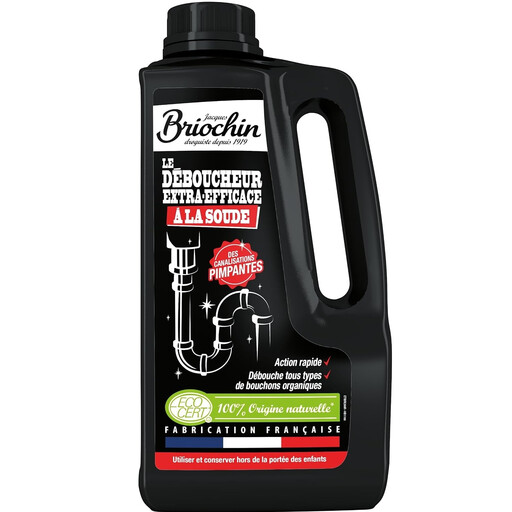
Why this choice suits this profile: its 900 ml size and detailed instructions allow you to tackle a household blockage without buying multiple products.
The stated 20% caustic soda content is clearly shown. The instructions note a dwell time of 15 to 30 minutes and the surfaces to avoid, particularly aluminium.
Concentrated formula, 900 ml volume, and indications for food residue, grease, soap, and hair.
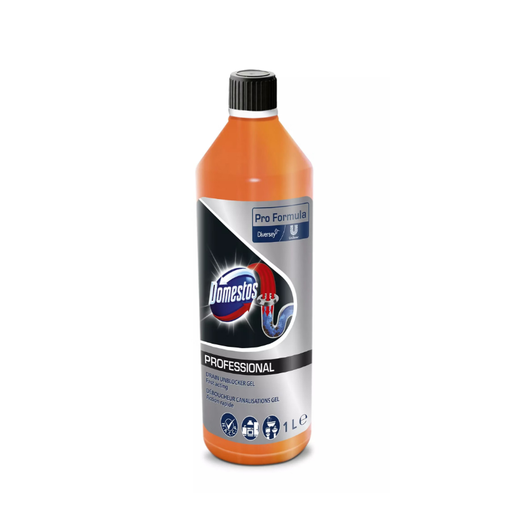
Why this choice suits this profile: its one-litre size and texture designed to work in pipes make it ideal for households wanting to combine occasional unblocking with maintenance.
The instructions distinguish between occasional use and preventative maintenance, with different quantities for each. A helpful detail to avoid overdosing.
Alkaline gel, 1 litre format, and indications for soap residue, organic matter, and hair.
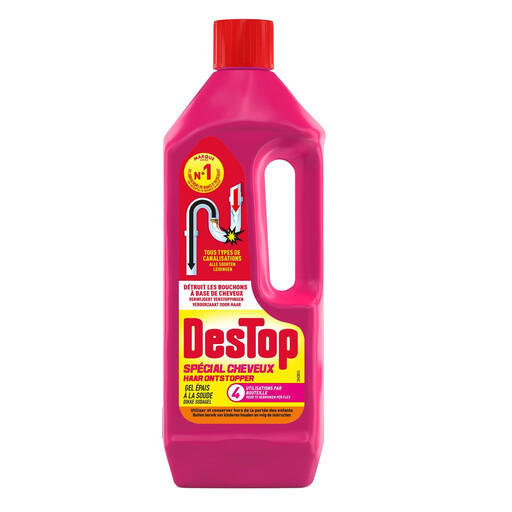
Why this choice suits this profile: it specifically targets hair blockages, which are common in showers and basins in busy households.
It doesn't just make a general promise of versatility: the product details specify its action on keratin and state a 30-minute dwell time for organic blockages.
Thick gel, 1 litre format, and intended use against hair, soap, grease, and in several household drains.
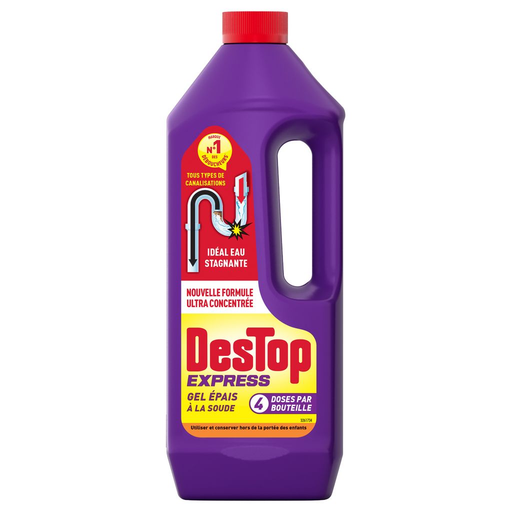
Why this choice suits this profile: its thick gel is described as being able to cut through standing water. A handy feature for minor mishaps that need sorting without immediate dismantling.
The product details specify which pipes are suitable and remind you of the need for a thorough rinse. It also states not to use it on aluminium.
950 ml gel, action claimed even with standing water, and use mentioned for sinks, showers, and toilets.
We've put together a comprehensive, real-time updated list of products that fully meet these strict selection criteria and European safety regulations.
To reduce blockages, regularly remove visible hair from the plug hole, use a strainer in the sink, and avoid pouring large amounts of grease down the drains. Periodic maintenance with a product designed for this purpose can complement these habits, but it doesn't replace mechanical cleaning of the U-bend.
Before each application, read the label, protect the work area, and keep children and pets away. Once the dwell time has elapsed, rinse with the amount of water stated. Never transfer a drain unblocker into another container.
A product specifically marketed as a hair and grease drain unblocker, such as Destop Special Hair, will be more suited to this type of blockage than a formula mainly intended for food residue. Start by removing any accessible hair, then follow the stated dwell time.
Some product details indicate compatibility with PVC pipes, but always check this information on the packaging of your chosen product. Stick to the dosage and do not use the formula on materials excluded by the manufacturer.
Don't keep applying products. Ventilate the room, avoid any contact with the remaining liquid, and try a plunger or dismantling the U-bend if you're comfortable doing so. If the drain remains blocked or if there's a backflow, contact a professional plumber.