
Same-day & Next-day Delivery

Quality Guaranteed

Unlock Your Welcome Offers: FREE Delivery | Up to 80% OFF | Free 30-day JoyPlus trial
Download the APP
A clogged drain? It's a classic household nightmare. The standing water, the rising odours… Faced with this little daily nightmare, it's tempting to rush to the store for the first drain cleaner you see. However, not all solutions are created equal. Behind the marketing promises, you can sometimes find major disappointments, or even a real risk to your plumbing.
As a product expert for Joybuy, my mission is to help you see things more clearly. Let's break down the pitfalls to avoid so you can make a truly informed choice.
The 2 pitfalls to avoid when buying a drain cleaner:
To unclog a sink or shower effectively and safely, you need to read between the lines on the packaging. Here are the two key points to inspect before you check out.
It all comes down to chemistry! The product's composition determines its effectiveness on a specific type of clog. There are two main families:
The product's texture (liquid or gel) is crucial, especially when dealing with standing water.
No endless list here. We've chosen to select targeted options, each meeting a specific need while respecting our performance and safety criteria.
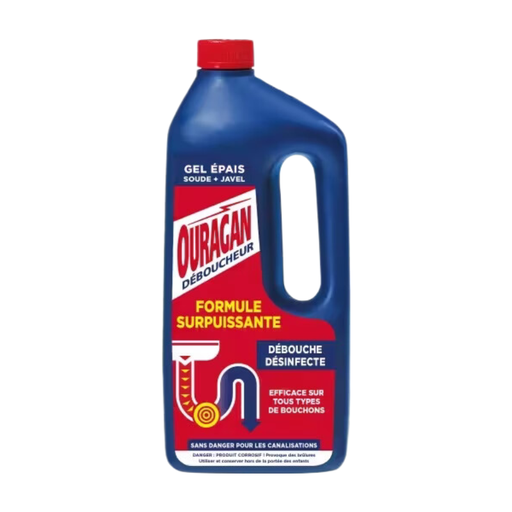
Why we chose it: When faced with a completely blocked sink or shower, every minute counts. This gel is formulated for shock action on the most common organic clogs.
Unlike 'one-size-fits-all' formulas, its concentrated gel is designed to cut through standing water and directly attack organic residue (grease, hair). The action is therefore perfectly targeted.
There's no need to remove standing water before use. This is its main advantage in an emergency, radically simplifying the process.
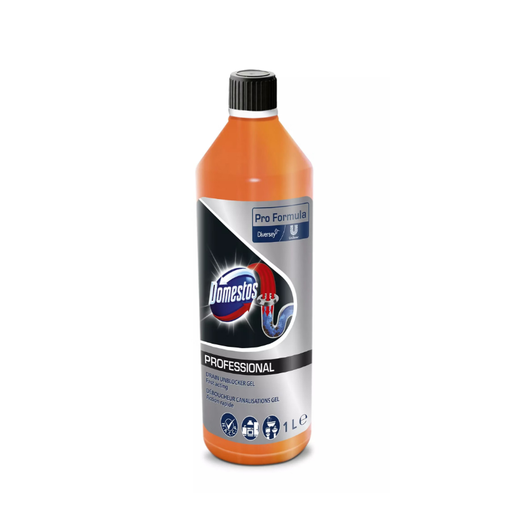
Why we chose it: This is the go-to solution for typical bathroom clogs, where hair and soap scum create dense blockages that standard products struggle to dissolve.
It doesn't promise to do everything. Its high-alkaline formula specifically targets the keratin in hair and soap residue, where less concentrated unblockers give up.
Its professional-grade formulation tackles even the most stubborn clogs. Another reassuring point: it is advertised as being safe for all types of pipes.
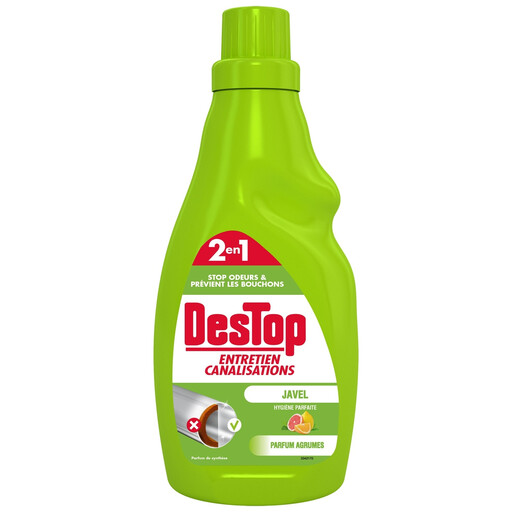
Why we chose it: For anyone who believes prevention is better than a cure. This is the perfect product for regular use to maintain a free-flowing drain and keep bad odours at bay for good.
This product focuses on drain maintenance, a step that is too often overlooked. It doesn't market itself as a miracle solution, but as the right preventive measure to avoid future emergencies.
Its dual action (cleaning and preventing) is complemented by a citrus fragrance that leaves a real feeling of cleanliness. It tackles the problem on both a mechanical and olfactory level.
Discover our full selection of products that meet our selection criteria and current safety standards.
This is THE question to ask. Many powerful chemical drain cleaners (especially those based on caustic soda) can destroy the bacterial balance essential for a septic tank to function properly. It is therefore imperative to check for "Septic Safe" on the packaging. When in doubt, don't use it and opt for enzymatic solutions, which are specially designed for this purpose.
The contact time varies enormously from one product to another: from 15 minutes for "quick-action" formulas to several hours (or even overnight) for desperate cases. The golden rule: always follow the manufacturer's instructions to the letter. Leaving it on for longer than recommended won't necessarily improve the result and could even damage your pipes.
When dealing with a clogged drain with standing water, the answer is an unequivocal yes. The gel drain cleaner, being denser, plunges through the water to reach the clog directly without diluting, maximising its effectiveness. Liquid, on the other hand, is better suited for maintenance or a slow-draining pipe, as it spreads more easily in a drain that is still partially functional.