
Same-day & Next-day Delivery

Quality Guaranteed

Unlock Your Welcome Offers: FREE Delivery | Up to 80% OFF | Free 30-day JoyPlus trial
Download the APP
A clogged drain? It's a problem no one wants to deal with. Between the standing water in your sink and the unpleasant odours coming from the shower, it's tempting to grab the first drain cleaner you see. But be careful—this hasty choice can often make the situation worse, not better.
As the Head of Buying Guides at Joybuy, my mission is to help you navigate your options. Together, we'll break down the common pitfalls and essential criteria for choosing the right drain cleaner for your needs, without risking damage to your plumbing.
The market is flooded with promises, but not all products are created equal. Here are the most common mistakes that end up costing you time and money.
For an effective, risk-free solution, three criteria should guide your choice.
First and foremost, identify the likely cause of your clogged drain.
The form of the drain cleaner directly influences how it works.
Read the label carefully. The presence of caustic soda (sodium hydroxide) is often a sign of effectiveness on organic matter, but it requires caution. Make sure the label clearly states "safe for all pipes (including plastic)" or "septic safe" (if you have a septic system). Brands like Destop offer various formulas tailored to these constraints.
Instead of an endless list, here are targeted solutions for specific needs. The goal: to help you find the product that will perfectly solve your problem.
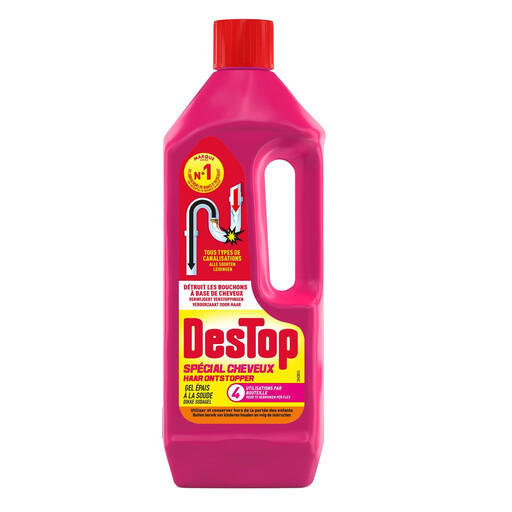
Why we chose it: The go-to solution for those who regularly face clogs in the shower or sink. Its formula is specifically designed to attack the very structure of hair.
This product avoids the "all-in-one" trap by offering a targeted solution. Instead of diluting its power, it focuses on dissolving keratin, the main culprit behind bathroom clogs.
Its thick, caustic soda-based gel formula is designed to act on organic clogs in 30 minutes and won't harm enamel or pipes, including plastic ones.
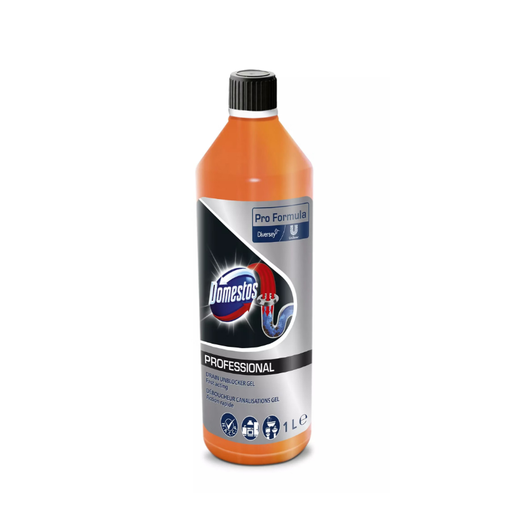
Why we chose it: The ultimate weapon against stubborn clogs that standard products can't shift. This is the last-resort solution before calling a plumber.
It doesn't promise a miracle fix in seconds. Its professional-grade formula is designed for deep action, with the option to leave it working overnight for the most severe blockages.
Its high-alkalinity gel works effectively on soap scum and organic matter. It cuts through standing water to attack the clog directly and is safe for all pipe types (plastic and metal).
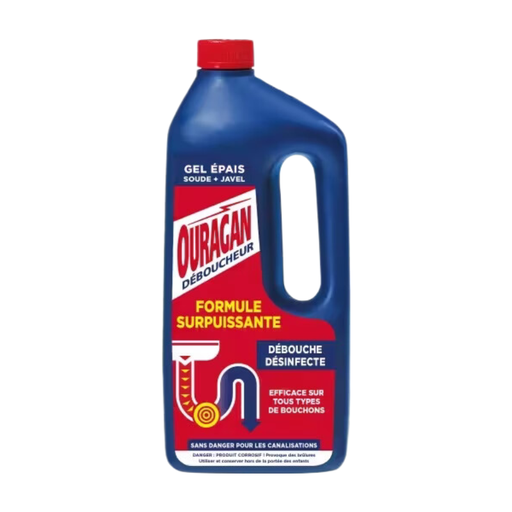
Why we chose it: The perfect ally for everyday hassles: a kitchen sink that's slow to drain after a big meal, or a bathroom sink that's showing signs of weakness. A quick fix for common organic clogs.
It avoids the speed trap with transparency: its 15-minute action is designed for organic matter (grease, waste), without making false promises about more complex clogs like hair.
The thick, concentrated gel works in cold water, no adding required, and clings to pipe walls for better efficiency. It's compatible with all pipes, including plastic, and is safe for septic systems.
Explore our full selection of products that meet our strict selection and safety criteria.
1. Can a chemical drain cleaner damage my pipes? The risk is real, especially with highly concentrated caustic soda products on old or fragile plumbing. To avoid this, there's one golden rule: always read and follow the manufacturer's instructions. Check for compatibility with your pipe types (PVC, metal, etc.) and never exceed the recommended contact time. When in doubt, opt for a formula certified as "safe for all pipes."
2. How long should I let a drain cleaner work? This varies greatly from one product to another. Some "express" products work in 15-30 minutes on light clogs. Others, which are more powerful, may require several hours or even overnight for the most severe blockages. The contact time is an indicator of the product's strength and mode of action; it's crucial to adhere to it.
3. Can I use any drain cleaner in the toilet? Absolutely not. The large volume of water and specific design of a toilet mean that some drain cleaners will be ineffective or even hazardous. Look for a product that explicitly states "suitable for toilets" on its packaging. Denser gel formulas are often the most suitable as they can sink through the water to reach the clog directly.