
Livraison le jour même ou le lendemain

Qualité garantie

Débloquez vos offres de bienvenue: Livraison GRATUITE | Jusqu'à -80 % | 30 jours d'essai gratuits à JoyPlus
Téléchargez l'application
A slow-draining sink, a shower where water pools or a basin with an unpleasant smell can quickly make everyday life more difficult. Yet choosing a drain unblocker is not simply a matter of picking the bottle that promises the fastest results. The nature of the blockage, the pipe material and the required safety precautions are just as important.
This 2026 selection reviews various solutions for routine drain maintenance, hair blockages, grease build-up and situations requiring more targeted action.
A product marketed as a fast-acting drain unblocker may work within minutes without being suitable for every installation. Some products are not recommended for aluminium or delicate surfaces. Others require good ventilation and particularly thorough rinsing.
Before making a purchase, always check:
A drain-unblocking gel generally adheres to pipe walls better than a highly fluid liquid. It may also pass through a certain amount of standing water. However, when an object is obstructing the pipe, the blockage is extremely compact or the problem is located deep within the drainage system, you may need to use a plunger, a drain snake or call a plumber.
Do not apply a chemical product at random when the drain is completely blocked and you do not know the cause of the problem.
Caustic soda, bleach, acids and certain descaling products must never be mixed. A chemical reaction can cause splashes, release irritating vapours or produce dangerous gases.
Wear chemical-resistant gloves and eye protection. Ventilate the room, keep children and pets away, then store the tightly closed bottle in a cool, dry and inaccessible place.
For a hair drain unblocker, choose a formula designed for organic residue and keratin, which are commonly found in showers, bathtubs and basins. In the kitchen, a grease drain unblocker or a product designed to dissolve food residue and soap will generally be more suitable.
A light blockage can sometimes be treated with a maintenance product. If water drains very slowly or does not drain at all, a more concentrated, viscous formula may be considered, provided you follow the instructions on the packaging precisely.
A caustic soda drain unblocker contains sodium hydroxide, a corrosive substance that can cause severe skin and eye burns. The JACQUES BRIOCHIN product featured below states that it contains a 20% concentration of caustic soda.
Gels containing chlorine-based agents also require particular care. Before every use, read the hazard statements, first-aid instructions and surface restrictions. The instructions on the bottle supplied with the product are the ones that should be followed.
The 750 ml, 900 ml and 1-litre formats are suitable for most household uses, but the quantity required varies according to the formula. Some products require 500 ml for occasional unblocking, while others need only 150 ml for weekly maintenance.
Do not exceed the recommended contact time unless otherwise instructed by the manufacturer. Rinsing with water—often warm or hot, depending on the product—must be sufficiently thorough.
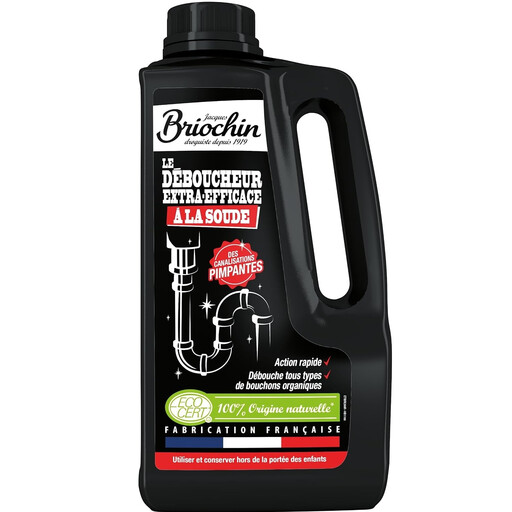
Why it fits the brief: a concentrated, versatile formula for households looking to remove food residue, grease, soap and hair.
The stated 20% concentration of caustic soda is clearly indicated. However, avoid using it on aluminium and wear the recommended protective equipment.
A 900 ml format, manufacturing stated as taking place in France and a quoted contact time of 15 to 30 minutes.
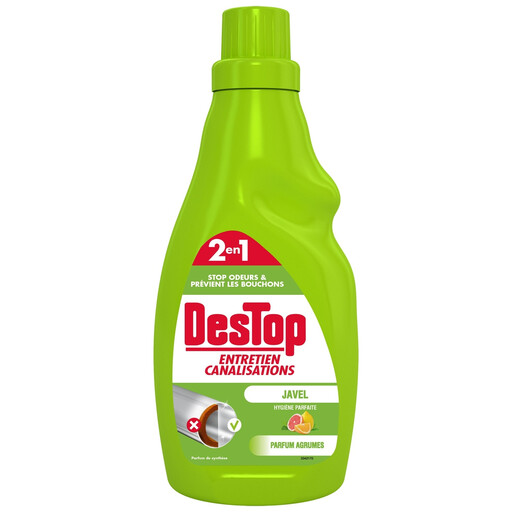
Why it fits the brief: its 2-in-1 formula suits anyone looking both to unblock their drains and establish a regular maintenance routine.
Its thick texture is designed to remain in contact with the pipe walls. However, the “non-corrosive” claim should be checked on the product’s UK label.
The manufacturer claims four actions: dissolving organic matter, reducing odours, cleaning and maintaining drains.
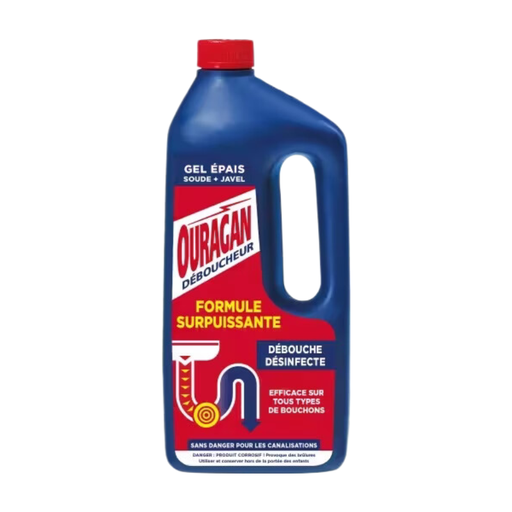
Why it fits the brief: this concentrated gel is presented as suitable for sinks, basins, bathtubs, showers and toilets, including when water is standing.
The manufacturer states that it can be used without adding water, with a 15-minute contact time. A second application should only be considered if the blockage remains.
A 1-litre format and a thick gel claimed to be compatible with plastic pipes, subject to the instructions on the packaging.
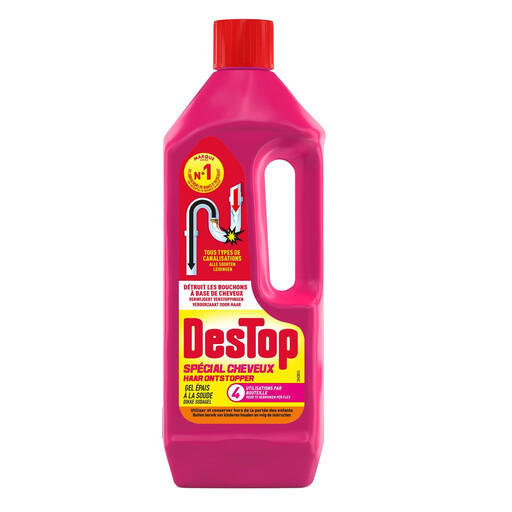
Why it fits the brief: a targeted solution for showers, bathtubs and basins, where hair often becomes entangled with soap and organic residue.
The product is specifically described as effective against keratin. It contains caustic soda and ammonia: never mix it with any other cleaning product.
A stated 30-minute contact time for organic blockages and declared compatibility with plastic pipes and enamel.
We have put together an up-to-date selection of products for unblocking and maintaining drains, including their features and safety precautions.
To help prevent the problem from returning, regularly remove visible hair from the shower drain and place a strainer in the kitchen sink. Never pour oil or liquid fat down the drain. Regularly flushing the pipes with hot water may help maintain them, but it will not replace the appropriate treatment once a blockage has formed.
For a toilet drain unblocker, check that the product is specifically intended for this use. Do not use a formula designed only for sinks or basins in a toilet bowl, especially if another cleaning product is already present.
A product marketed as a hair drain unblocker, usually in the form of a thick gel, is suitable for organic blockages in showers, bathtubs and basins. Start by removing any accessible hair, then follow the stated contact time.
No. Compatibility must be checked on the label. Even when a product is advertised for several types of pipe, aluminium, certain delicate surfaces or older installations may be excluded. If in doubt, it is best to seek advice from a plumber.
Shelf life varies depending on the product reference and batch. Check the date shown on the packaging, keep the cap properly closed and store the bottle away from heat, sunlight, food and incompatible products.