
Livraison le jour même ou le lendemain

Qualité garantie

Débloquez vos offres de bienvenue: Livraison GRATUITE | Jusqu'à -80 % | 30 jours d'essai gratuits à JoyPlus
Téléchargez l'application
An airtight food storage container makes meal prep, fridge organisation and taking your lunch with you easier. But not every design suits every use. A closure that’s difficult to clean, a capacity that doesn’t meet your needs or confusion about microwave compatibility can turn a practical purchase into something that quickly ends up at the back of a cupboard.
Before comparing prices, it’s worth looking out for the most common pitfalls and focusing on the features that really matter.
A leakproof food container needs a well-fitted seal and a closure system that applies even pressure. A lid that simply rests on top may help contain odours, but it won’t necessarily be enough to carry soup or sauce.
Four-clip systems, push-button lids and silicone seals are designed to improve leakproofing. However, before putting the container in your bag, check that every latch is securely closed.
The words ‘microwave-safe’ often apply to the base only. The lid usually needs to be removed or left ajar to let steam escape. A container sealed tightly while food is being reheated can build up pressure.
The same caution applies to conventional ovens, grills and hobs, which aren’t automatically suitable for plastic food containers or their lids.
Food residue can get trapped in the groove of the lid or underneath the seal. So, even if a container is dishwasher-safe, it still needs to be cleaned thoroughly. If the manufacturer allows it, remove the silicone seal so you can wash and dry every part properly.
A warped, torn or incorrectly repositioned seal can affect how well the container keeps food in. It’s best to replace a cracked container or damaged lid rather than continue using it for liquids.
For everyday use, look for a BPA-free food storage container made from a material suitable for contact with food. Polypropylene, often shortened to PP, is lightweight and practical for the fridge, freezer and taking food on the go.
Borosilicate glass is another good option. It’s generally more resistant to stains and odours, but it’s heavier and less convenient in a school bag or for your daily commute. In all cases, check the manufacturer’s guidance on temperatures and permitted uses.
An airtight lunch container with a capacity of 300 to 500 ml is suitable for side dishes, chopped fruit or small portions. For a full lunch, 750 to 1 000 ml is often more suitable. Containers with a capacity of 1.5 to 2.5 litres are better for storing family leftovers, bulk ingredients or several meals prepared in advance.
A stackable food container with a rectangular shape makes efficient use of space in the fridge or cupboard. Stackable and nesting designs are particularly useful for meal prep, provided the lids are interchangeable.
Before buying, check each of the following separately:
For cupboard storage, a food storage container with a clear lid and a label may be more practical than a small container designed for meals.
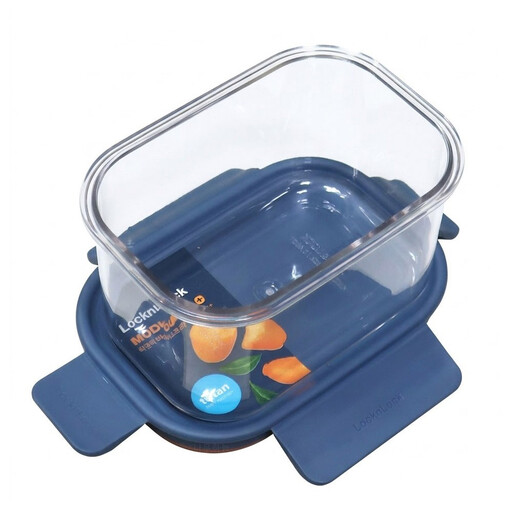
Why this is a good match for you : With a capacity of 450 ml, this container is ideal for small portions, snacks and side dishes, without taking up too much room in your bag or fridge.
Its clearly stated capacity helps you avoid buying a container that’s too large for everyday use. The four-sided closure system and silicone seal are described as airtight and leakproof.
Lightweight design, BPA-free PP material and stated compatibility with the freezer, microwave and dishwasher, according to the product listing.
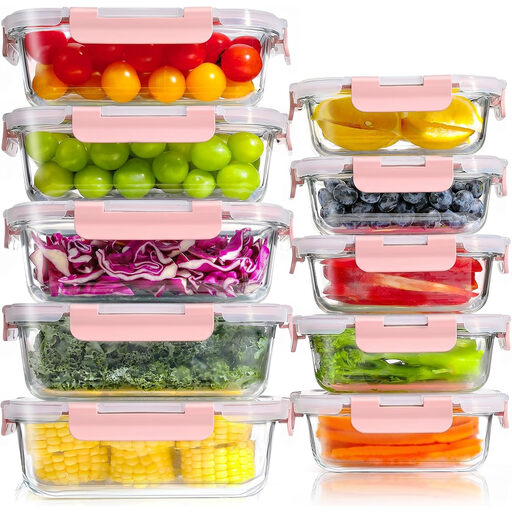
Why this is a good match for you : This set includes five 1 040 ml containers and five 370 ml containers, helping you organise meals, leftovers and portions prepared at home.
Glass is less likely to absorb odours and stains. The lids need to be removed before reheating, as stated in the product instructions.
Borosilicate glass, hinged lids with silicone seals, and stated compatibility with the oven, microwave, freezer and dishwasher.
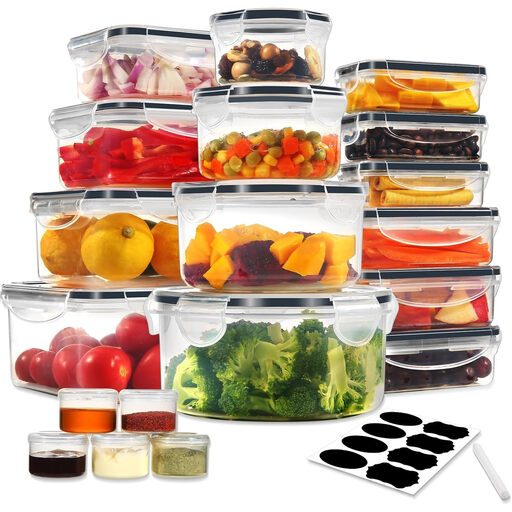
Why this is a good match for you : The range of sizes suits families, preparing several meals and storing both dry foods and leftovers.
The set includes containers in several sizes, as well as small sauce pots, so you don’t have to use a large container for every need. The four-clip lids are designed to help prevent leaks.
Includes 38 pieces, in round and rectangular shapes, with labels included. BPA-free plastic and stated compatibility with the freezer, microwave and dishwasher.
We’ve put together a comprehensive selection, updated in real time, of products that meet these strict criteria and European safety regulations.
It depends on the model and the manufacturer’s instructions. A container that’s suitable for both the freezer and microwave can generally be used in both, but leave room for food to expand as it freezes. Then remove the lid or leave it ajar when reheating.
For an individual portion, 700 to 1 000 ml is a practical starting point. Smaller sizes are ideal for sauces and side dishes, while containers of 1.5 litres or more are suitable for family-sized meals. A set of food containers in different sizes gives you more flexibility.
Its lifespan depends on how it’s used and washed, as well as the condition of the material. Check the container, lid and seal regularly. If you notice a crack, warping, a lingering odour or a closure that no longer stays shut, replace the affected part.