
Livraison le jour même ou le lendemain

Qualité garantie

Débloquez vos offres de bienvenue: Livraison GRATUITE | Jusqu'à -80 % | 30 jours d'essai gratuits à JoyPlus
Téléchargez l'application
By Joybuy Product Recommendation Officer, August 26, 2026
Choosing the perfect food storage container? It seems simple, but in reality, it's often a real challenge. Who hasn't cursed at a cupboard full of containers that leak, stain, or warp after a single trip through the dishwasher? The result: money down the drain, food waste, and a daily dose of frustration.
To avoid these disappointments, let's review the common pitfalls. The goal is to find the model that truly fits your lifestyle, whether you're packing your lunch box, doing weekly meal prep, or simply trying to organize your fridge.
To sort through the options, focus on the technical details that really matter. They are the true guarantors of a smart and sustainable purchase.
The material is the soul of your container. Your intended use will dictate the best choice.
bento, lunch box). Its main disadvantage is its incompatibility with microwaves. This makes it perfect for salads, sandwiches, and other cold meals that don't need reheating.The seal of an airtight food container depends entirely on one thing: its lid. Two points to inspect closely:
For meal prep fans and organization fanatics alike, containers that stack perfectly are a significant space-saver. Opting for a set of storage containers from the same collection is the best way to ensure modularity. Pro tip: square or rectangular formats optimize space in a fridge or cupboard much better than round containers.
Rather than just a random list, we've selected models that meet specific needs, always keeping durability and practicality in mind.
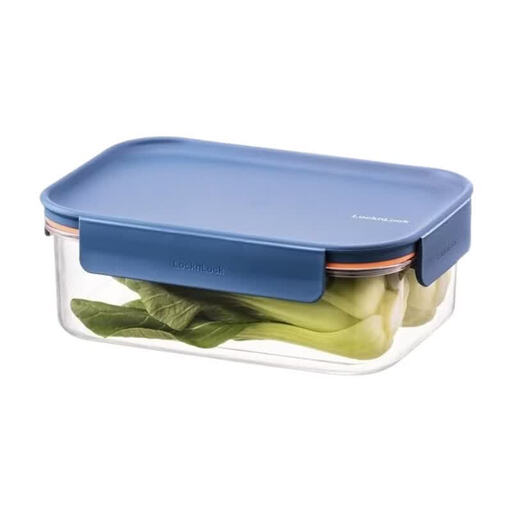
Why we love it: Perfect for preparing meals in advance. Its modular design allows for stable stacking in the fridge, maximizing space. The Tritan plastic offers an excellent compromise between the lightness of plastic and the durability of glass.
Tritan is far more resistant to stains and odours than conventional plastics (goodbye, wrong material pitfall!). Its 4-clip lock is reliable and ensures a tight seal.
Its stackable modular design and durable Tritan material, which is microwave-safe (without lid) and freezer-safe.

Why we love it: This set of containers in stainless steel meets all family needs, from kids' snacks to dinner leftovers. 316 stainless steel is a premium material: safe, virtually unbreakable, and built to last. A true investment.
Completely neutral, stainless steel retains no odours or stains. It goes far beyond the simple "BPA-free" criterion. Its rock-solid durability protects it from warping and breaking.
A set of 3 very practical sizes (600 ml, 1100 ml, 2200 ml) made of 316 stainless steel, a safe material designed to last a lifetime (or close to it).

Why we love it: It's the all-in-one solution for those who love to cook, store, and reheat in the same dish. This borosilicate glass container goes from the oven to bake a casserole, to the fridge to store it, and then to the microwave to reheat it. All without transferring.
Borosilicate glass is specifically designed to handle high temperatures, making it the ideal material for cooking. Its versatility isn't a gimmick; it's its main selling point.
Absolute versatility: oven, microwave, freezer, and dishwasher safe. Glass remains the ultimate safe material that never degrades.
Discover our complete selection of products that meet our quality criteria and current standards.
Here's a tried-and-true trick that works every time: fill the container with a mixture of hot water and baking soda (about one to two tablespoons). Let it sit for several hours, ideally overnight, before rinsing. White vinegar is also an excellent ally for neutralizing odours.
Absolutely not! That's the surest way to shatter it, even with highly resistant borosilicate glass. Such a violent thermal shock should be avoided. The best practice is to let the container thaw slowly in the refrigerator or at room temperature before putting it in the oven.
It all depends on its use and care. A quality gasket can last for several years. Our tip to preserve it: opt for hand washing, which is less aggressive than the dishwasher. If it becomes dry, cracked, or no longer stays in place, it's time to replace it (if the model allows) to guarantee a flawless seal.