
Same-day & Next-day Delivery

Quality Guaranteed

Unlock Your Welcome Offers: FREE Delivery | Up to 80% OFF | Free 30-day JoyPlus trial
Download the APP
A well-organised kitchen depends on more than just the number of cupboards you have. Choosing the right airtight food storage containers has a direct impact on the freshness of your ingredients, the space available and how easy everything is to keep clean. However, it is important not to be swayed by marketing promises and end up with a mismatched collection that does not suit your habits.
A lid that simply fits into place will not necessarily protect food from moisture or odours. For pasta, rice, flour or cereals, choose a system with a silicone seal and check that the lid fits evenly all the way around.
The term “airtight” should be backed up by a clearly identifiable design: a removable seal, a pressure mechanism or a detailed locking system. A reliable closure also reduces the risk of spills when storing your containers.
Twelve containers with the same capacity may seem like a great deal. In practice, they will not meet every need. Spice jars, dried fruit and leftovers are better suited to smaller volumes, while containers for pasta and rice need greater height and capacity.
A kitchen storage set made up of several sizes makes better use of your space and avoids having to transfer small quantities into disproportionately large boxes.
Not every food container with a lid is designed for use in the oven, freezer or microwave. The material and usage instructions should guide your choice.
Lightweight plastic is generally suitable for the pantry, but some models must not be used with hot liquids. Glass is more resistant to lingering odours, but it is heavier and can break if exposed to thermal shock. It is therefore important to distinguish between storing dry ingredients and keeping cooked meals.
BPA-free plastic storage jars are popular for their light weight and impact resistance. However, check the manufacturer’s guidance on heat, dishwasher use and contact with acidic foods.
Borosilicate glass containers are particularly suitable for meals, leftovers and preparations that need to move from the fridge to the freezer. Their improved resistance to temperature changes is a real advantage, but you must still follow the instructions. A container taken out of the freezer should not necessarily be placed directly on an intense heat source.
For any purchase intended for food contact, check the compliance information supplied by the manufacturer and follow the usage limits stated on the product page.
To organise your pantry properly, measure the depth and height of your shelves before ordering. Stackable food containers should remain stable and must not be wider than the cupboard.
As a general guide:
A transparent container also makes it easier to keep track of your supplies. At a glance, you can see what is left without having to open every box.
A removable seal is easier to clean after being exposed to flour, sugar or sauces. It must be completely dry before being put back in place, to prevent moisture from accumulating.
Also check whether the dishwasher is suitable for the entire product or just the container. Some wooden lids, such as those fitted to certain glass jars, must be washed by hand.
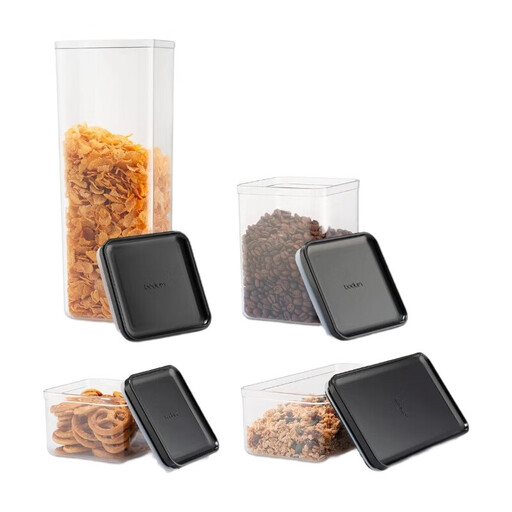
Why this choice suits this profile: this set of six jars offers several sizes, including two 17 oz containers (approximately 500 ml), two 34 oz containers (approximately 1 l), one 40 oz container (approximately 1.2 l) and one 88 oz container (approximately 2.6 l). It allows you to start organising your dry ingredients without having to buy several separate products.
The different sizes prevent you from using a large container for small quantities. The airtight lids and transparent bodies let you see the contents while helping to prevent spills.
Plastic stated to be BPA-free, reduced weight and components that are dishwasher-safe according to the product page.
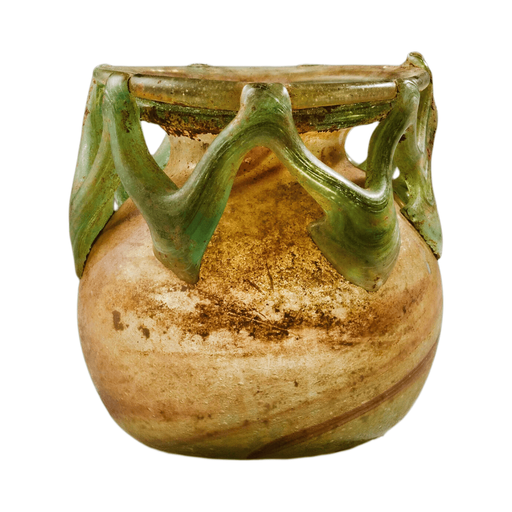
Why this choice suits this profile: this 750 ml jar combines textured borosilicate glass, an acacia lid and a silicone seal. It can be left on display on the worktop to store coffee, nuts, cereals or dried fruit.
The material and type of seal are clearly specified. However, the wooden lid must be washed by hand, so it cannot be treated like a standard dishwasher-safe lid.
750 ml capacity, glass stated to be free from BPA, lead and cadmium, and a dishwasher-safe container.

Why this choice suits this profile: its 2 l rectangular shape is ideal for prepared meals, family-sized leftovers and fridge storage. The model is also designed for use in the freezer and microwave, provided the lid is removed.
The permitted uses are clearly detailed: fridge, freezer and microwave. However, the product page also reminds you to leave room for liquid foods to expand and to avoid extreme thermal shock.
Borosilicate glass, removable seal, lid stated to be BPA-free and dishwasher-safe cleaning.
We have brought together a complete, real-time updated selection of products that meet these demanding criteria and European safety standards.
Before filling them for the first time, wash the containers and allow them to dry completely. For dry ingredients, write down the product name and, if necessary, the date you opened it. This will help you avoid mixing older contents with a new purchase.
Place ingredients you use every day at eye level. Heavier supplies, such as large containers of flour, rice or pulses, should stay on a sturdy shelf. In the fridge, rectangular containers generally make better use of the available depth than cylindrical jars.
Never fill a container while it is still damp, and inspect the seals, lids and sides regularly. A crack, deformation or damaged seal is a good reason to replace the container.
A 1.5 to 2.6 l container is generally suitable for family-sized quantities. However, the ideal capacity depends on how much you buy and the height available in your cupboard. Measure the space before choosing stackable containers.
No. Plastic models designed for pantry storage may not be microwave-safe. For glass containers, check the product page and always remove the lid if instructed to do so. You should also avoid sudden changes in temperature.
Clean the seal, dry it completely and avoid abrasive products. Do not pour hot liquid into a container unless it is approved for this use. Finally, never force a warped lid: airtightness depends as much on the condition of the seal as on the rim of the container.