
Same-day & Next-day Delivery

Quality Guaranteed

Unlock Your Welcome Offers: FREE Delivery | Up to 80% OFF | Free 30-day JoyPlus trial
Download the APP
On paper, a good airtight food container promises a simpler life: keeping food fresh, transporting meals stress-free, and optimising storage. But in reality, the experience is often disappointing. A lid that leaks all over your bag, plastic that's permanently stained by the first bolognese sauce, or unstackable containers that create chaos in your cupboards... These letdowns turn a practical purchase into a source of daily frustration.
Before you splurge on a new set of food containers, let's review the most common pitfalls so you can stop throwing your money away.
To make an informed choice, let's focus on the few technical features that truly make a difference in daily use.
Safety is non-negotiable, and the BPA-free (bisphenol A) label has become the standard. However, not all plastics are created equal when it comes to durability and practicality.
A container's seal depends on the lid-and-gasket duo. The most reliable systems almost always rely on a mechanical locking mechanism.
The four-clip locking system, popularised by brands like LocknLock, combined with a hollow-core silicone seal, distributes pressure perfectly evenly around the entire rim. This design guarantees a foolproof air and liquid-tight seal that is far more durable than simple press-on lids, even after countless dishwasher cycles.
meal prep and OrganisationWhether for your weekly meal prep (meal prep container) or for organising leftovers, modularity is a key criterion. Containers that stack and nest perfectly guarantee optimised space in both the fridge and cupboards. A modular design allows you to use vertical space efficiently and avoid clutter. In this game, square and rectangular shapes are far more effective than round ones at making the most of every square inch.
Instead of an endless list, we've selected a few models that meet specific needs, always keeping our criteria of durability and practicality in mind.
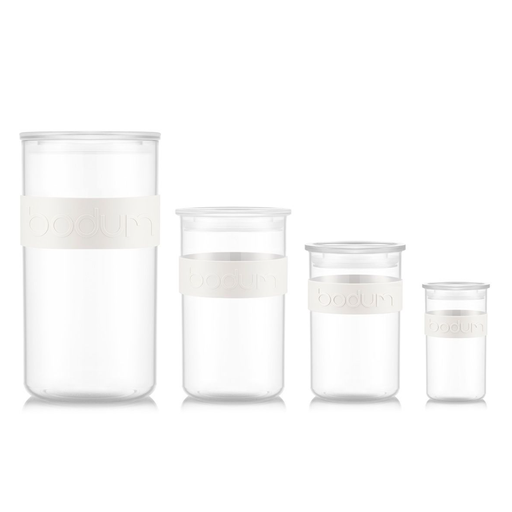
Why we chose it: For `meal prep`, a variety of sizes is king. This comprehensive set allows you to portion everything: main dishes, sides, and snacks, all with perfect consistency for optimised storage.
It puts an end to chaotic storage with a unified and perfectly stackable system. No more orphan lids and mismatched containers piling up.
This 12-piece set covers all your needs with its 4 sizes. The BPA-free plastic and airtight seal ensure optimal freshness.
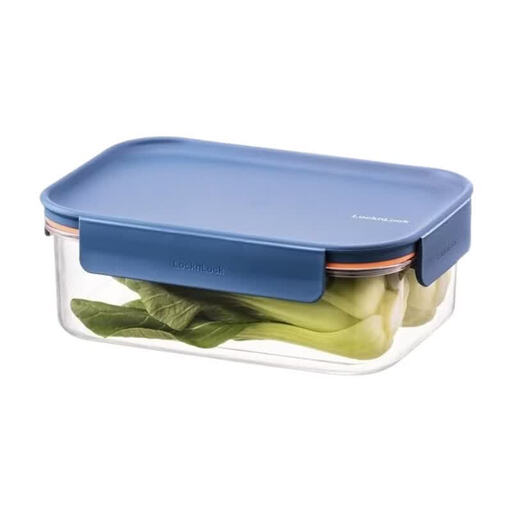
Why we chose it: For intensive family use, robustness isn't an option. Tritan offers clarity and resistance to stains and odours that are far superior to standard plastic, guaranteeing increased longevity.
It solves the problem of plastic that ages poorly. Tritan doesn't warp, stands up to the toughest tomato sauces, and retains no odours, even after countless trips through the microwave and dishwasher.
Its ultra-durable Tritan material, which is as clear as glass. Its modular design ensures stable stacking for perfectly organised storage.
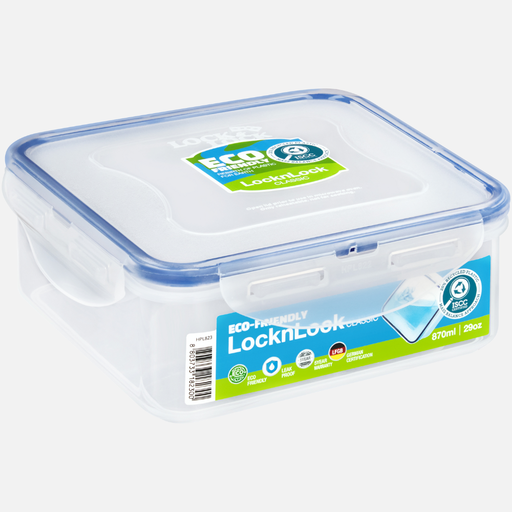
Why we chose it: For dinner leftovers, a lunch salad, or snacks, you need a simple, reliable container. This LocknLock classic is a safe bet, renowned for its proven locking system.
It directly tackles the "fake seal" trap. Its 4-clip locking system and hollow-core silicone gasket guarantee an airtight seal that stands up to backpacks and the test of time.
The famous LocknLock locking system, which is proven and ultra-reliable. An all-rounder container: freezer, microwave (without the lid), and dishwasher safe.
Explore our full selection of products that meet our demanding selection criteria and current safety standards.
The first rule is to rinse the container immediately after use, before any residue can dry. For a deep clean, remember to wash the silicone gasket separately. For a stubborn odour, let it soak overnight in a mixture of water and baking soda. Against stains, the best defence is a material like Tritan, which is naturally more resistant.
Yes, absolutely. The only precaution is to never fill it to the brim. Liquids expand when they freeze. Always leave 2 to 3 centimetres of empty space at the top to allow for this expansion and prevent the pressure from cracking or warping the container.
Polypropylene (PP) is the everyday plastic: economical, lightweight, flexible, and often translucent or opaque. It's very versatile. Tritan, on the other hand, is a next-generation plastic. It's as transparent and glossy as glass but much more resistant to impact and heat. Its biggest advantage is that it doesn't stain or absorb odours, making it the champion of longevity, especially with colourful foods.