
Livraison le jour même ou le lendemain

Qualité garantie

Débloquez vos offres de bienvenue: Livraison GRATUITE | Jusqu'à -80 % | 30 jours d'essai gratuits à JoyPlus
Téléchargez l'application
Dust, pollen, cooking fumes, pet hair and persistent odours can quickly make indoor air less pleasant. However, choosing an air purifier is not simply a matter of picking the model with the largest coverage area.
Commercial data is not always comparable from one brand to another, and certain practical details can make all the difference after a few months of use. Here are the key points to consider before buying, along with a selection of models suited to different needs.
The maximum area stated by a manufacturer generally corresponds to a specific air-change rate. An appliance advertised for 100 or 130 m² may therefore only renew the air once per hour in that configuration. Conversely, a small room may need several air changes per hour to achieve genuinely effective filtration.
When comparing two appliances, focus instead on the CADR, expressed in m³/h, as well as the area associated with the stated number of air changes. A 20 m² room, a 35 m² bedroom and a large open-plan room do not have the same airflow requirements.
An air purifier fitted with a HEPA filter can capture a large proportion of fine particles. However, its everyday effectiveness also depends on the volume of air passing through the filter. The presence of an H13 filter or a claimed efficiency of 99.97% is therefore not, on its own, enough to assess performance in your living room.
Also check whether it has a pre-filter capable of capturing dust, hair and pet hair, as well as the availability and price of replacement filters.
An appliance that is quiet on its lowest setting can become noticeably louder at full power. This is worth bearing in mind if you suffer from allergies or live with pets and want to run the purifier for several hours a day.
The filter replacement interval, access to the grilles and the availability of consumables in France also deserve your attention. When a manufacturer states a long service life, this is generally a maximum figure that varies according to indoor pollution levels and usage time.
The CADR is the clean-air delivery rate of the appliance. The larger or more open the room, the higher this value should be. A compact model may be sufficient for a home office or bedroom. In a large open-plan living area, it is better to choose an appliance capable of treating a greater volume of air.
Advertised coverage areas are not always calculated using the same method. Where possible, compare values in m³/h rather than relying solely on figures expressed in m².
A multi-layer filtration system generally includes:
To choose an air purifier suitable for allergies, prioritise effective particle filtration combined with sufficient airflow. To tackle pet hair or unpleasant odours, the pre-filter and the amount of activated carbon are just as important.
In a bedroom, check the noise level in night mode, whether the indicator lights can be switched off and whether a timer is included. Appliances fitted with a PM2.5 sensor can monitor fine-particle concentrations and automatically adjust the fan speed.
A connected air purifier will generally allow you to control the appliance from an app, schedule its operating times and, in some cases, control it by voice. These features are convenient, but they cannot compensate for insufficient airflow for the room in question.
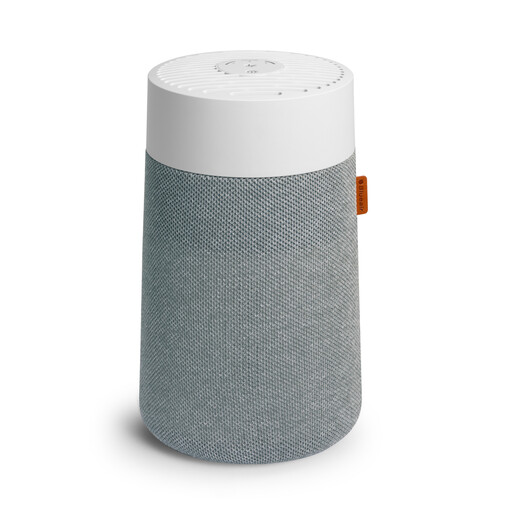
Why this choice suits this profile : Its compact design fits easily into a bedroom, home office or small room. According to the stated specifications, it covers up to 20 m² and is easy to operate using two buttons.
The stated coverage area comes with a CADR of 117 m³/h. The manufacturer recommends replacing the filter every 6 to 9 months, depending on usage.
Claimed HEPASilent technology, a 29 × 17.3 × 17.3 cm format and 220–240 V power supply.
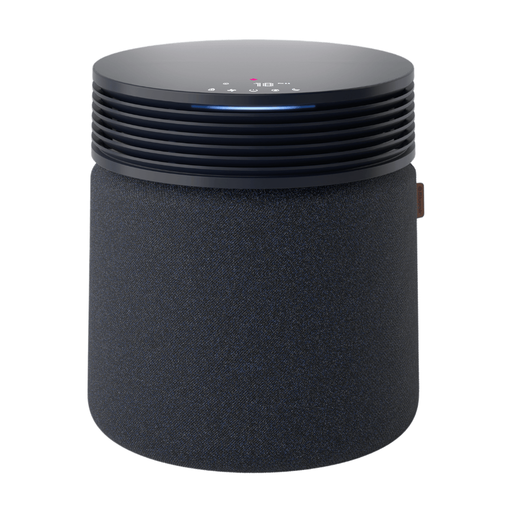
Why this choice suits this profile : With a stated airflow of more than 700 m³/h, this model is designed for large living spaces and homes where the purifier needs to run regularly.
The product information distinguishes coverage according to the time needed to clean the air and recommends replacing the filter approximately every 6 to 9 months.
Mobile app, voice control, night mode, laser sensors and OdorFence filtration according to the supplied specifications.
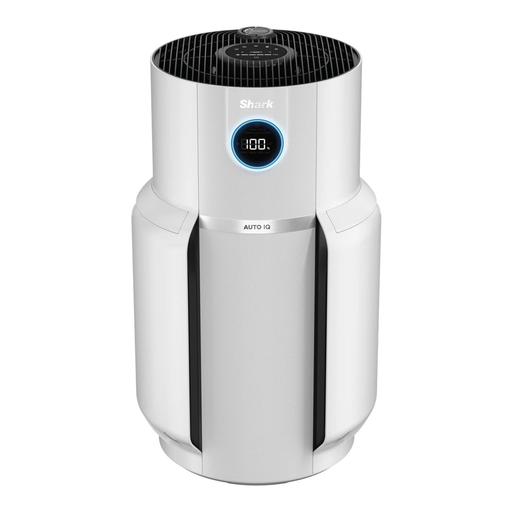
Why this choice suits this profile : It is suitable for large living rooms, homes with pets and users who want to monitor air quality automatically.
The product information distinguishes between two coverage levels : up to 130 m² with one air change per hour, or 28 m² with 4.8 air changes per hour.
NeverChange5 filter claimed to last up to 5 years, four-stage filtration, automatic mode and LED display.
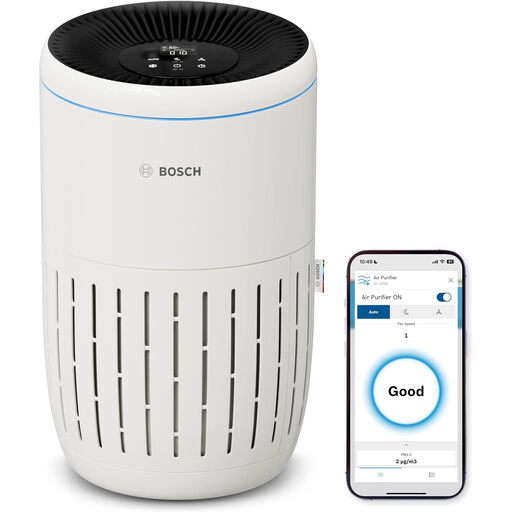
Why this choice suits this profile : This model is designed for rooms of up to 37.5 m² and is aimed at those who want to combine physical controls, a mobile app and compatible voice control.
The stated capacity is based on a specific CADR of 180 m³/h, rather than solely on a maximum coverage area.
Three-stage filtration with HEPA filter and activated carbon, automatic mode, air-quality sensor and quiet mode.
We have put together a complete, real-time updated selection of products that meet these exacting criteria and European safety standards.
Place it on a stable surface, leaving around 30 cm of clear space around the air inlets and outlets. Keep it away from curtains, furniture, tightly enclosed corners and damp areas. In a bedroom, night mode can reduce noise and brightness, but always refer to the information provided by the manufacturer.
Filter life depends on the model, pollution levels and operating time. Manufacturers often state a lifespan of 6 to 9 months, while some filters are designed to last for several years. The replacement indicator, a reduction in airflow or a visible build-up of dust are all signs to look out for.
A non-washable HEPA filter must not be cleaned with water unless the instructions explicitly state otherwise.
The cost includes electricity and replacement filters. To estimate it, multiply the appliance’s power, expressed in watts, by the number of hours it operates, then apply your electricity tariff. Next, add the price of compatible filters and their replacement frequency.
A more powerful model may use more energy, but automatic mode can reduce the fan speed when the sensor detects stable air quality.