
Livraison le jour même ou le lendemain

Qualité garantie

Débloquez vos offres de bienvenue: Livraison GRATUITE | Jusqu'à -80 % | 30 jours d'essai gratuits à JoyPlus
Téléchargez l'application
Constant sneezing, itchy eyes, disrupted sleep… Living with allergies to pollen, dust mites, or pet dander can turn your home into a living nightmare. An air purifier seems like the miracle solution, but the market is saturated with marketing promises and gimmicks that often lead to buyer's remorse. Before you buy, it's essential to avoid the most common pitfalls.
The first pitfall: focusing on gimmicky features. Ambient lights, unnecessary connectivity… these options drive up the price without actually improving air quality. The second trap involves so-called "washable" or "permanent" filters. While they may seem cost-effective on paper, their ability to capture allergens and other fine particles often plummets after just a few washes. The result: the device quickly loses its effectiveness.
This guide gives you the keys to choosing a device that truly fits your needs, focusing on the features that make a real difference for your respiratory comfort.
To make the right choice, understanding a few technical concepts is crucial. This is what determines the real-world effectiveness of your future purifier and your daily comfort.
The core component of an air purifier for allergies is its filtration system. The gold standard is the HEPA (High-Efficiency Particulate Air) filter.
A good filtration system often combines this HEPA filter with a pre-filter (for large dust particles and pet hair) and an activated carbon filter, which is essential for neutralising odours, smoke, and volatile organic compounds (VOCs).
The CADR (Clean Air Delivery Rate) is a standard measurement indicating the volume of air the device can filter in one hour (expressed in m?/h). Choosing an unsuitable CADR is the classic rookie mistake.
For someone with allergies, it's recommended to circulate the air in the room 3 to 5 times per hour. The calculation to estimate the required CADR is simple: CADR (m?/h) ≈ Room Area (m?) × Ceiling Height (m) × 5
For example, for a 15?m? bedroom with a 2.5?m ceiling height, a CADR of around 188?m?/h (15 × 2.5 × 5) is ideal.
An air purifier often runs for hours on end, including overnight. A model that's too noisy quickly becomes unbearable, especially in a bedroom. A quiet air purifier is therefore not an option—it's a prerequisite.
Check the noise level in decibels (dB), especially for the night mode or the lowest fan speed. A level below 30?dB at this setting is considered virtually silent and will not disturb your sleep.
To put theory into practice, here are a few models that suit different user profiles.
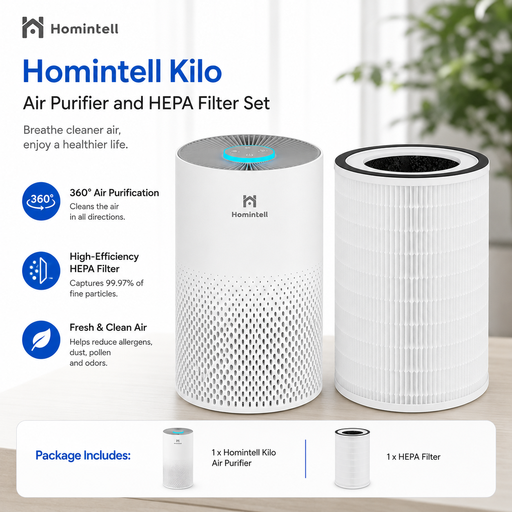
The right profile: Ideal for a bedroom or small office (up to 18 m?). It gets straight to the point: effective purification, without the gimmicks that inflate the price. Its simplicity makes it an excellent first-time buy.
This model relies on a replaceable 3-in-1 filter (HEPA and activated carbon), not on "washable" filters of questionable effectiveness. No frills, just performance.
Its 150 m?/h CADR is perfectly sized for small rooms. The triple-layer filtration (pre-filter, H11 HEPA, activated carbon) ensures excellent capture of dust, allergens, and odours.
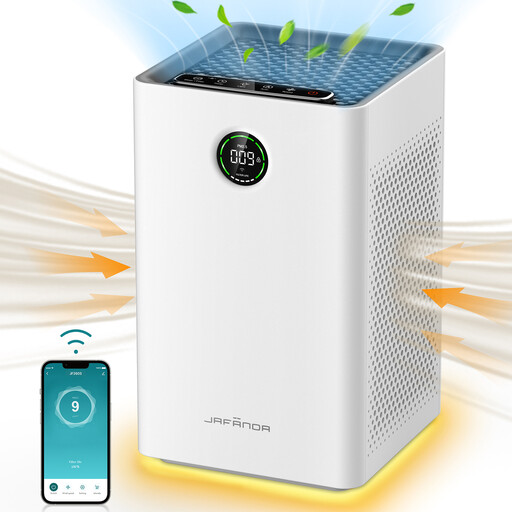
The right profile: With its 260 m?/h CADR and H13 HEPA filter, it's designed for medium-sized living areas. Its activated carbon filter is a real bonus for homes with pets, as it effectively neutralises stubborn odours.
It integrates useful smart features (control via WiFi app) without becoming a gimmick. Its 23 dB night mode is a real treat for the ears, a far cry from noisy turbines.
The PM2.5 particle sensor allows the auto mode to adjust ventilation in real time, optimising both efficiency and consumption. The H13 filtration is a guarantee of peace of mind for allergy sufferers.
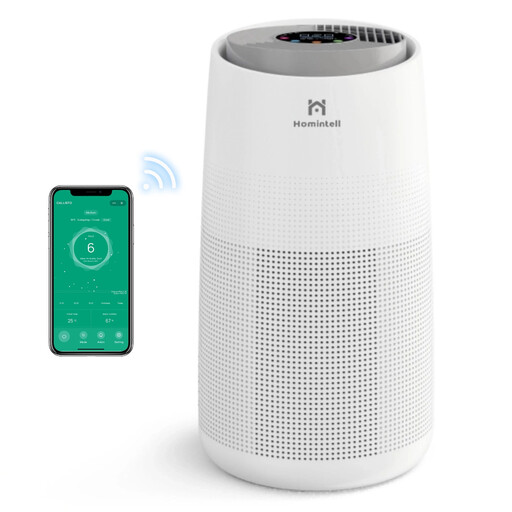
The right profile: Its powerful 300 m?/h CADR makes it suitable for large living rooms or open spaces (up to 36 m?). It combines high-performance H13 filtration with smart features (Wi-Fi control, air quality display).
Rather than piling on trivial features, it focuses on what's useful: the dust sensor automatically controls the power, while the temperature and humidity display offers a 360-degree view of your indoor air.
The combination of a powerful CADR + H13 filtration + UV sterilisation + ioniser offers a complete purification solution. Its 26 dB night mode remains discreet despite the machine's power.
A purifier cleans the air, but a monitor lets you know exactly what you're breathing. It's the next step towards total control of your environment.
A HEPA filter's lifespan depends on your usage frequency and the level of pollution. Generally, it needs to be replaced every 6 to 12 months. Most modern devices are equipped with an indicator light that alerts you when the time comes. Remember to factor this recurring cost (which can be a few dozen pounds or dollars per year) into your budget.
For those with severe allergies, continuous operation at a low speed is recommended to maintain stable air quality. Rest assured, modern devices are designed for this, and their power consumption in low-speed or auto mode is very low. Timer functions or auto mode allow you to tailor its operation to your lifestyle.
For optimal efficiency, the device needs to "breathe." Place it in an area with free-flowing air, avoiding putting it right against a wall or tucking it behind furniture. Leave at least 30 to 50 cm of space all around it. In a bedroom, positioning it a few feet from the bed is a good strategy for better sleep.