
Livraison le jour même ou le lendemain

Qualité garantie

Débloquez vos offres de bienvenue: Livraison GRATUITE | Jusqu'à -80 % | 30 jours d'essai gratuits à JoyPlus
Téléchargez l'application
Breathing clean air at home is no longer a luxury, but a growing concern for many families. Whether to soothe seasonal allergies, limit the spread of pet dander, or simply reduce dust and stubborn odours, the air purifier is emerging as a go-to solution. The problem: faced with a jungle of options and often opaque technical sheets, it's easy to get lost and make the wrong choice.
Our mission: to help you see things more clearly. Let's forget the marketing jargon and focus on what really matters. Here are the pitfalls to avoid and the essential criteria for finding the model that's perfectly suited to your needs.
To make the right choice, there's no need to get bogged down in the details. Focus on these three fundamental criteria: they determine 90% of your future device's effectiveness.
The CADR, or Clean Air Delivery Rate, is the #1 performance indicator. Expressed in cubic metres per hour (m?/h), it measures the volume of air the device can effectively treat in one hour.
How to choose it? For an effective air purifier at home, especially if you have allergies, aim for a CADR that allows for at least 4 air changes per hour in your room.
Filtration quality is non-negotiable. An effective system is almost always based on this trio:
An air purifier is meant to run continuously, especially at night in a bedroom. A noisy model will quickly become unbearable. For a silent air purifier, aim for a noise level below 30 decibels (dB) in night mode, which is equivalent to a faint whisper.
To put theory into practice, here are a few models that check all the boxes, selected for different uses and budgets based on the criteria we've just covered.
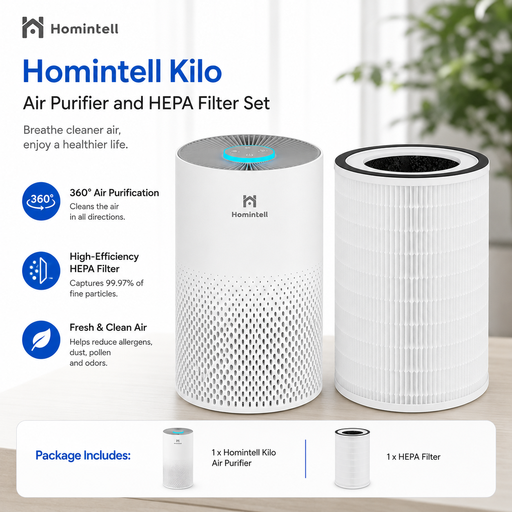
Why we recommend it: Perfect for a first-time purchase or for equipping a bedroom or small office. Its compact size and 150 m?/h CADR are perfectly calibrated for rooms up to 18 m?, all with an excellent performance-to-price ratio.
This model is transparent. Its 150 m?/h CADR is clearly stated for modestly sized rooms, which guarantees real effectiveness without false promises.
3-in-1 filtration (Pre-filter, HEPA, Activated Carbon) and intuitive touch controls. The timer and night light are welcome bonuses for nighttime use.
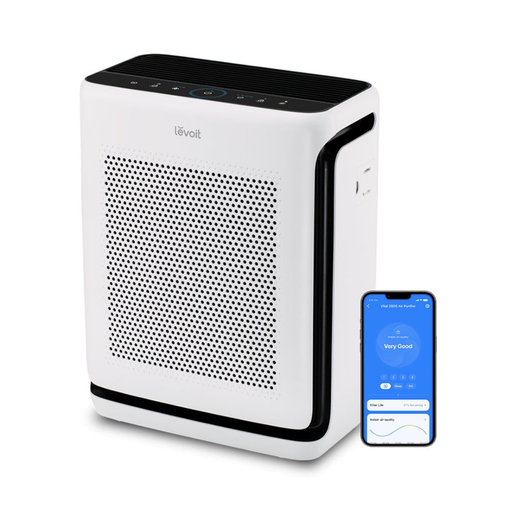
Why we recommend it: Designed for demanding users, it combines a powerful 425 m?/h CADR with H13 HEPA filtration. It's formidable against allergens, pet dander, and odours in living spaces up to 36 m? (providing nearly 5 air changes per hour).
It gets straight to the point: high-performance filtration. No superfluous gadgets, just a proven trio of filters that precisely targets fine particles and odours.
Smart auto mode with an air quality sensor, nearly silent operation (23 dB in night mode), and control via a mobile app for remote management.
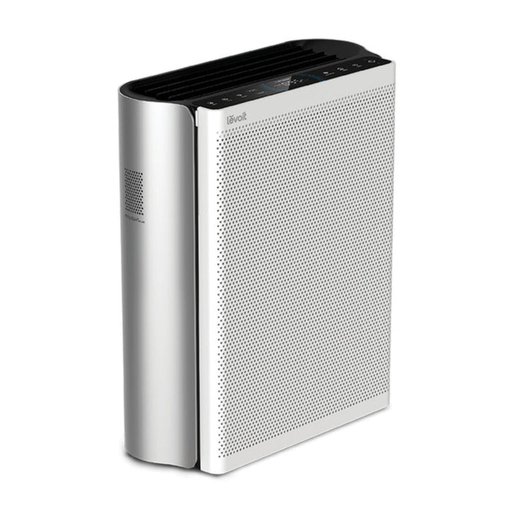
Why we recommend it: With its monstrous 612 m?/h CADR, this heavyweight is built for very large spaces (open-plan living rooms, large flats). Its ultra-precise sensors (PM1.0, PM2.5, PM10) and connectivity make it the go-to choice for demanding technophiles.
It anticipates maintenance costs: its washable pre-filter intercepts the largest particles, which extends the life of the main filter and reduces the long-term cost.
Serious firepower, multiple sensors for a highly refined auto mode, and adjustable air outlets to direct the clean airflow where it's needed.
Our complete selection brings together the best models on the market, all tested and approved by our experts according to strict criteria.
For optimal performance, place it in the room where you spend the most time (bedroom, living room). Leave at least 30 to 50?cm of space around it to ensure proper air circulation. Above all, avoid tucking it into a corner or behind furniture.
The lifespan of a HEPA filter depends on the model and your usage, but it generally lasts between 6 and 12 months. Rest assured, most modern devices will alert you with an indicator light or a smartphone notification when it's time for a change. Failing to replace it on time renders its effectiveness null.
No, its consumption is quite modest. A standard model for a medium-sized room uses between 25 and 50 watts at full power, and much less in night mode. Even running 24/7, the impact on your electricity bill is minimal.