
Livraison le jour même ou le lendemain

Qualité garantie

Débloquez vos offres de bienvenue: Livraison GRATUITE | Jusqu'à -80 % | 30 jours d'essai gratuits à JoyPlus
Téléchargez l'application
A nighttime accident, perspiration or a spilled drink can quickly damage a mattress. However, not every product marketed as a waterproof mattress protector meets the same needs. The material, fastening system and washing instructions directly affect both comfort and product lifespan.
To help you avoid unpleasant surprises, here are the main pitfalls to avoid, the criteria to check and a selection of models suited to different uses in France.
A quilted mattress topper can make a bed feel softer, but it does not necessarily block liquids. The quilted microfibre model, for example, is designed to add a layer of comfort and protect the mattress from everyday wear. However, its product description clearly states that it is not waterproof.
It can therefore be placed over a waterproof mattress pad, but it is not sufficient on its own to protect against leaks, moisture or incontinence.
A protector with the right length and width can still shift if it is not suitable for the mattress thickness. If it is too loose, it may form creases and move during the night. If it is too tight, it may come away from the mattress.
Mattress protectors with elasticated edges or four corner straps help limit this issue. However, you should still check the mattress height supported, particularly when using a 25–30 cm deep hybrid memory foam model.
The term breathable mattress protector generally refers to the ability of the textile and its membrane to allow some water vapour to circulate. It does not mean that the surface will remain cool in every situation or that the protector will eliminate all sensations of heat.
For everyday use, choose a soft surface, a slim design and clear information about the membrane, materials and care requirements. Pay attention to rustling noise as well when the product incorporates a waterproof layer.
Cotton offers a natural feel and is often suitable for people who dislike the sensation of synthetic textiles. The 100% cotton model features a terry-cloth surface and a membrane described as waterproof and breathable.
Polyester and microfibre generally dry more quickly while still offering a soft surface. The 140 x 200 cm model combines a polyester terry surface with a protective membrane. The composition should be clearly stated on both the product page and the textile label, in accordance with European consumer information rules.
An effective waterproof mattress cover generally relies on a membrane positioned beneath the textile. Check that the product description explicitly mentions protection against liquids and stains, rather than using a vague phrase such as “mattress protection”.
This feature protects bedding, but it is not a medical device and does not replace professional advice in situations involving incontinence.
The most common sizes include:
Measure the mattress width, length and thickness. With a four-corner protector, attach each strap without overstretching it. The product should remain smooth and flat without interfering with the fitted sheet.
A washable mattress protector is particularly practical when used regularly with children or in cases of heavy perspiration. The models presented here can be machine-washed at temperatures between 20 and 40 °C, with temperatures of up to 60 °C permitted depending on the product instructions. Tumble-drying should be carried out at a low temperature, and ironing is not recommended.
Always read the care label before washing. Excessive heat or unsuitable treatment can damage the waterproof membrane or loosen the elasticated edges.
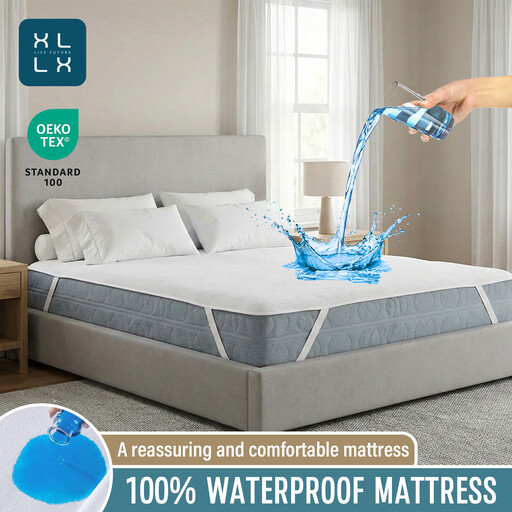
Why this choice suits this profile: A suitable option for a standard double bed, providing everyday protection against liquids, perspiration and stains.
The product description specifies a waterproof membrane, four corner straps and a washable design, rather than simply describing a quilted protector.
Polyester surface, 140 x 200 cm size, four corner elastics and machine washing in accordance with the stated instructions.
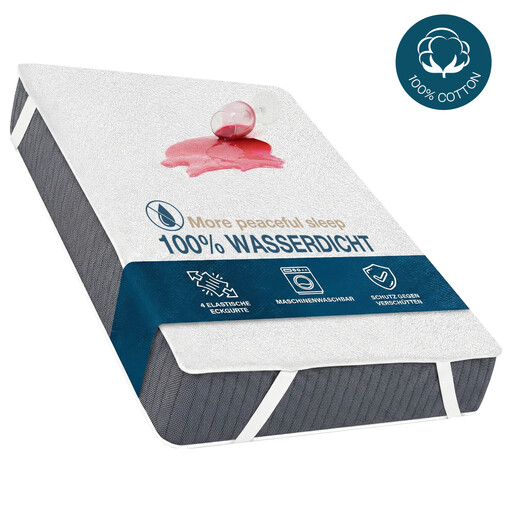
Why this choice suits this profile: Its size is suitable for a single bed, a child's bedroom or occasional bedding, with a cotton surface and four-corner fastening.
The cotton composition is clearly stated, while the 90 x 200 cm size reduces the risk of choosing an approximate fit.
Cotton terry-cloth surface, membrane described as waterproof and machine washing at between 20 and 40 °C, up to 60 °C depending on the care instructions.
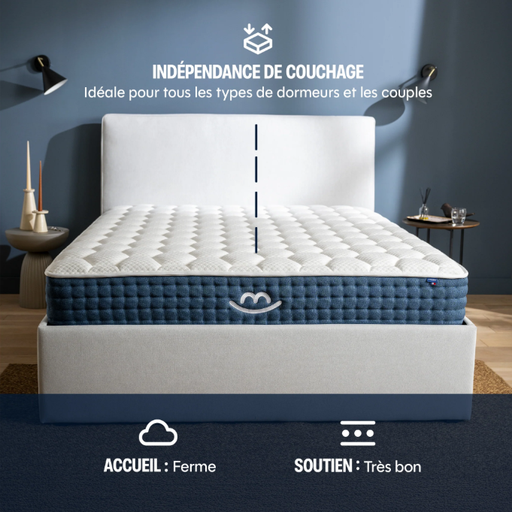
Why this choice suits this profile: A solution for replacing the mattress and then adding a protector that fits its dimensions.
Its stated 26 cm height is a reminder that checking mattress depth before buying a protector is essential.
Technology combining memory foam and pocket springs, a 26 cm thickness and a 90 x 200 cm size.
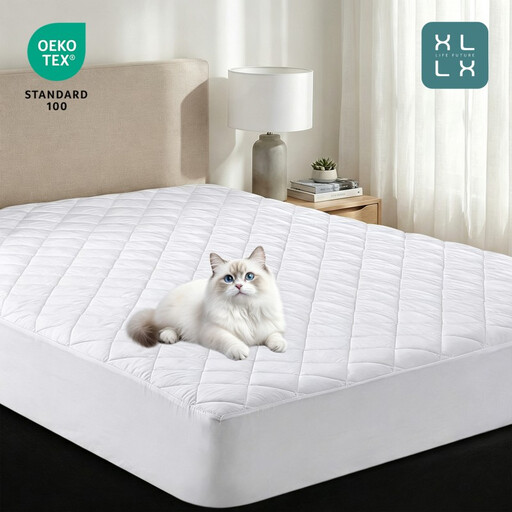
Why this choice suits this profile: Designed to add extra softness to an existing bed when protection against liquids is not the priority.
The product description clearly states that it is not waterproof, so it should be paired with a waterproof mattress pad if necessary.
Quilted filling, elasticated edges, compatibility with mattresses up to 30 cm high and machine washing.
We have put together an updated selection of products designed to meet different bedding-stability and protection needs.
It depends on the material, thickness and membrane. A thin cotton or microfibre surface may feel more comfortable than a particularly bulky protector. The term “breathable” remains a design indication; it does not guarantee the same sensation of coolness for every sleeper.
Choose a 140x200 mattress protector and check the mattress height. If the mattress is 26 cm deep, a protector designed for an equivalent or greater height will generally be easier to fit. Four corner straps help prevent movement, but they can never compensate for an unsuitable size.
The frequency depends on how it is used. For everyday use, regular washing is recommended, particularly for children's bedding or in cases of heavy perspiration. To preserve the membrane, follow the temperature, detergent dosage and drying method specified by the manufacturer.:VEVENT